





Some error occured while loading the Quick View. Please close the Quick View and try reloading the page.
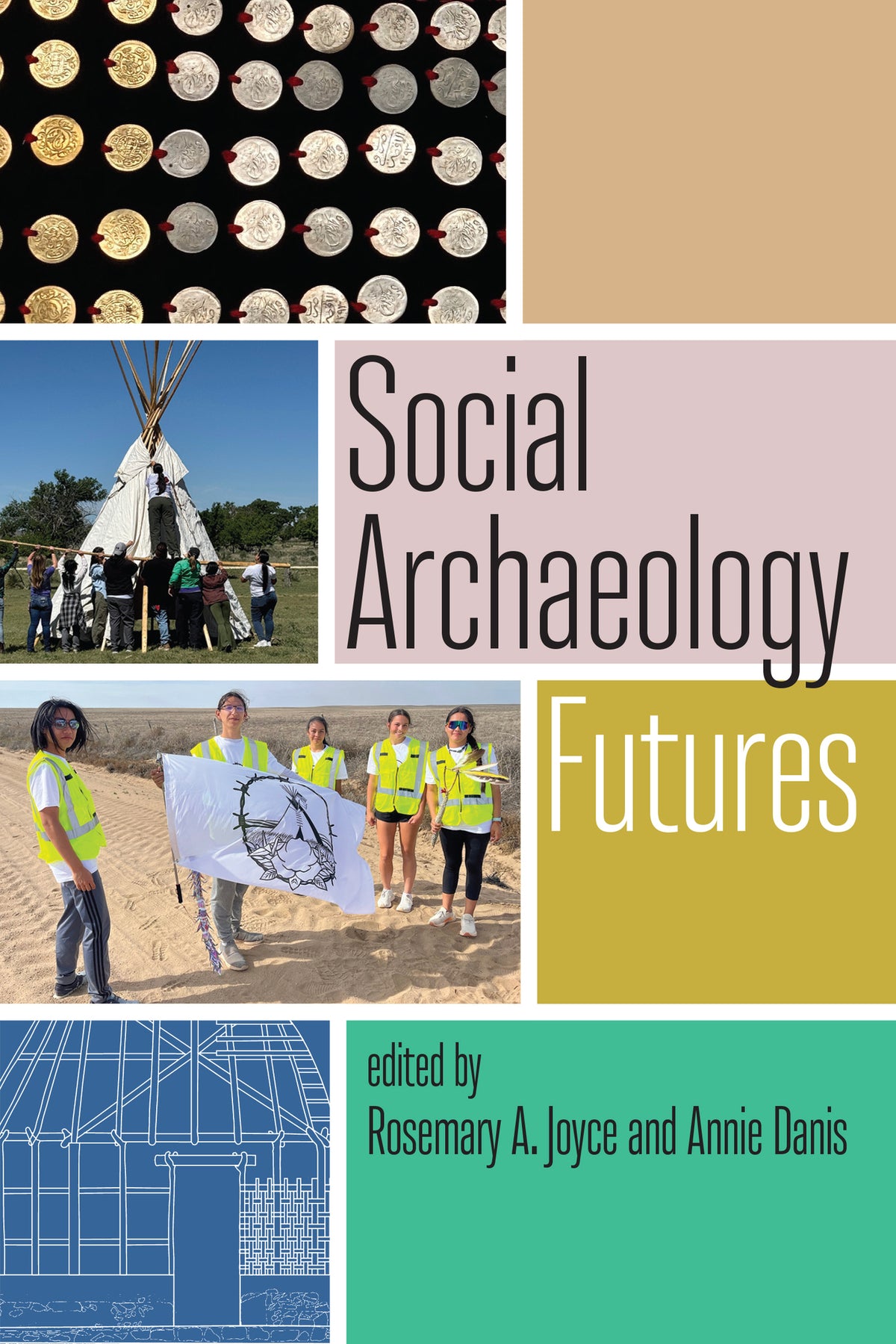
Social Archaeology Futures brings together archaeologists from the Mediterranean, North America, and Latin America to consider what a “social archaeology” should be after the emergence of strong commitments to community engagement and ethical conduct in the field, establishing archaeology as a practice that both presents research and theories about people in the past and engages with people in the present to whom those findings matter. These rich narratives present a cutting-edge approach from established and emerging scholars, bridging the gap between the scholarly project of knowledge production and the social projects of care and repair.
What archaeologists say matters because they shape ideas about what is natural, what “past” led to the present, and how people’s identities took form. This leads to concerns with ethical approaches to representation, to amending the fractures archaeology has produced in previous periods, and to ensuring that communities that are sources of information also benefit from the knowledge produced. Contributors share an understanding of the historical development of social life as an outcome of the decisions and dispositions of living people. Reaching beyond archaeology to natural science, social science, humanities, and the arts, they demonstrate the continued and expanding relevance of archaeological work in transdisciplinary, not merely interdisciplinary, contexts.
Social Archaeology Futures broadens concepts around who counts as a participant in the archaeological process and what counts as archaeology, extending the understanding of the practice well beyond the idea of excavation and lab analysis to include community events, reconsideration of museum collections and archives, and engagement in storytelling. Social archaeology is the future of archaeology, making this volume of considerable interest to students, scholars, and general readers interested in anthropology, art history, heritage studies, and museum studies.


“Archaeology is having a decolonial moment, and this book demonstrates how to do this important work, not just how to talk critically about the field’s past failings.”
—Pamela L. Geller, University of Miami
“This project is especially timely and important since it engages with and provides direction for how archaeology is responding to contemporary social issues, political agendas, and practical realities. Of special significance is the fact that it revisits ‘social archaeology’ and invests it with a new mission and purpose.”
—Robert Preucel, Brown University
Rosemary A. Joyce is Distinguished Professor Emerita of Anthropology at the University of California, Berkeley. She is the author or editor of twenty-one books and has been the V. Gordon Childe Lecturer at UC London, a Fulbright Senior Scholar at the Universidad de Costa Rica, and an Astor Visiting Lecturer at Oxford University. She is a past John Simon Guggenheim Memorial Foundation Fellow and was a fellow at the Bunting Institute at Radcliffe, the Center for Advanced Study in the Behavioral Sciences at Stanford, and the University of California Humanities Research Institute. She has also been awarded an honorary doctorate by Leiden University, the “Premio Jesús Núñez Chinchilla” by the Instituto Hondureño de Antropología e Historia, and the A. V. Kidder Award for Eminence in American Archaeology by the American Anthropological Association.
Annie Danis is assistant professor of anthropology at California Polytechnic University, Pomona, and co-director of the Amache Community Archaeology Project. She is a former Berkeley Fellow for Graduate Study and Berkeley Social Science Matrix Fellow and was awarded the Teacher-Scholar award by the Cal Poly Pomona College of Letters, Arts, and Social Sciences and the Rainbow Tassel by the Cal Poly Pomona Pride Center.