





Some error occured while loading the Quick View. Please close the Quick View and try reloading the page.
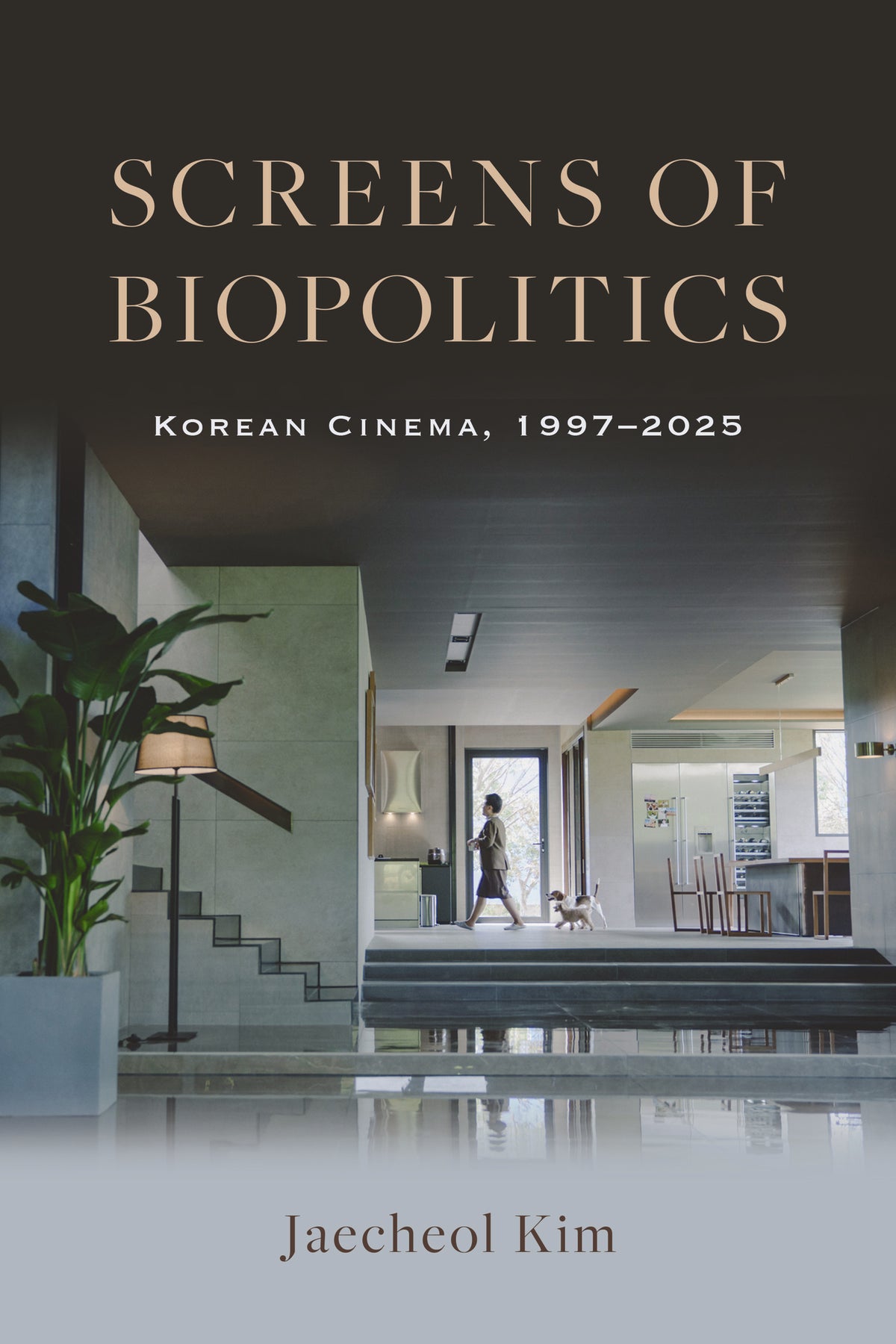
Offers a panoramic view of recent Korean history through Korean cinema.
Screens of Biopolitics surveys Korean films produced between the IMF receivership of 1997 and the martial law crisis of 2024/2025. The book is divided into two parts that explore the two faces of biopolitics in Korean cinema. The first part illuminates the way Korean cinema represents sovereign violence with a series of states of exception, guided by biopolitical philosophies of Giorgio Agamben, Roberto Esposito, and Walter Benjamin. It considers how films such as The Man Standing Next, 12.12: The Day, Peppermint Candy, and 1987 represent major historical events such as the assassination of President Park, the 12.12 Coup, the Gwangju Uprising, and the 1987 struggles. The second part of the book, inspired by Michel Foucault's biopolitical philosophy of governmentality with which he analyzed neoliberalism, explores Korean films that illustrate neoliberal social order. Starting with Default, a movie about the IMF receivership, and moving through such films as Sympathy for Mr. Vengeance, Parasite, Train to Busan, and Peninsula, the second half investigates how neoliberalism has been installed in Korea, spreading to all realms of life, from the family structure to the educational system, to handling fatigue, and to the younger generation’s subcultures. Screens of Biopolitics offers readers a panoramic view of modern Korean history through Korean cinema with biopolitical philosophies.


"This is a capacious study of Korean film organized between two crucial moments in Korean history, the so-called IMF crisis in 1997 (aka the Asian financial crisis) and President Yoon Suk-yeol’s ill-fated declaration of martial law in 2024. The author is extremely erudite and precise on a wide range of topics, ranging from Western theory to Korean history, and his analysis of the years between the Lee Myung-bak/Park Geun-hye administrations and President Yoon’s declaration of martial law is particularly excellent." — Joseph Jonghyun Jeon, University of California, Irvine
Jaecheol Kim is Professor of English at Yonsei University, South Korea.
List of Illustrations
Acknowledgments
Notes on Proper Names
Introduction: A Biopolitical Turn in Korean Cinema
Part 1: Sovereign Power and Cinematic Historiography
1. Recollecting the Twenty-Sixth of October in The Man Standing Next
2. A Coup as a Spectacle—12.12: The Day and Debating the Raison d'État
3. "Life is Beautiful": A Train to Gwangju and the State of Exception in Peppermint Candy
4. Mourning and Violence in 1987: A Benjaminian Moment
5. Sovereign Default: The IMF Crisis in Default and Black Money
Part 2: Neoliberal Biopolitics: Governmentality, Conducts, and Governing the Soul
6. "Destroy the new liberalism": Revenge and Neoliberal Rationality in Sympathy for Mr. Vengeance
7. Family Structure and Parenting in Happy End, The Show Must Go On, and Broker
8. Healing and Handling Neoliberal Tiredness in Little Forest
9. Neoliberal Hospitality and Sonographic Imagery in Parasite
10. Biocalyptic Imaginations in I am a Hero, Train to Busan, and Peninsula
Epilogue: Creating a Thick Relationship with a Shared Memory
Notes
Works Cited