





Some error occured while loading the Quick View. Please close the Quick View and try reloading the page.
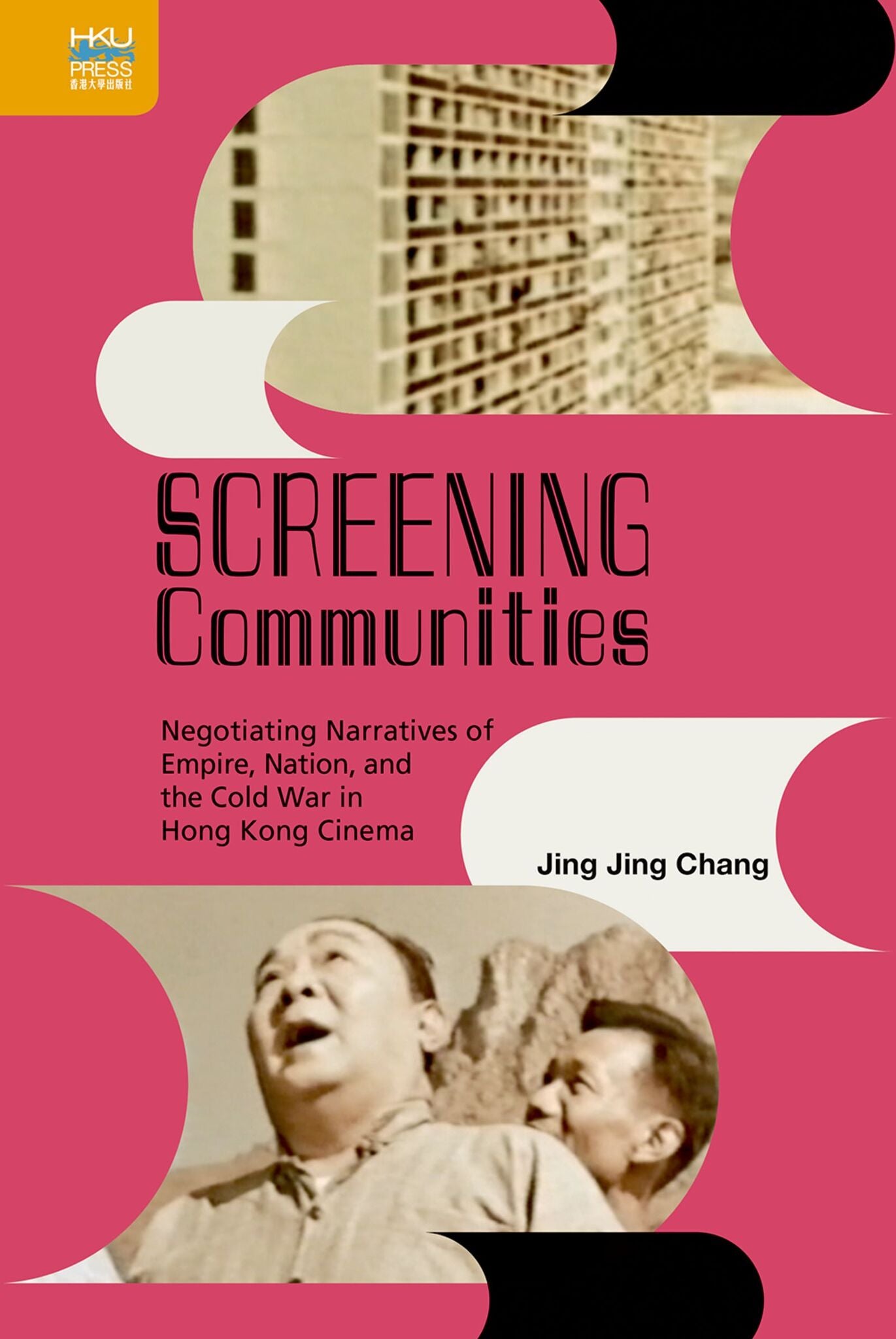
Postwar Hong Kong cinema played an active role in building the colony’s community in the 1950s and 1960s. To Jing Jing Chang, the screening of movies in postwar Hong Kong was a process of showing the filmmakers’ visions for Hong Kong society and simultaneously an attempt to conceal their anxieties and mask their political agenda. It was a time when the city was a site of intense ideological struggles among the colonial government, Chinese Nationalists, and Communist sympathizers. The medium of film was recognized as a powerful tool for public persuasion and various camps competed to win over the hearts and minds of the audience. Screening Communities thus situates the history of postwar Hong Kong cinema at the intersection of Cold War politics, Chinese culture, and local society.
Focusing on the genres of official documentary film, leftist family melodrama (lunlipian), and youth film, this study examines the triangulated relationship of colonial interventions in Hong Kong film culture, the rise of left-leaning Cantonese directors as new cultural elites, and the positioning of audiences as contributors to the colony’s journey toward industrial modernity. Filmmakers are shown having to constantly negotiate changing sociopolitical conditions: the Hong Kong government presenting itself as a collaborative ruling body, moral and didactic messages being adapted for commercial releases, and women becoming recognized as a driving force behind Hong Kong’s postwar industrial success. In putting forward a historical narrative that privileges the poetics and politics of shaping a local community through a continuous screening process, Screening Communities offers a new interpretation of the development of Hong Kong cinema—one that breaks away from the usual accounts of the “rise and fall” of the industry.
Focusing on the genres of official documentary film, leftist family melodrama (lunlipian), and youth film, this study examines the triangulated relationship of colonial interventions in Hong Kong film culture, the rise of left-leaning Cantonese directors as new cultural elites, and the positioning of audiences as contributors to the colony’s journey toward industrial modernity. Filmmakers are shown having to constantly negotiate changing sociopolitical conditions: the Hong Kong government presenting itself as a collaborative ruling body, moral and didactic messages being adapted for commercial releases, and women becoming recognized as a driving force behind Hong Kong’s postwar industrial success. In putting forward a historical narrative that privileges the poetics and politics of shaping a local community through a continuous screening process, Screening Communities offers a new interpretation of the development of Hong Kong cinema—one that breaks away from the usual accounts of the “rise and fall” of the industry.

Price: £43.60
Pages: 256
Publisher: Hong Kong University Press
Imprint: Hong Kong University Press
Publication Date:
25 April 2019
Trim Size: 9.00 X 6.00 in
ISBN: 9789888455768
Format: Hardcover
BISACs:

“Despite the voluminous literature on Hong Kong cinema, Screening Communities doesn’t just fill in gaps; it positively seals up a number of fissures. Chang shows us a cinema on the ground, refuting the standard image of an apolitical, fantasized world of martial arts and musicals. When Hong Kong’s identity seems ever more precarious, this is a bracing reminder of how film was deeply implicated in Hong Kong identity-formation in the Cold War era.”
—David Desser, University of Illinois
“Screening Communities offers an exciting analysis of the role of cinemas in shaping Hong Kong and diasporic identities during the Cold War. Chang brings left-wing Cantonese filmmakers and the colonial state back into the story, and in the process broadens our understanding of the place of Hong Kong in the cultural and social history of the Cold War. This is an important contribution to the scholarship.”
—Jeremy E. Taylor, University of Nottingham
—David Desser, University of Illinois
“Screening Communities offers an exciting analysis of the role of cinemas in shaping Hong Kong and diasporic identities during the Cold War. Chang brings left-wing Cantonese filmmakers and the colonial state back into the story, and in the process broadens our understanding of the place of Hong Kong in the cultural and social history of the Cold War. This is an important contribution to the scholarship.”
—Jeremy E. Taylor, University of Nottingham
Jing Jing Chang is associate professor of film studies at Wilfrid Laurier University, Canada. She has written articles on such topics as celebrity culture and Cold War politics in postwar Hong Kong cinema. Her current research explores the sexual politics of Hong Kong cinema since the 1970s.