





Some error occured while loading the Quick View. Please close the Quick View and try reloading the page.
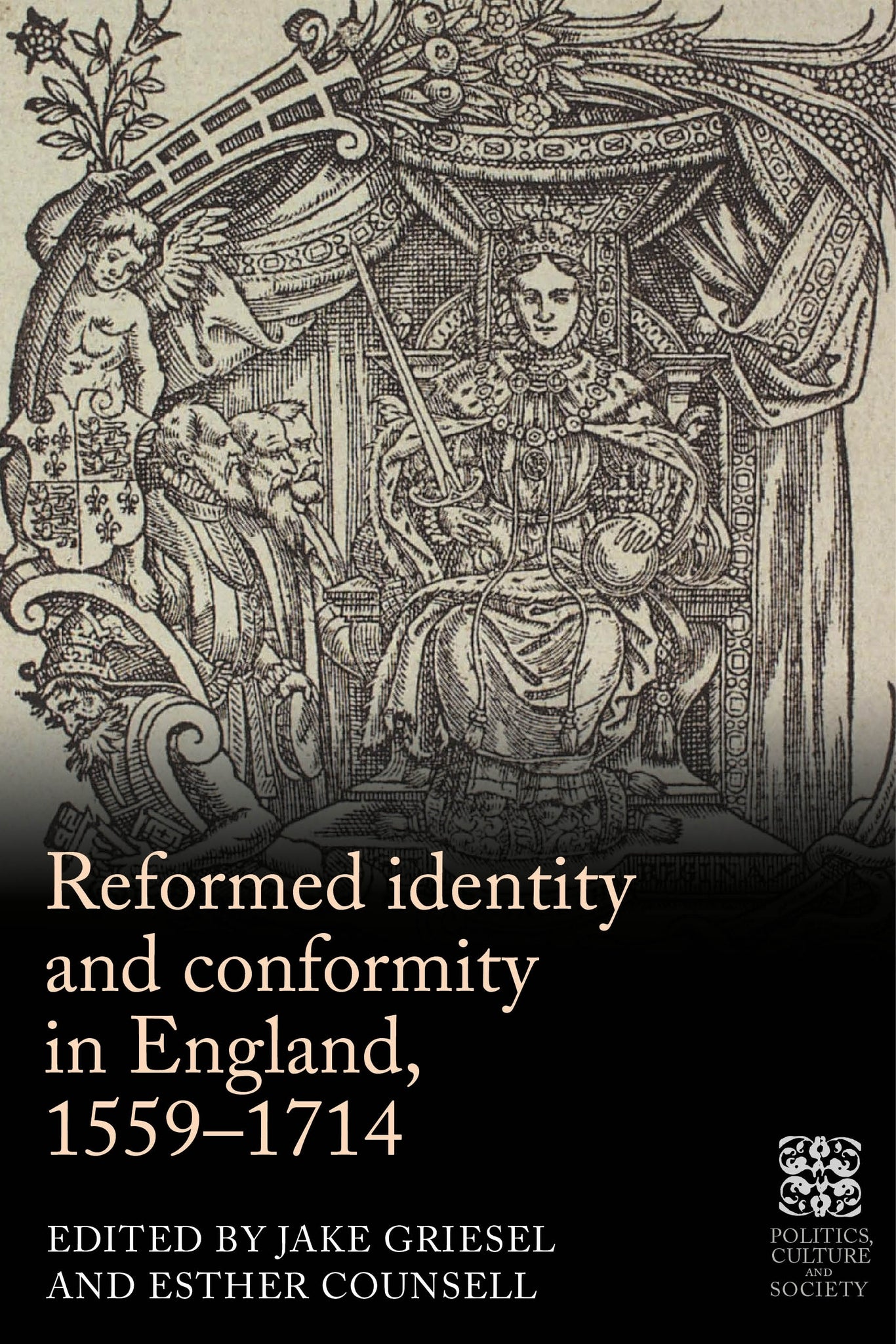


'The cumulative thrust of this volume of essays is one that requires a rethink on the part of conservative Reformed Protestants. Since the early nineteenth century, our tradition has been supplied with a steady stream of Puritan reprints—all bearing the implication that it was through this line of succession that the future of the English Reformed heritage was ensured, especially after the ejection of nonconforming ministers in 1662. This collection of essays, and the growing body of research reflected in them, demonstrates the utter inadequacy of this research reflected in them, demonstrates the utter inadequacy of this long-established assumption. The transmission and survival of English Reformed thought must be freshly calibrated.'
Kenneth J. Stewart, Calvin Theological Journal.
'This book will be of great value to historians of early modern English religion broadly conceived, and the Church of England in particular, especially those concerned with the intersections of theology, politics, and ecclesiastical identity. It is a richly argued contribution to the study of early modern English religion and deserves a central place in future scholarship on the Church of England, the Reformed tradition, and the politics of religious identity.'
Adam Quibell, Religious Studies Review
Jake Griesel is Senior Lecturer in Church History and Anglican Studies at George Whitefield College, Cape Town, and Research Associate at North-West University, South Africa
Esther Counsell is an External Research Scholar in History at Trinity College, Cambridge
Introduction - Jake Griesel and Esther Counsell
Part I: Ecclesio-political and liturgical contests
1 Contests, contexts, and the boundaries of conformity in early modern England - Jacqueline Rose
2 Protestant jurisdictionalism and the nature of Elizabethan puritan non-conformity - Esther Counsell
3 Cathedrals, the Reformed, and the Elizabethan Church - Alice J. Soulieux-Evans
4 Sir Francis Hastings, Jacobean non-conformity, and the House of Commons, 1604–10 - Jonathan C. Harris
5 Zachary Crofton, the Restoration Church of England, and the dilemmas of partial conformity, 1662–65 - Elliot Vernon
Part II: Reformed conformist theology and ecclesiology
6 Justifying faith and faith as a virtue in the theology of Richard Hooker - Torrance Kirby
7 The best religion? The revived ambitions of the Reformed conformist establishment, 1637–40 - Peter Lake
8 The Reformed conformist tradition, 1640–62 - Anthony Milton
9 Edward Reynolds and the making of a presbyterian bishop - Christy Wang
10 The Reformed theology of Thomas Hobbes: The Answer to Archbishop Bramhall - Mark Goldie
11 Reformed orthodoxy as conformity in the post-Restoration Church of England - Jake Griesel
Afterword - Diarmaid MacCulloch
Index