





Some error occured while loading the Quick View. Please close the Quick View and try reloading the page.
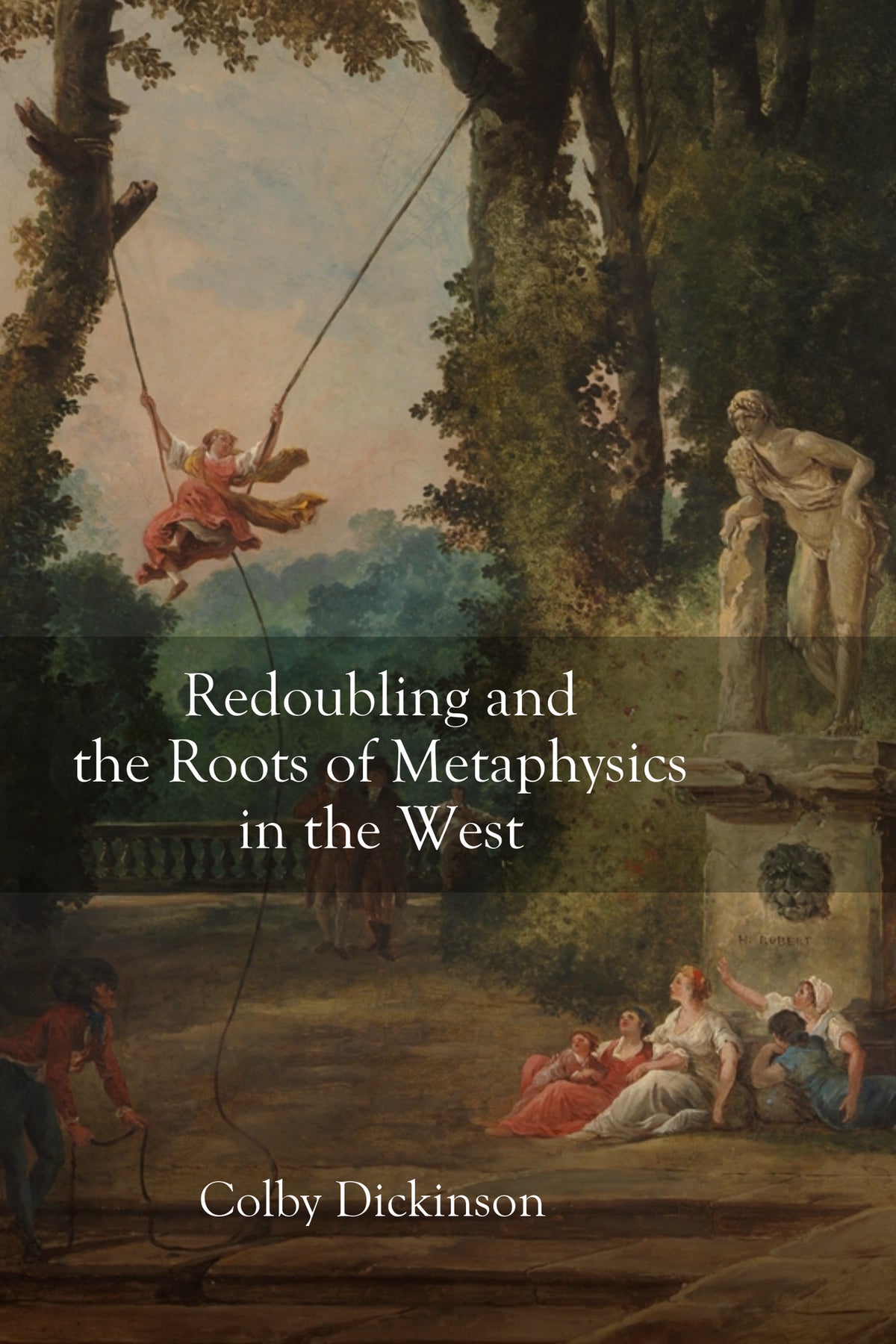
Describes the secularization of mystical thought as it transforms into nihilism in the modern period.
Redoubling and the Roots of Metaphysics in the West is a study of how positive metaphysical abstractions are not only central to Western Philosophy, but to its core political mythologies as well. By creating a "meta" position through such abstract redoublings of a concept, absolute positions are routinely constructed (e.g., "God of gods," "concept of the concept"). To counter such claims to absolutism, there arise historically in both philosophy and theology a series of negative redoublings (e.g., "negation of negation") that seek to undermine the sovereign claims of positive redoublings in order to limit their expansion and dominance. By focusing specifically on how nihilism became a modern instance of earlier apophatic mystical forms of negation, Colby Dickinson shows how the negative redoublings of apophatic, nihilistic thought are actually inherently connected to any positive, political project of redoubling. By doing so, Dickinson argues for a renewed attentiveness to how conceptual abstractions—a staple part of any philosophy or theology—are formed theoretically, as well as how they function politically.


"This is a well-reasoned, detailed, and valuable contribution to the contemporary discussion of nihilism and its relation to religion and metaphysics." — Karen L. Carr, author of The Banalization of Nihilism: Twentieth-Century Responses to Meaninglessness
"Like James Joyce, who spoke in tongues to make manifest what words don't altogether express, Dickinson weaves together the different grammars of thinking itself that lead both to totalizing regimes of power and to infinite love and hospitality beyond borders and identities. The book is a tour de force in its complexity and erudition." — Noëlle Vahanian, author of Language, Desire, and Theology: A Genealogy of the Will to Speak
Colby Dickinson is Professor of Theology at Loyola University Chicago. His previous books include Sacred Pilgrim, Secular Pilgrim: A Roman Journey; Atheism and Love in the Modern Era: Practicing Indifference; and Haunted Words, Haunted Selves: Listening to Otherness within Western Thought.
Acknowledgements
Preface
Introduction: Metaphysics and Redoubling
1. Secularizing the theological
Nietzsche and Nihilism
Heidegger and Nihilism
Nihilation of the Nothing
The Permanent Revolution in Law
Polemos and Logos
Love and Dialectics
2. God redoubled
Jean-Luc Marion on the Impossible Possible
Desmond and Hegel on Positive and Negative Redoubling
Agamben on the Pauline negations of the negative
Jankélévitch and Marion on Forgiveness and Redoubling
De Warren on Original Forgiveness
Kierkegaard and the Works of Love
3. Political mythologies and metaphysics
Roland Barthes and Jan Patočka on the Redoublings of Myth
Jean-Luc Nancy on Myth
The Politics of Myth
4. Religion, law and redoubling
Jacques Derrida and the Redoublings of White Mythology
Sovereignty and the Law of Laws
Apophatic Moves and Negative Theologies
Double-Speak?
Derrida and Levinas on Religion Without Religion
Slavoj Žižek and Materialism Without Materialism
5. The impersonal act of redoubling
Jan Patočka and the unmanifestable
Jean-Louis Chrétien and the immemorial
Roberto Esposito and the impolitical
Simone Weil and decreation
6. Mysticism and black nihilism
Michel de Certeau and Mystic Speech
Achille Mbembe on Necropolitics
Recurring Exclusions
Black Nihilism
7. Tensions in apophatic thought
Denys Turner on the Mystical Negation of Negation
Ernesto Laclau and the Names of God
Michael Allen Gillespie and Modern Nihilism
Divergent Views on the Nihilistic
Conclusion: Mystical theology without sovereignty
In Search of New Forms of Mystical Thought
Bibliography