





Some error occured while loading the Quick View. Please close the Quick View and try reloading the page.
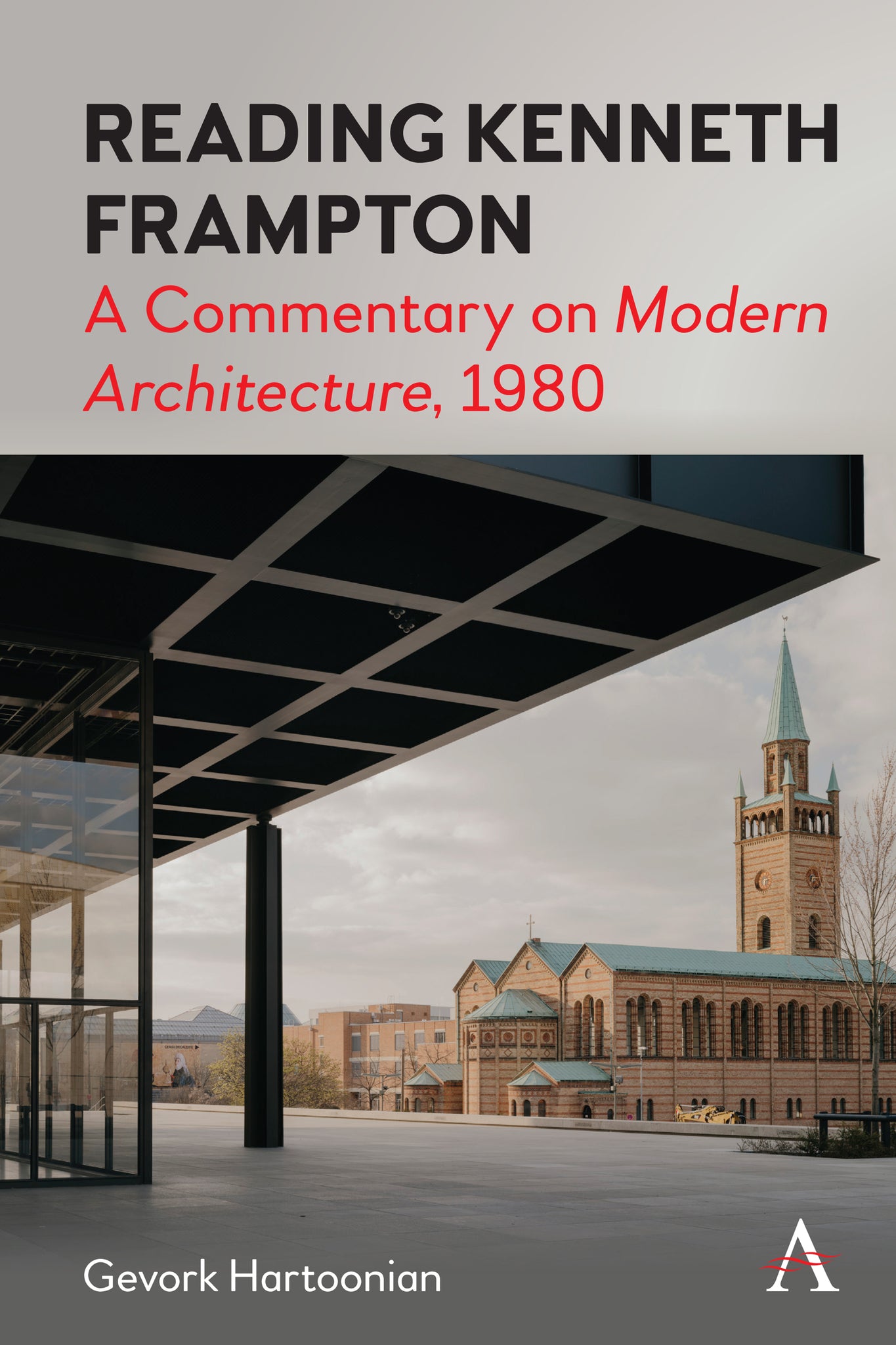
This book focuses on the first edition of Kenneth Frampton’s Modern Architecture: A Critical History, published in 1980. It searches for clues and positions that will provide the reader with an unprecedented insight into the significance of Frampton’s historiography of modern architecture. It explores selected themes in line with Frampton’s many-faceted contribution, certain aspects of which can be noted between the lines of his ongoing criticism of the present-day architecture, which inevitably lead us to a critical understanding of the past, the modernity of architecture’s contemporaneity. The compiled chapters attempt to open a window onto the constellation of themes that allowed Frampton to hold on to his anteroom view of history even amidst the flow of time and flood of temporalities spanning 1980–2020. The book elucidates how Frampton’s critical presentation of the history of modern movement architecture and the book’s classificatory mode (periodization?) contribute to our understanding of the contemporaneity of architecture today.


“Kenneth Frampton is unquestionably one of the most influential and original architectural thinkers of the last hundred years. Now in its fifth edition, his Modern Architecture: A Critical History remains a mainstay in architecture schools and design offices around the world. In this brilliant study, Gevork Hartoonian offers us a lucid and in-depth account of the authors who shaped Frampton’s thinking, from Walter Benjamin to Hannah Arendt. He also gives us a compelling interpretation of Frampton’s engagement with leading protagonists of the modern movement, from Le Corbusier to Louis Kahn, from Ludwig Mies van der Rohe to Alvar Aalto. This book is necessary reading for students of postwar architectural thought, as well as for those seeking a deeper understanding of the debates and ideas shaping architecture today.” —Nader Vossoughian, Associate Professor, Architecture, New York Institute of Technology, USA
Introduction, Chapter 1: The Violence of Quotation; Chapter 2: A Trilogy; Chapter 3: The Vicissitudes of a Critical History; Chapter 4: In Defence of Architecture; Chapter 5: The Agency of Critical; Chapter 6: Aalto Contra Mies: A Conundrum?; Chapter 7: From Critical to Resistance; Postscript.