





Some error occured while loading the Quick View. Please close the Quick View and try reloading the page.
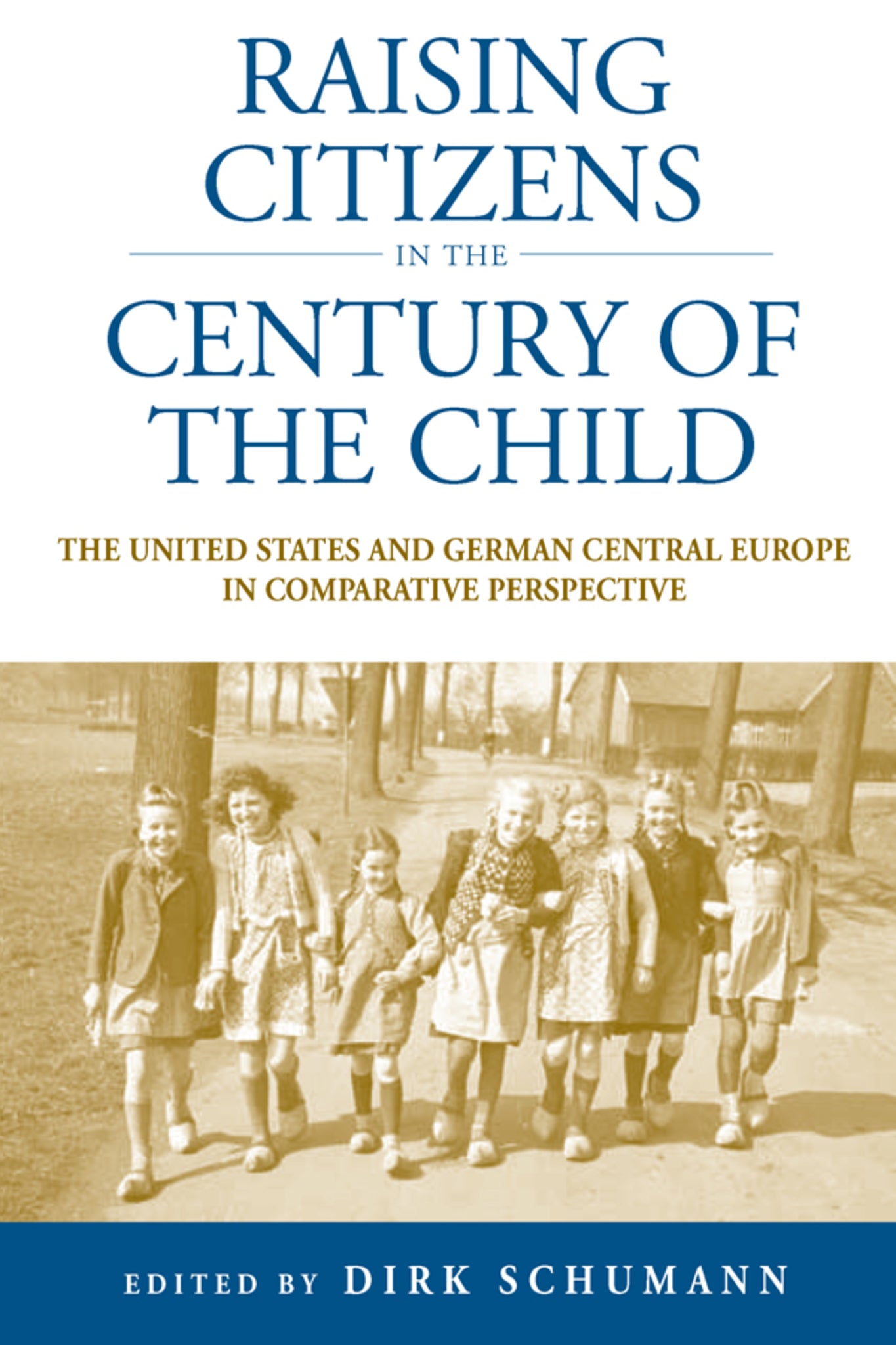
The 20th century, declared at its start to be the “Century of the Child” by Swedish author Ellen Key, saw an unprecedented expansion of state activity in and expert knowledge on child-rearing on both sides of the Atlantic. Children were seen as a crucial national resource whose care could not be left to families alone. However, the exact scope and degree of state intervention and expert influence as well as the rights and roles of mothers and fathers remained subjects of heated debates throughout the century. While there is a growing scholarly interest in the history of childhood, research in the field remains focused on national narratives. This volume compares the impact of state intervention and expert influence on theories and practices of raising children in the U.S. and German Central Europe. In particular, the contributors focus on institutions such as kindergartens and schools where the private and the public spheres intersected, on notions of “race” and “ethnicity,” “normality” and “deviance,” and on the impact of wars and changes in political regimes.


“This is an interesting and ambitious book that seeks to present a comparative perspective on raising children in Germany and in the United States in the twentieth century… [It] brings together a wide and interesting variety of topics on both America and Germany… [and] will be of great use to students and scholars in the fields of both American and European twentieth-century childhood studies and history.” · German Studies Review
“This is an inspiring book for any social scientist analyzing childhood…the range of topics that are presented in this way allows insight into many constellations of ‘raising citizens,’ so that we can consider the linkage of child-rearing and education to the development of political systems in many variations. The various chapters taken together convey evidence for the main idea of the book: twentieth-century childhood is a political, and especially, national affair.” · H-Childhood
“The strength of this impressive collection is that it brings the family and childhood back in and emphasizes the significance of these subjects for understanding debates over citizenship, the relationship of the public to the private, religion, science, and secularization in the twentieth century. The comparative focus on Germany and the United States works well, and several of the articles are in (at least indirect) conversation with each other in ways that illuminate the comparison.” · Robert G. Moeller, University of California, Irvine
Introduction: Child-Rearing and Citizenship in the Twentieth Century
PART I: FOUNDATIONS
Chapter 1. Children and the National Interest
Sonya Michel (with Eszter Varsa)
PART II: NEW BEGINNINGS
Chapter 2. Children’s Future, Nation’s Future: Race, Citizenship, and the U.S. Children’s Bureau
Katherine Bullard
Chapter 3. From Reform Pedagogy to War Pedagogy: Education Reform before 1914 and the Mobilization for War in Germany
Andrew Donson
Chapter 4. ‘Linked with the welfare of all peoples’: The American Kindergarten, Americanization, and Internationalism in World War I
Ellen Berg
PART III: REDEFINING PARENTS' ROLES
Chapter 5. How Should We Raise Our Son Benjamin? Advice Literature for Mothers in Early Twentieth-Century Germany
Carolyn Kay
Chapter 6. Debunking Mother Love: American Mothers and the Momism Critique in the Mid-Twentieth Century
Rebecca Jo Plant
Chapter 7. Paternity, Rechristianization, and the Quest for Democracy in Postwar West Germany
Till van Rahden
PART IV: PARENTAL RIGHTS AND STATE DEMANDS
Chapter 8. Who Owns Children? Parents, Children, and the State in the United States South
Charles A. Israel
Chapter 9. ‘Children Betray their Father and Mother’: Collective Education, Nationalism, and Democracy in the Bohemian Lands, 1900-1948
Tara Zahra
Chapter 10. Asserting Their ‘Natural Right’: Parents and Public Schooling in Post-1945 Germany
Dirk Schumann
Chapter 11. ‘Special Relationships’: The State, Social Workers, and Abused Children in the United States, 1950-1990
Lynne Curry
Notes on Contributors
Bibliography
Index