





Some error occured while loading the Quick View. Please close the Quick View and try reloading the page.
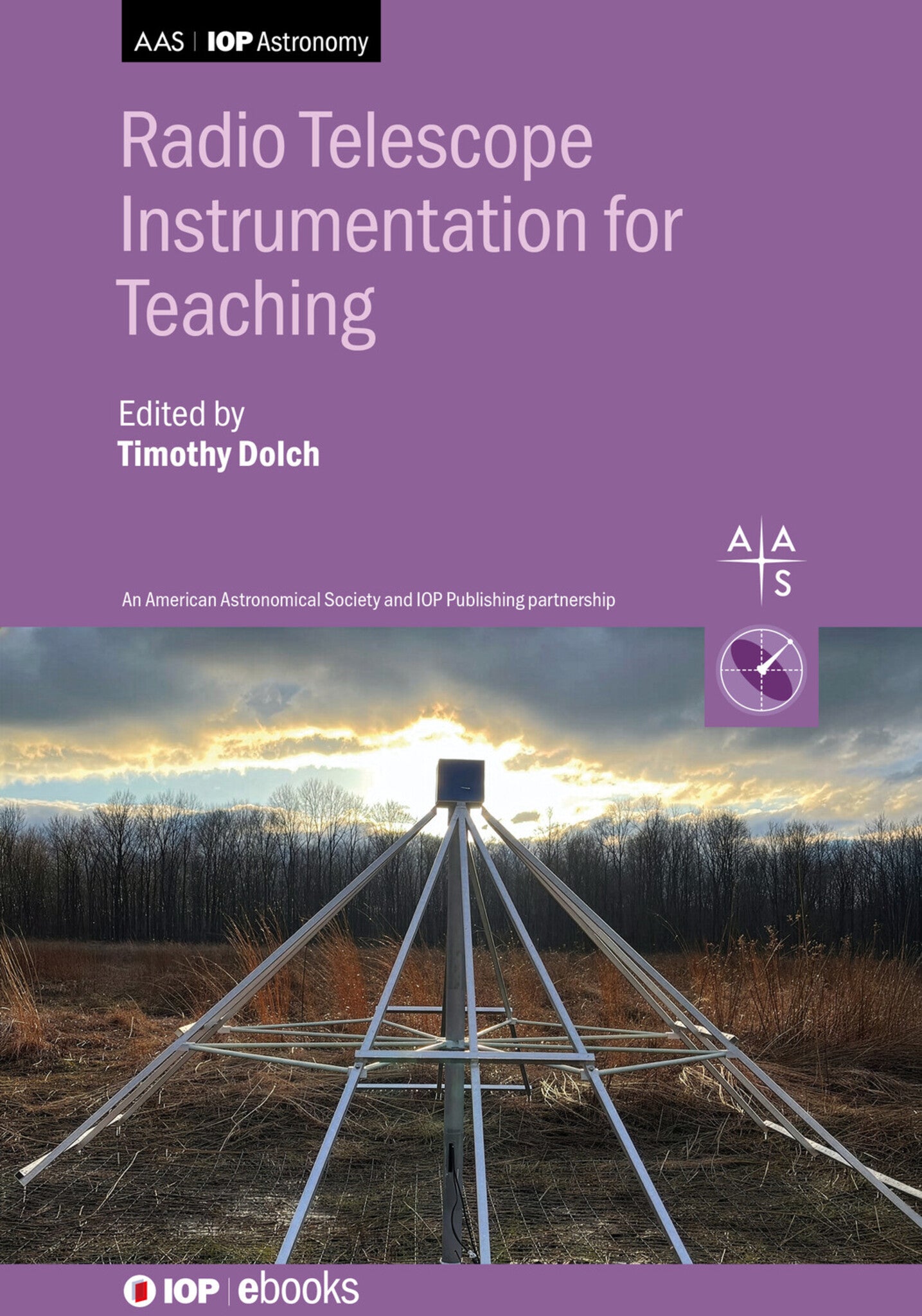
Radio Telescope Instrumentation for Teaching is designed for undergraduate physics instructors seeking to integrate radio astronomy into their courses. After optical astronomy, radio astronomy is the only ground-based method accessible with modest equipment, yet classroom projects can be challenging to implement. This book offers a range of projects, from introductory to advanced, covering standalone classroom systems, networked stations, and larger facilities involving student participation. Activities include observing Galactic hydrogen, Cygnus A, Cassiopeia A, solar bursts, Jovian emissions, and pulsars. Instrumentation options span online setups, small-scale equipment, and permanent small-dish telescopes, with advanced techniques like interferometry now feasible using affordable tools such as field-programmable gate arrays. Chapters are authored by experienced educators.
Key Features:
-
First book dedicated to developing radio astronomy projects in the classroom
-
Gives the instructor a starting point for a variety of classroom projects
-
Describes how rapid advances in computing have enabled locally-built radio telescopes to be accessible to undergraduate students


- Introduction
I. Standalone systems for the classroom - Solar Radiometry, HI Spectroscopy, and Galactic Kinematics Using a Small-Dish Radio Telescope
- BHARAT Setup for HI Pedagogy: The Radiometer
- BHARAT Setup for HI Pedagogy: HI Astrophysics
II. Local Stations That Are Part of Larger Network or Project - Hydrogen Map of Our Milky Way
- The Radio JOVE Project
III. Large facilities/missions that include student participation in instrumentation - The Long-Wavelength Array
- An Introduction to Solar Radio Bursts
- The Sun Radio Interferometer Space Experiment and Student-led Ground-based Observations
IV. Innovative Methods to Use across Various Radio Astronomy Teaching Projects - Interferometry with DLITE
- The Low-Frequency All-Sky Monitor