





Some error occured while loading the Quick View. Please close the Quick View and try reloading the page.
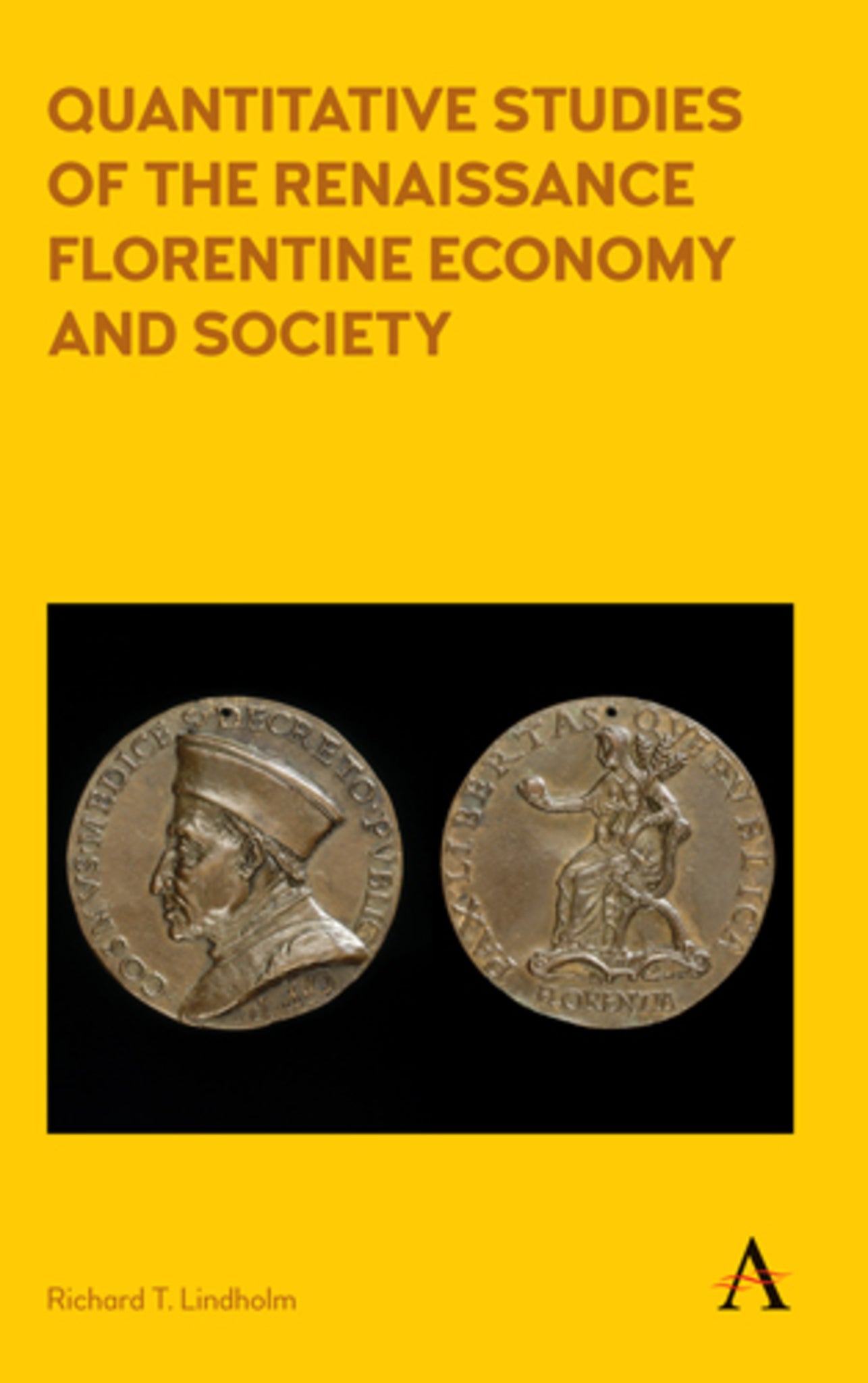
Quantitative Studies of the Renaissance Florentine Economy and Society is a collection of nine quantitative studies probing aspects of Renaissance Florentine economy and society. The collection, organized by topic, source material and analysis methods, discusses risk and return, specifically the population’s responses to the plague and also the measurement of interest rates. The work analyzes the population’s wealth distribution, the impact of taxes and subsidies on art and architecture, the level of neighborhood segregation and the accumulation of wealth. Additionally, this study assesses the competitiveness of Florentine markets and the level of monopoly power, the nature of women’s work and the impact of business risk on the organization of industrial production.


“Lindholm’s Quantitative Studies illuminates the underlying dynamics of plague mortality, residential patterns, home ownership, wealth distribution and women’s work in the wool industry in Renaissance Florence. Drawing on economic theory and advanced statistical methods, yet attentive to microhistorical contexts, this important book opens up new pathways for future research.” —Julius Kirshner, Professor Emeritus of Medieval and Renaissance History, University of Chicago, USA
List of Illustrations; Preface; Acknowledgments; List of Abbreviations; Introduction; Part I. Risks and Returns; Chapter One The Costs and Benefits of Running Away: Late Medieval Florentine Plague Mortality and Behavior; Chapter Two When Economic Theory Meets Medieval Contracts: Calculating the Monte Comune Interest Rate; Part II. Society; Chapter Three The Chances of Getting Rich in Renaissance Florence: The Wool Industry Occupational Wealth Hierarchy; Chapter Four Palaces and Workers: Neighborhood Residential Segregation in Renaissance Florence; Chapter Five The “State” Makes a Work of Art: The Impact of the Catasto Homeowner Tax Loophole on the Quattrocento Florentine Palazzo Building Boom; Chapter Six Not Getting Ahead in Life: The Lack of Life- Cycle Wealth Accumulation in Quattrocento Tuscany; Part III. Work; Chapter Seven Just Doing Business: Testing Competition in the Renaissance Florentine Wool Industry; Chapter Eight Time for It All: Women in the Renaissance Florentine Wool Industry; Chapter Nine Why Were Renaissance Florentine Wool Industry Companies So Small?; Conclusion; Glossary; Bibliography; Index.