





Some error occured while loading the Quick View. Please close the Quick View and try reloading the page.
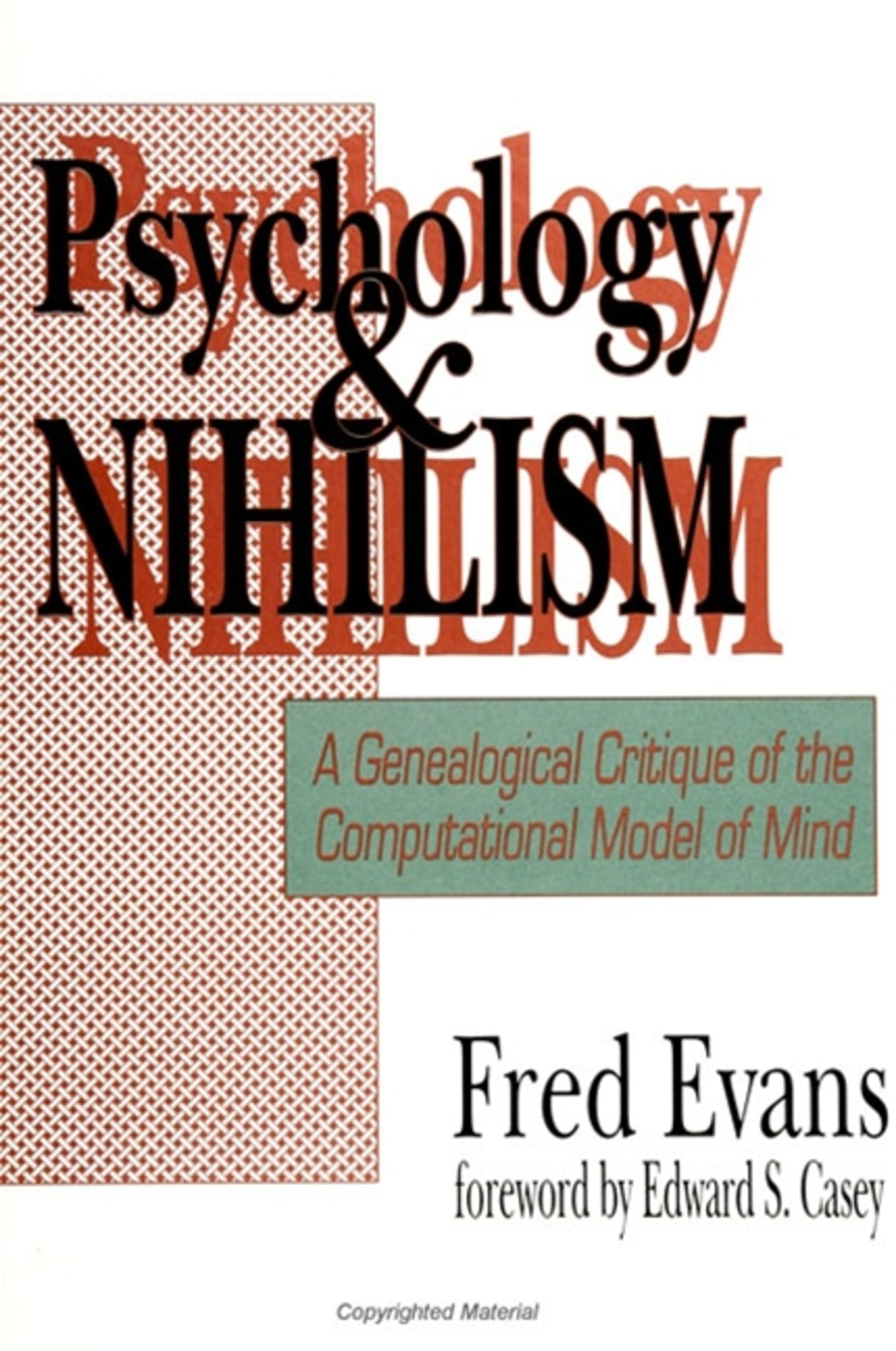
Reveals its hidden nihilistic assumptions and proposes a richer vision of human thought grounded in lived experience and "transfigurative rationality."
In an age increasingly defined by technocratic thinking and mechanistic models of the mind, Psychology and Nihilism challenges the very foundations of modern cognitive psychology. Drawing deeply on Nietzsche’s concept of the "last man" and the pervasive influence of nihilism, Fred Evans argues that contemporary psychology rests on hidden assumptions it cannot escape—among them, tacit understanding, lived experience, and our embeddedness in a meaningful world.
Through a powerful synthesis of philosophy and psychological theory, Evans reveals how dominant models of cognition—rooted in computation, abstraction, and control—risk reducing human beings to lifeless systems, stripped of creativity, ambiguity, and depth. Yet this is not merely a critique. Evans advances a bold alternative: a vision of "transfigurative rationality," one that transcends narrow technocratic limits and reclaims the richness of human thought, language, and perception.
Engaging with figures across philosophy, literature, and social theory, Psychology and Nihilism bridges the divide between psychology and philosophy, exposing the philosophical stakes hidden within scientific claims about the mind. It invites readers to reconsider what it means to think, to speak, and ultimately, to be human.
Ambitious, incisive, and deeply original, this book is essential reading for anyone seeking to understand—and move beyond—the intellectual currents shaping our modern conception of the self.


"Evans' most brilliant stroke consists of demonstrating that cognitive psychology must presuppose the very sorts of things which it presumes it can do without, e.g., tacit understanding and an intimate relation to the life-world. Moreover, Evans suggests that a more positive and productive model of psychology can be devised if attention is paid to the idea of a 'transfigurative rationality' which underlies and surpasses the 'technocratic rationality' that is currently dominant in cognitive and other forms of psychology. Nietzsche's notions of the 'the last man' and of 'passive nihilism' are effectively brought to bear in this remarkable book." — Edward S. Casey, SUNY, Stony Brook
"The author succeeds in showing how cognitive psychology not only unwittingly reflects the currents of nihilism rampant in our time, but also reinforces them with its truncated, technocratic, inadequate conceptions of human minds, human language, human creativity, and human beings.
"The work can help to bring psychology and philosophy into dialogue with each other, breaking down some of the artificial separations that exist between the two fields. It shows the indispensable relevance of philosophical analysis and criticism to theories and claims in psychology.
"The work can help to bring psychology and philosophy into dialogue with each other, breaking down some of the artificial separations that exist between the two fields. It shows the indispensable relevance of philosophical analysis and criticism to theories and claims in psychology.
"The part of the book that I found most illuminating was its explanation of something I have always found to be mystifying—the seeming eagerness of many intellectuals to conceive of ourselves and the universe as nothing more than complex machines. Evans attributes it to the fear of a life without guarantees, a life fraught with ambiguities, uncertainties, diversities, fecund possibilities, and elusive, inexhaustible plays of images—a life that cannot be contained, captured, controlled, or made completely explicable and predictable.
Fred J. Evans is Assistant Professor of Philosophy at Duquesne University.
Foreword
Acknowledgments
Preface
1. Nihilism and Nietzsche's "Last Man"
The Crisis of Modernity
The "Mind's New Science"
The Mind's New Science and Genealogical Critique
Plato versus Homer
Nietzsche's Genealogical Critique of "Ascetic Values"
Reactive Nihilism and Its Progeny: The "Overman" versus the "Last Man"
2. Nietzsche's "Last Man" and Modernity
Marx, Lyotard, and the Metanarratives of Modernity
Modern Literature and Passive Nihilism
Philosophical Critics of Modernity: Heidegger, Horkheimer/Adorno, and Foucault
Gramsci's "Organic Intellectuals," "Performativity," and the Problem of Agency
3. The Psychology of the "Last Man"
Modern Psychology and the "Analytic Observer"
The Analytic Oberver as "Proto-Technocrat": From Behaviorism to the Computational Rationality of the Turing Machine
Cognitive Psychology and the Computational Model of Mind
4. The Science of the "Last Man"
The Analytic Observer and the "Received View" of Science
The "Received View" of Science
Cognitive Psychology and Scientific Explanation
The Weltanschauung View of Science
Weltanschauung and Social Discourse
5. The Self-Overcoming of the "Proto-Technocrat"
Cognitive Psychologists as Creators
Miller and Johnson-Laird's "Decompositional Odyssey" of the Proto-Technocrat
The Self-Overcoming of the Proto-Technocrat
Connectionism
Ecological Cognitivism
6. The Emergence of the Phenomenological Perceiver and the Circularity of Experimental Evidence in Cognitive Psychology
The Return to Presence
Merleau-Ponty and the Notion of the "Body-Subject"
The Circularity of Experimental Evidence in Cognitive Psychology
7. Cognitive Psychology and the Productive Dimension of Language
The Productive Dimension of Language
The Language of the "Proto-Technocrat": Procedural Semantics and Its Propositional Rivals
The Transformation of the Propositional View of Linguistic Meaning into the "Significative Intention" of the Body-Subject
8. Phenomenology, Post-Structuralism, and the Productive Dimension of Language
Language, Subjects, and Linguistic Agency
Phenomenology and the Limits of the "Primacy of Perception"
The Primacy of Discourse: Foucault, Lyotard, and Derrida
The Limits of Discourse
9. Linguistic Agency and the Interplay of Voices
"Voice" and Linguistic Agency: Nuances on Bakhtin's Notion of "Heteroglossia"
Nihilism and "Oracles"
The Self-Overcoming of Nihilism
10. Beyond the "Last Man": Genealogical Psychology and Transfigurative Rationality
Genealogical Psychology
Transfigurative Rationality and Metaphor
Cognitive Psychology and Metaphor
Metaphor and Experimental Circularity in Cognitive Psychology
Beyond the "Last Man"
Notes
References
Index