





Some error occured while loading the Quick View. Please close the Quick View and try reloading the page.
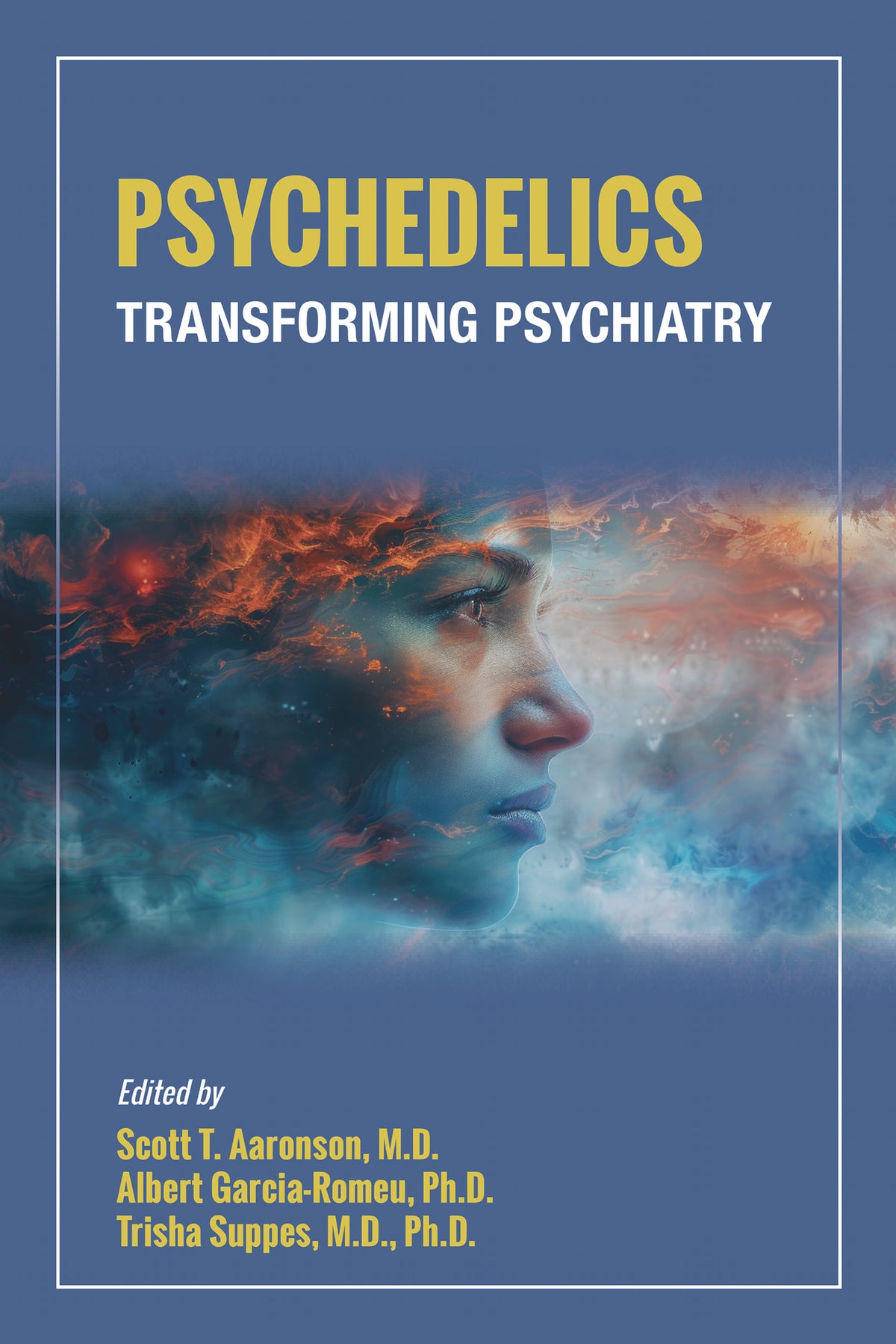
Few topics in psychiatry over the past few years have generated as much curiosity and excitement among clinicians and laypeople as the use of psychedelics. For mental health professionals, psychedelics offer an opportunity to expand existing treatment options and to explore new ones that have the potential to change neuroplasticity and neuroconnectivity. For patients, they offer the hope of relief from illnesses that have not responded adequately to traditional treatments.
When approaching the use of psychedelics in treatment, it is important to separate science from sensationalism. Expert-vetted and rigorously researched, Psychedelics: Transforming Psychiatry delivers an authoritative review of the current knowledge and evidence for the use of psychedelics in practice. Organized into three parts, this volume covers
• The history of psychedelic research and treatment, as well as the pharmacological and neurobiological mechanisms that underpin how these substances work
• Clinical applications for targeted illnesses that include mood disorders, PTSD, OCD and anxiety disorders, and substance use disorders
• Precautions and risks when using psychedelics, the role of psychotherapy when leveraging these substances, and potential future uses
The contributions from an international panel of recognized experts are enriched throughout the text by key clinical takeaways, data tables, and extensive references. This is a thoughtful and informative review of the current, rapidly developing landscape surrounding psychedelics in medicine.


Scott T. Aaronson, M.D., is the Chief Science Officer of the Institute for Advanced Diagnostics and Therapeutics at Sheppard Pratt in Towson and an Adjunct Professor in the Department of Psychiatry at the University of Maryland School of Medicine in Baltimore, Maryland.
Albert Garcia-Romeu, Ph.D., is an Associate Professor of Psychiatry and Behavioral Sciences at the Johns Hopkins School of Medicine and the Associate Director of the Johns Hopkins Center for Psychedelic and Consciousness Research in Baltimore, Maryland.
Trisha Suppes, M.D., Ph.D., is Director of Exploratory Therapeutics for Mood Disorders and Founder of the Bipolar and Depression Research Program in the VA Palo Alto Health Care System in Palo Alto, and Professor in the Department of Psychiatry and Behavioral Sciences at Stanford University School of Medicine in Stanford, California.
Introduction
Part I: Context, History, and Biological Underpinnings of Psychedelic Treatment
Chapter 1. Psychedelic Research and Treatment: Brief History of a Key Pioneer
Chapter 2. Pharmacological and Neurobiological Mechanisms of Action of Psychedelic substances
Part II: Illness Targets for Psychedelic Research and Treatment
Chapter 3. The Illness Targets: Mood Disorders and Suicide
Chapter 4. MDMA-Assisted Therapy for Treatment of PTSD
Chapter 5. Psychedelic Treatment of OCD and Anxiety Disorders: Early Work
Chapter 6. Psychedelics in the Treatment of Substance Use Disorders
Chapter 7. The Therapeutic Use of Psychedelics in the Treatment of Psycho-Existential Distress in Palliative and End-of-Life Care
Chapter 8. Psychedelic Treatment for Emerging Indications: Eating Disorders, Autism, and Chronic Pain Management
Part III: Considerations for Implementing Psychedelic Treatment
Chapter 9. Psychedelics and Well-Being: Enhancements and Risks
Chapter 10. The Psychedelic Therapy Treatment Process
Chapter 11. The Future of Psychedelics in Psychiatry