





Some error occured while loading the Quick View. Please close the Quick View and try reloading the page.
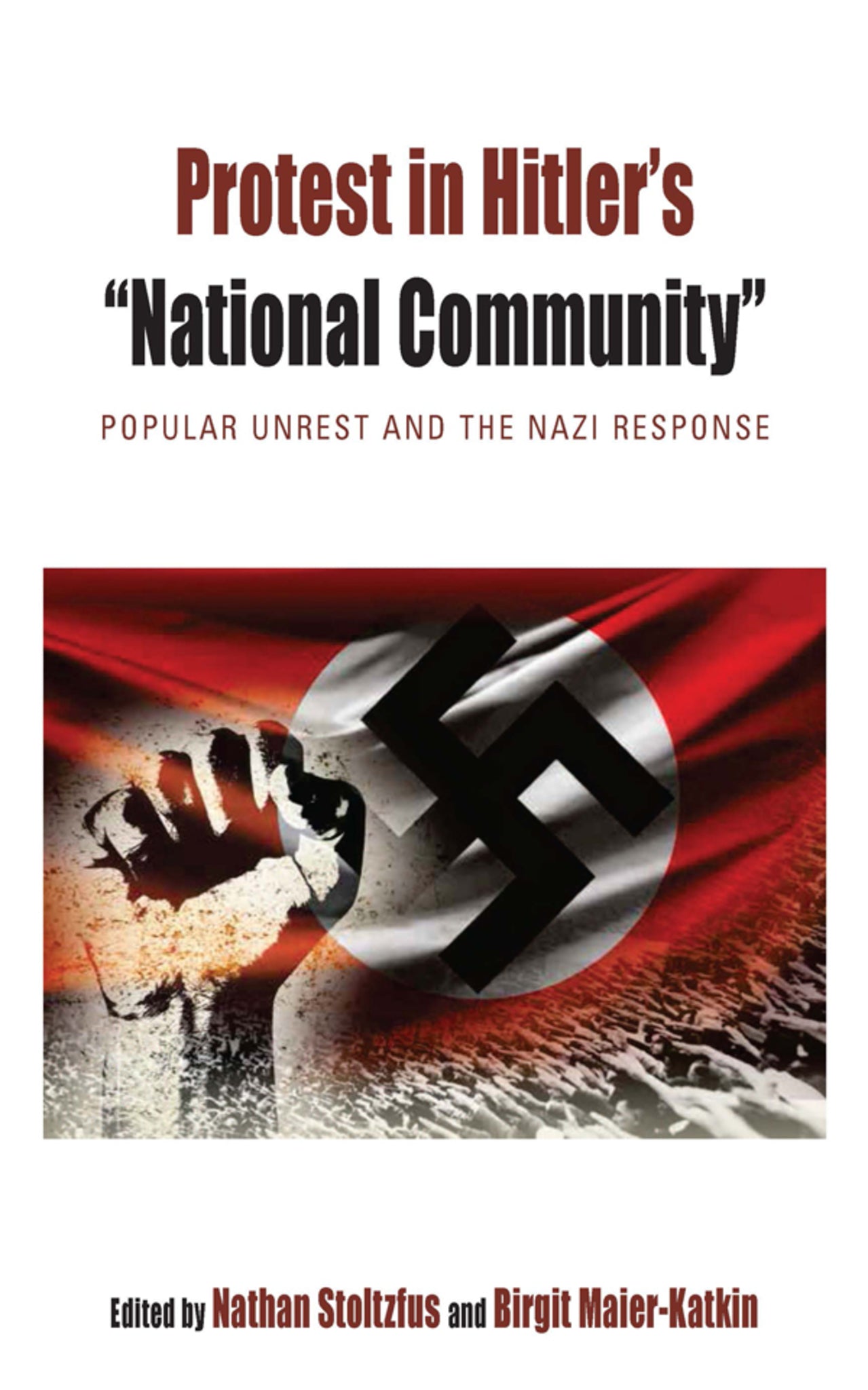
That Hitler’s Gestapo harshly suppressed any signs of opposition inside the Third Reich is a common misconception. This book presents studies of public dissent that prove this was not always the case. It examines circumstances under which “racial” Germans were motivated to protest, as well as the conditions determining the regime’s response. Workers, women, and religious groups all convinced the Nazis to appease rather than repress “racial” Germans. Expressions of discontent actually increased during the war, and Hitler remained willing to compromise in governing the German Volk as long as he thought the Reich could salvage victory.


“The volume’s merit lies not only in the empirical clarification of the Rosenstraße controversy but also in drawing new attention to public forms of opposition during the Nazi regime, whereas research has mainly concentrated on consent and cooperation in the last years…[It will inspire work on confessional milieus, contributing to a more differentiated categorization of resistance and opposition on the one side and consent and cooperation on the other – or rather on the interminglement of the two.” • Journal of Contemporary History
“This is a solid book and a welcome addition to the literature. It should find a place on the reading lists of any course dealing with dictatorships, totalitarianism, or twentieth-century German history.” • HISTORY: Reviews of New Books
“Protest in Hitler's National Community: Popular Unrest and the Nazi Response is comprised of nine erudite and instructive articles that are impressively written works of seminal scholarship… [It] is strongly recommended for academic library 20th-Century German History reference collections in general, and Nazi History supplemental studies reading lists in particular.” • Midwest Book Review
“This collection represents a very useful introduction to, as well as historiographical stock-taking of, the field of protest, resistance and acquiescence in the Third Reich. I find the writing to be engaging and very well-suited to an advanced lay audience or informed undergraduate audience.” • Richard Steigmann-Gall, Kent State University
List of Illustrations
Preface
Introduction: Nazi Responses to Popular Protest in the Reich
Nathan Stoltzfus
Chapter 1. Aspects of German Procedures in the Holocaust
Gerhard L. Weinberg
Chapter 2. Women and Protest in Wartime Nazi Germany
Jill Stephenson
Chapter 3. The Demonstrations in Support of the Evangelical Land Bishop Hans Meiser: a Successful Protest against the Nazi Regime?
Christiane Kuller
Chapter 4. The Catholic Church, Bishop von Galen and ‘Euthanasia’
Winfried Süß
Chapter 5. The Possibilities of Protest in the Third Reich: The Witten Demonstration in Context
Julie Torrie
Chapter 6. The ‘Legend’ of Women’s Resistance in the Rosenstrasse
Katharina von Kellenbach
Chapter 7. Auschwitz, the 'Fabrik-Aktion', Rosenstrasse: A Plea for a Change of Perspective
Joachim Neander
Chapter 8. The 1943 Rosenstrasse Protest and the Churches
Antonia Leugers
Chapter 9. Protest and Aftermath: Popular Protest in Nazi German History
Nathan Stoltzfus
Afterword: Protest and Resistance
David Clay Large
APPENDIX: TRANSLATED DOCUMENTS
Appendix I: The Situation of the "Mischlinge" in Germany, Mid-March 1943, by Gerhard Lehfeldt
Appendix II: Decree Regarding the Removal of Jews from Frankfurt/Oder Factories, February 25, 1943
Appendix III: April 1, 1943 OSS document identifying Protest in Berlin with the Interruption of Deportation of Jews
Appendix IV: Translated Excerpts from the Diaries of Joseph Goebbels, Die Tagebücher von Joseph Goebbels, ed. Elke Frölich (Munich: K.G. Saur)
Appendix V: Excerpts from testimonies of women who protested for their Jewish husbands in response to a request from the Berlin Bureau of Reparations, 1955.
Appendix VI: Excerpts of Individual Sections and Paragraphs from Legal Texts and Ordinances (1933-1941)
Appendix VII: RSHA Guidelines for Deportation to Auschwitz, Berlin, February 20, 1943
Appendix VIII: Documents of the SS at Auschwitz from early March 1943 indicating their “pull” for workers from Berlin and their expectation that more working Jews (intermarried) would be sent from Berlin
Appendix IX: Documents in response to the Witten Protest and from 1944 indicating Hitler’s continuing refusal to use force against “racial” civilians who refused to follow regime guidelines for evacuating bombed areas.
Appendix X: Excerpts from the recent German press representing controversies about public protest by ordinary Germans in the Third Reich.
Select Bibliography
Index