





Some error occured while loading the Quick View. Please close the Quick View and try reloading the page.
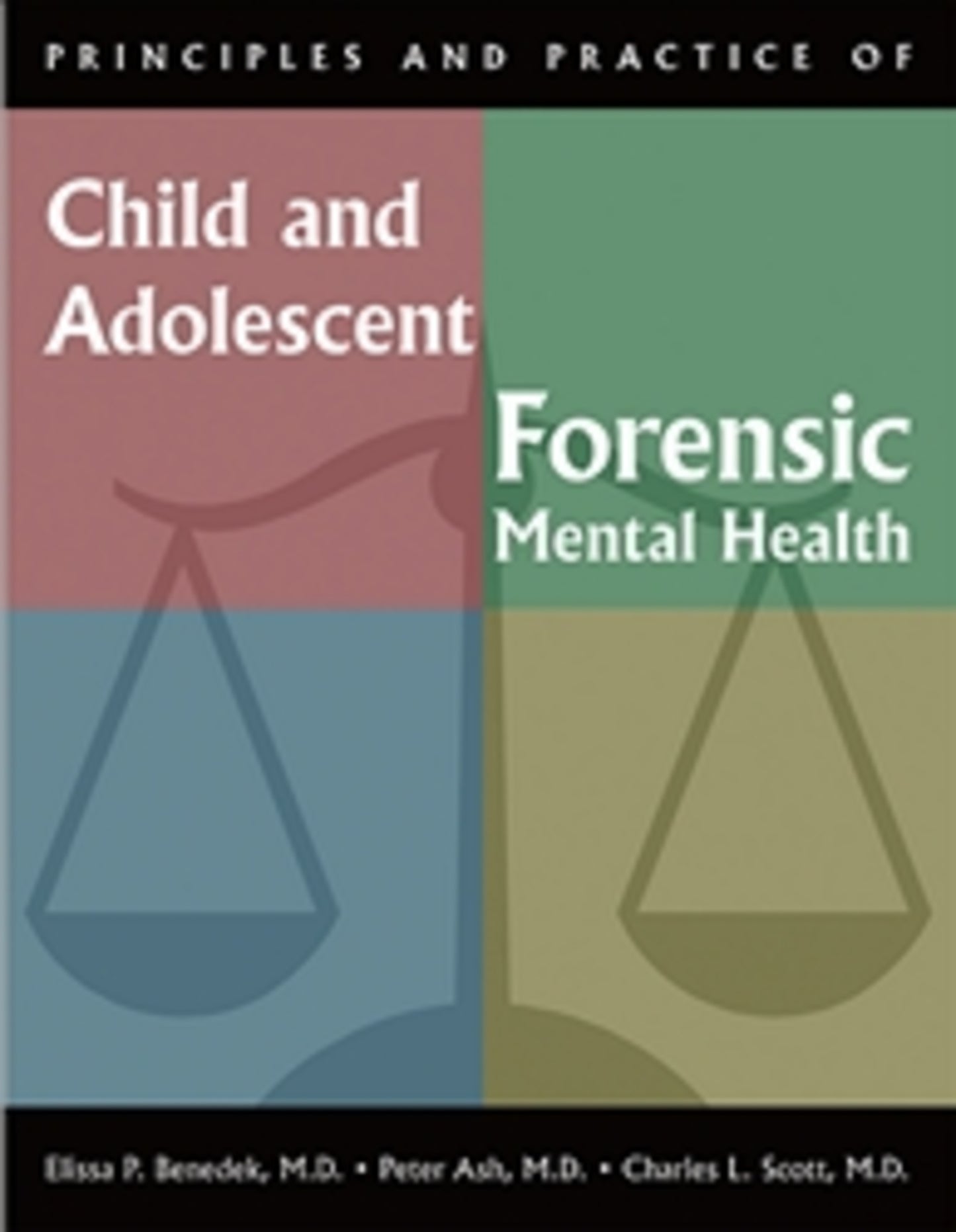
When care of younger patients raises thorny legal questions, you need answers you can trust: that's why this book belongs on every clinician's reference shelf. Principles and Practice of Child and Adolescent Forensic Mental Health is a timely and authoritative source that covers issues ranging from child custody to litigation concerns as it walks clinicians through the often-confusing field of depositions and courtroom testimony.
The book expands on the 2002 volume Principles
and Practice of Child and Adolescent Forensic Psychiatry winner of
the 2003 Manfred S. Guttmacher Award, to meet pressing twenty-first-century
concerns, from telepsychiatry to the Internet, while continuing to cover
basic issues, such as forensic evaluation, psychological screening, and the
interviewing of children for suspected sexual abuse, that are important to
both new and experienced practitioners. Many of its chapters have been
entirely rewritten by new authors to provide fresh insight into such topics
as child custody; juvenile law; abuse, neglect, and permanent wardship
cases; transcultural, transracial, and gay/lesbian parenting and adoption;
and the reliability and suggestibility of children's statements. It also
includes significant material not found in the previous volume:
• Two chapters on special education offer an introduction to screening
instruments and help practitioners determine a child's potential need for
special education programs and services.
• A chapter on cultural
competence helps readers improve the accuracy and responsiveness of forensic
evaluations and minimize the chance of an unjust outcome resulting from
misguided expert opinion.
• The section on youth violence features three
new chapters—Taxonomy and Neurobiology of Aggression, Prevention of School
Violence, and Juvenile Stalkers—plus a newly written chapter on assessment
of violence risk, offering guidance on how to confront problems such as
bullying and initiate effective family interventions.
• A chapter on
psychiatric malpractice and professional liability addresses these legal
concerns with an eye toward cases involving minors.
• A chapter on
psychological autopsy covers evaluation of the circumstances surrounding
pediatric suicides, describing various types of equivocal deaths and
discussing legal issues such as admissibility of the autopsy in court.
•
A newly written chapter on the Internet expands the previous book's focus on
child pornography to help practitioners deal with issues ranging from online
threats to emotional and legal consequences of interactions in cyberspace.
This is a valuable reference not only for practitioners in psychiatry and the mental health field but also for attorneys and judges. It opens up a field that may be too often avoided and helps professionals make their way through legal thickets with confidence.


This is a truly comprehensive work, beautifully organized and well referenced, that really does cover the "principles and practice" of its topic.
— William H. Reid, M.D., MPH
In general, the book does a tremendous job of summarizing
the current literature, reviewing pertinent case law, and then applying this
to the topics.
The editors have tremendous expertise in child and
adolescent forensic psychiatry With the many changes in the juvenile justice
system and other areas of child and adolescent forensic mental health, it is
certainly worthwhile to replace the first edition.
— Louis J. Kraus, M.D.
Elissa P. Benedek, M.D., is Adjunct Clinical Professor of Psychiatry at the University of Michigan Medical School in Ann Arbor.
Peter Ash, M.D., is Chief, Child and Adolescent Psychiatry; Director, Psychiatry and Law Service; and Associate Professor in the Department of Psychiatry and Behavioral Sciences at the Emory University School of Medicine in Atlanta, Georgia.
Charles L. Scott, M.D., is Chief, Division of Psychiatry and the Law, and Professor of Clinical Psychiatry, Department of Psychiatry and Behavioral Sciences, at the University of California–Davis School of Medicine.
Contributors
Preface
Acknowledgments
PART I:
Basics
Chapter 1. Introduction to the Legal System
Chapter 2. Ethics
of Child and Adolescent Forensic Psychiatry
Chapter 3. Introduction to
Forensic Evaluations
Chapter 4. Testifying: The Expert Witness in
Court
Chapter 5. Special Education: Screening Tools, Rating Scales, and
Self-Report Instruments
Chapter 6. Psychological Testing in Child and
Adolescent Forensic Evaluations
Chapter 7. Forensic
Telepsychiatry
Chapter 8. Cultural Competence in Child and Adolescent
Forensic Mental Health
PART II: Legal Regulation of Practice
Chapter
9. Legal Issues in the Treatment of Minors
Chapter 10. Legal Aspects of
Intellectual Disability
PART III: Child Custody
Chapter 11. Child
Custody Evaluation
Chapter 12. Parenting Assessment in Abuse, Neglect,
and Permanent Wardship Cases
Chapter 13. Children in Foster
Care
Chapter 14. Adoption
Chapter 15. Special Issues in
Transcultural, Transracial, and Gay and Lesbian Parenting and
Adoption
PART IV: Child Abuse
Chapter 16. Reliability and
Suggestibility of Children's Statements: From Science to
Practice
Chapter 17. Interviewing Children for Suspected Sexual
Abuse
Chapter 18. Forensic Issues in Munchausen by Proxy
Chapter 19.
Forensic Issues and the Internet
PART V: Youth Violence
Chapter 20.
Taxonomy and Neurobiology of Aggression
Chapter 21. Assessing Violence
Risk in Youth
Chapter 22. Prevention of Youth Violence
Chapter 23.
Prevention of School Violence
Chapter 24. Juvenile Stalkers
PART VI:
Juvenile Offenders
Chapter 25. Overview of Juvenile Law
Chapter 26.
Juvenile Waiver and State-of-Mind Assessments
Chapter 27. Assessment and
Treatment of Juvenile Offenders
Chapter 28. Sexually Aggressive
Youth
PART VII: Civil Litigation
Chapter 29. Civil Litigation and
Psychic Trauma
Chapter 30. Malpractice and Professional
Liability
Chapter 31. Psychological Autopsy in Children and
Adolescents
Chapter 32. Evaluations for Special Education
Chapter
33. Clinical and Forensic Aspects of Sexual Harassment in School-Age
Children and Adolescents
Index