





Some error occured while loading the Quick View. Please close the Quick View and try reloading the page.
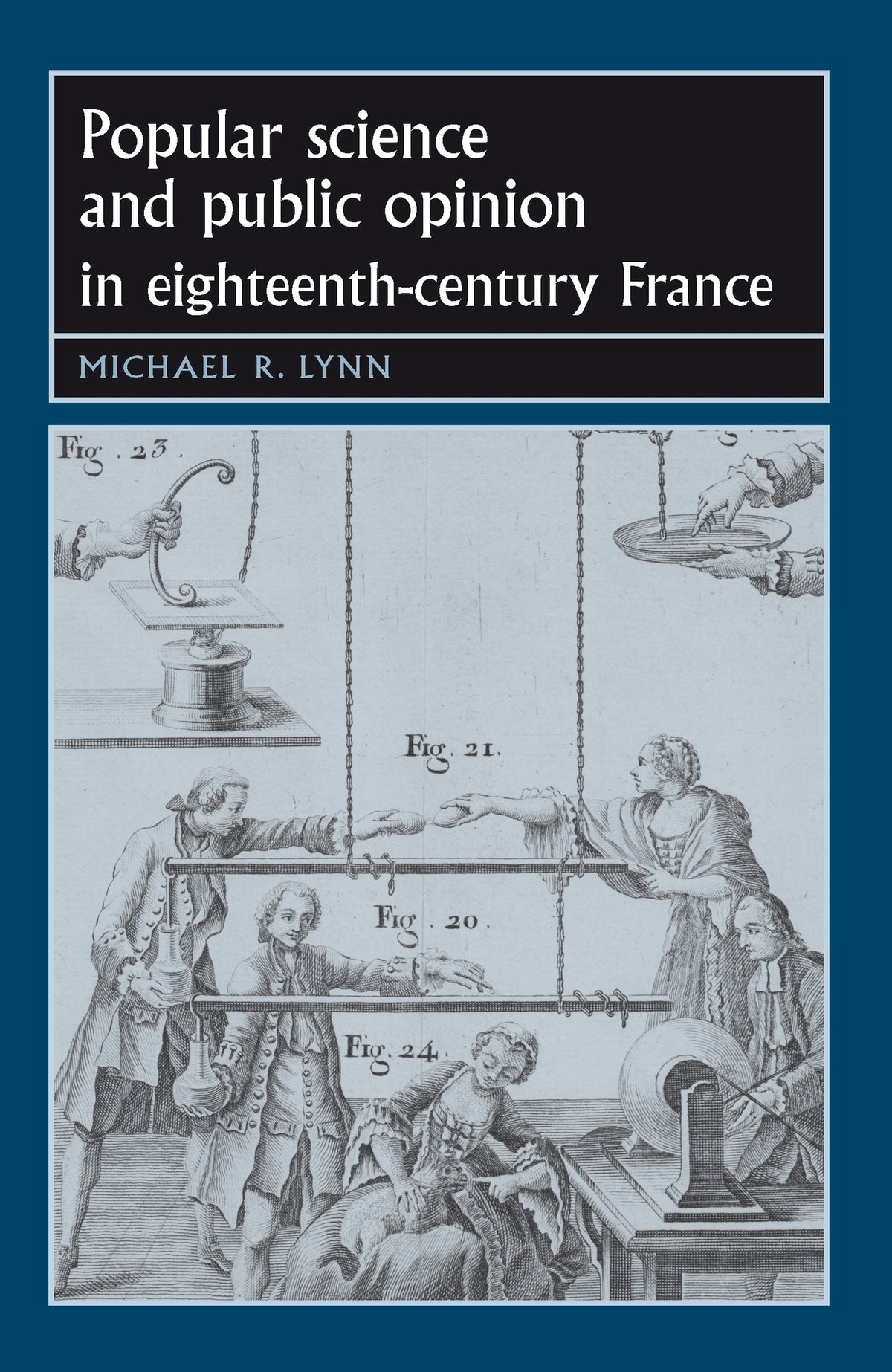
Now available in paperback, Michael R. Lynn's book analyses the popularisation of science in Enlightenment France. He examines the content of popular science, the methods of dissemination, the status of the popularisers and the audience, and the settings for dissemination and appropriation. Lynn introduces individuals like Jean-Antoine Nollet, who made a career out of applying electric shocks to people, and Perrin, who used his talented dog to lure customers to his physics show. He also examines scientifically oriented clubs like Jean-François Pilâtre de Rozier’s Musée de Monsieur which provided locations for people interested in science. Phenomena such as divining rods, used to find water and ores as well as to solve crimes; and balloons, the most spectacular of all types of popular science, demonstrate how people made use of their new knowledge.
Lynn’s study provides a clearer understanding of the role played by science in the Republic of Letters and the participation of the general population in the formation of public opinion on scientific matters.


Available in paperback for the first time
1. Introduction
2. The practice of popularization
3. The audience, economics and geography of popular science
4. Institutions of popular science
5. Divining rods and public opinion
6. Balloons and mass science
7. Conclusion
Bibliography
Index