





Some error occured while loading the Quick View. Please close the Quick View and try reloading the page.
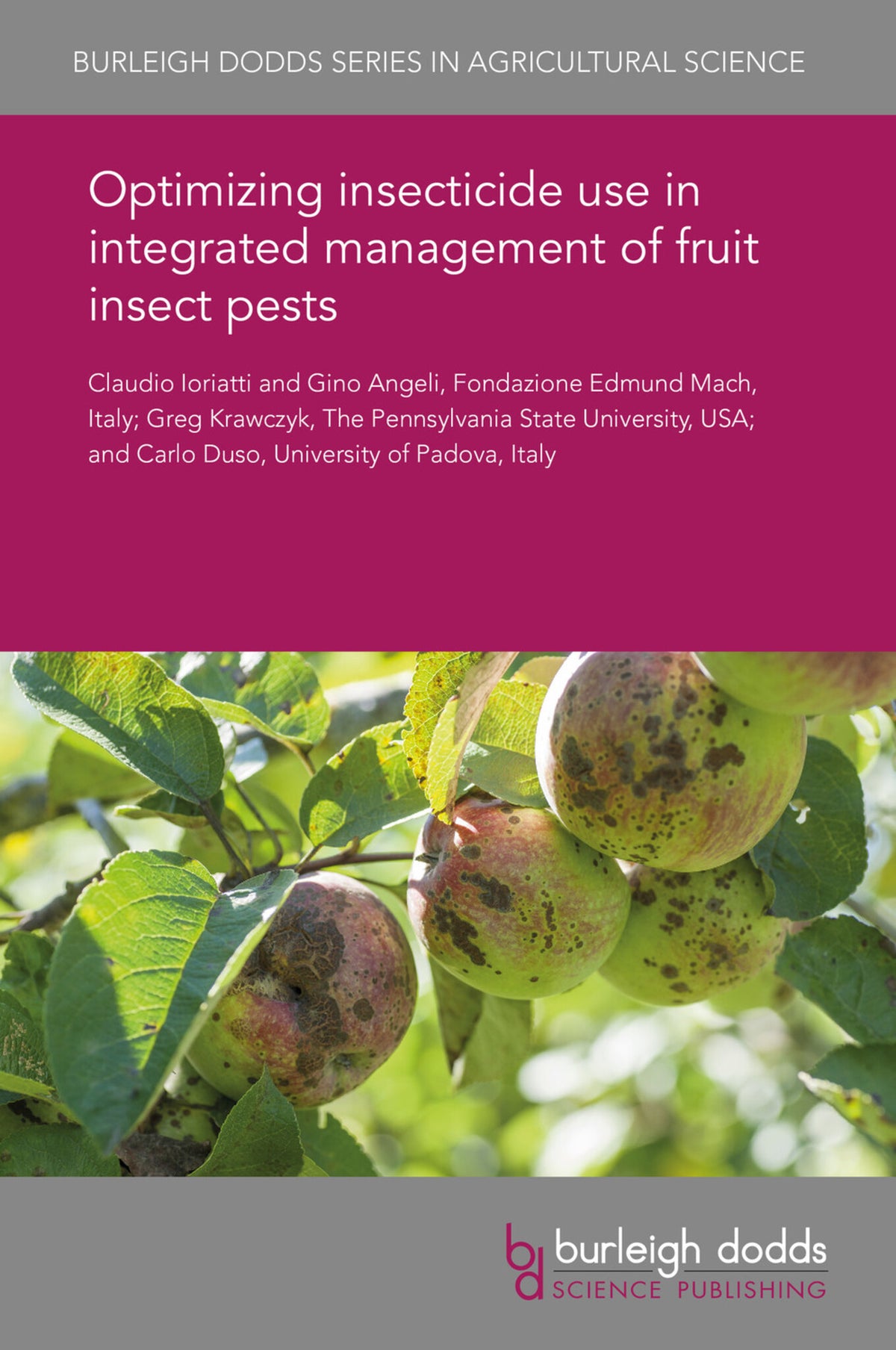
The integrated pest management approach was conceived to reduce grower reliance on pesticides by combining and optimizing pesticide use with biological, physical and agronomical control tools. Natural enemies are an essential component of the agroecosystem and play a valuable role in controlling insect pests in fruit orchards. Growers need to understand how to protect them from harmful agronomic practices and how these natural allies could be integrated with other control tools. This chapter describes old and new monitoring tools, robust monitoring protocols available for estimating abundance of pest and beneficial insects, use of available phenology models to predict crucial future events important for pest management (e.g. the use of precise timing for surveillance) and pest control. The chapter includes three detailed case studies of common fruit pests as examples of how optimization of insecticide applications could be implemented within a framework of an integrated management of fruit insect pests. Finally, the chapter looks ahead to future research trends in this area.

Price: £25.00
Publisher: Burleigh Dodds Science Publishing
Imprint: Burleigh Dodds Science Publishing
Series: Burleigh Dodds Series in Agricultural Science
Publication Date:
09 September 2019
ISBN: 9781838799175
Format: eBook
BISACs:

1 Introduction 2 Optimizing insecticide use in IPM 3 Case study 1: woolly apple aphid 4 Case study 2: pear psylla 5 Case study 3: European red spider mite 6 Future trends and conclusion 7 Where to look for further information 8 References