





Some error occured while loading the Quick View. Please close the Quick View and try reloading the page.
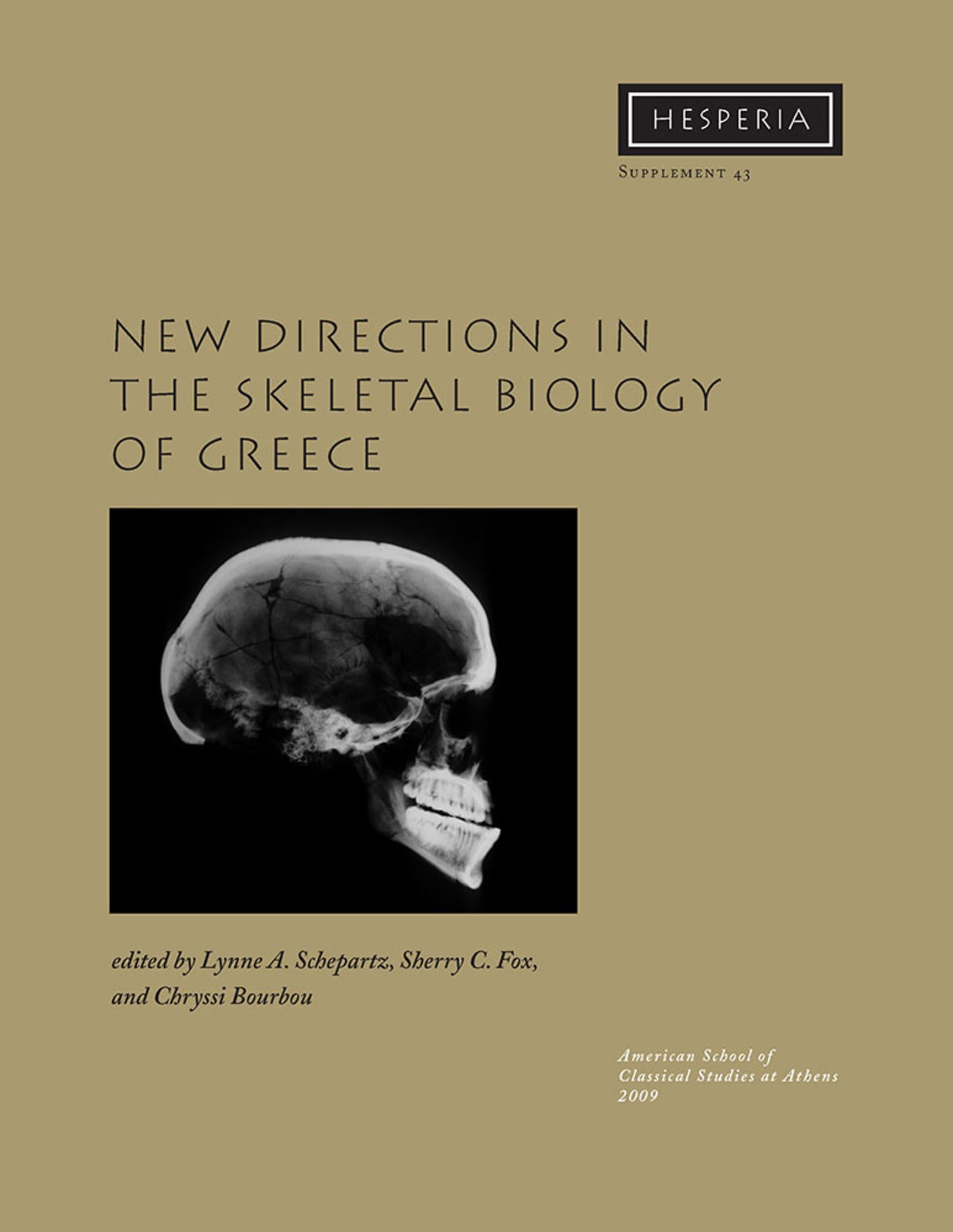
Physical anthropology, the study of human skeletal remains, has assumed an increasingly important role in the archaeology of Greece over the past 30 years, both in the field and in interpretive research. In addition to including stimulating case studies, ranging in date from the Palaeolithic to modern periods, the 17 chapters in this book provide an overview of bioarchaeological research across Greece and Cyprus. The volume is the first in a series of monographs from the Wiener Laboratory at the ASCSA that demonstrates the impact of archaeological science on Mediterranean archaeology.

Price: £60.00
Pages: 304
Publisher: American School of Classical Studies at Athens
Imprint: American School of Classical Studies at Athens
Series: Hesperia Supplement
Publication Date:
01 May 2009
ISBN: 9780876615430
Format: Paperback
BISACs:

Lynne A. Schepartz is Associate Professor of Anthropology at Florida State University.
Sherry C. Fox is Director of the Wiener Laboratory at the American School of Classical Studies at Athens.
Chryssi Bourbou is a bioarchaeologist at the 28th Ephoreia of Byzantine Antiquities.
Sherry C. Fox is Director of the Wiener Laboratory at the American School of Classical Studies at Athens.
Chryssi Bourbou is a bioarchaeologist at the 28th Ephoreia of Byzantine Antiquities.
Introduction (Lynne A. Schepartz, Sherry C. Fox, and Chryssi Bourbou); Bioarchaeological Approaches to Aegean Archaeology (Jane Buikstra and Anna Lagia); Petralona: Link Between Africa and Europe? (Katerina Harvati); "On This Wise Held They Funeral For Horse-Taming Hector": A Greek Incineration from the Louvre Museum Reflects Homeric Burial Ritual (Philippe Charlier); It Does Take a Brain Surgeon: A Successful Trepanation from Kavousi, Crete, and the Identification of Associated Surgical Instruments (Maria A. Liston and Leslie P. Day); The Malleable Body: Headshaping in Greece and the Surrounding Regions (Kirsi O. Lorentz); Skeletal Evidence for Militarism in Mycenaean Athens (Susan K. Smith); Patterns of Trauma in a Medieval Urban Population from Central Crete (Chryssi Bourbou); Patterns of Life and Death at the Site of Sourtara Galaniou Kozanis in Northern Greece (Chryssi Bourbou and Agathoniki Tsilipakou); The World's Largest Infant Cemetery and its Potential for Studying Growth and Development: The Notia Kylindra Site on the Island of Astypalaia in the Dodecanese (Simon Hillson); Differential Health and Status among the Mycenaeans of Messenia: The Status of Females at Pylos (Lynne A. Schepartz, Sari Miller-Antonio, and Joanne M.A. Murphy); Regional Differences in the Health Status of the Mycenaean Women of East Lokris (Carina Iezzi); Anthropological Research on a Byzantine Population from West Greece (Christina Papageorgopoulou and Nikolaos I. Xirotiris); Human Osteological Remains from Proskynas, Fthiotis: A Bioarchaeological Analysis (Anastasia Papathanasiou, Eleni Zachou, and Michael P. Richards); Isotope Paleodietary Analysis of Humans and Fauna from the Late Bronze Age Site of Voudeni (Eirini I. Petroutsa, Michael P. Richards, Lazaros Kolonas, and Sotiris K. Manolis); Population Mobility at Frankish and Ottoman Corinth: Evidence from Stable Oxygen Isotope Ratios of Tooth Enamel (Sandra J. Garvie-Lok); Porotic Hyperostosis in Neolithic Greece: New Evidence and Further Implications (Eleni Stravopodi, Sotiris K. Manolis, Stavros Kousoulakos, and Michael Schultz); The Application of Mt-Dna Analysis to the Investigation of Kinship from Skeletal Remains (Maria Georgiou, George D. Zouganelis, Chara Spiliopoulou and Antonis Koutselinis).