





Some error occured while loading the Quick View. Please close the Quick View and try reloading the page.
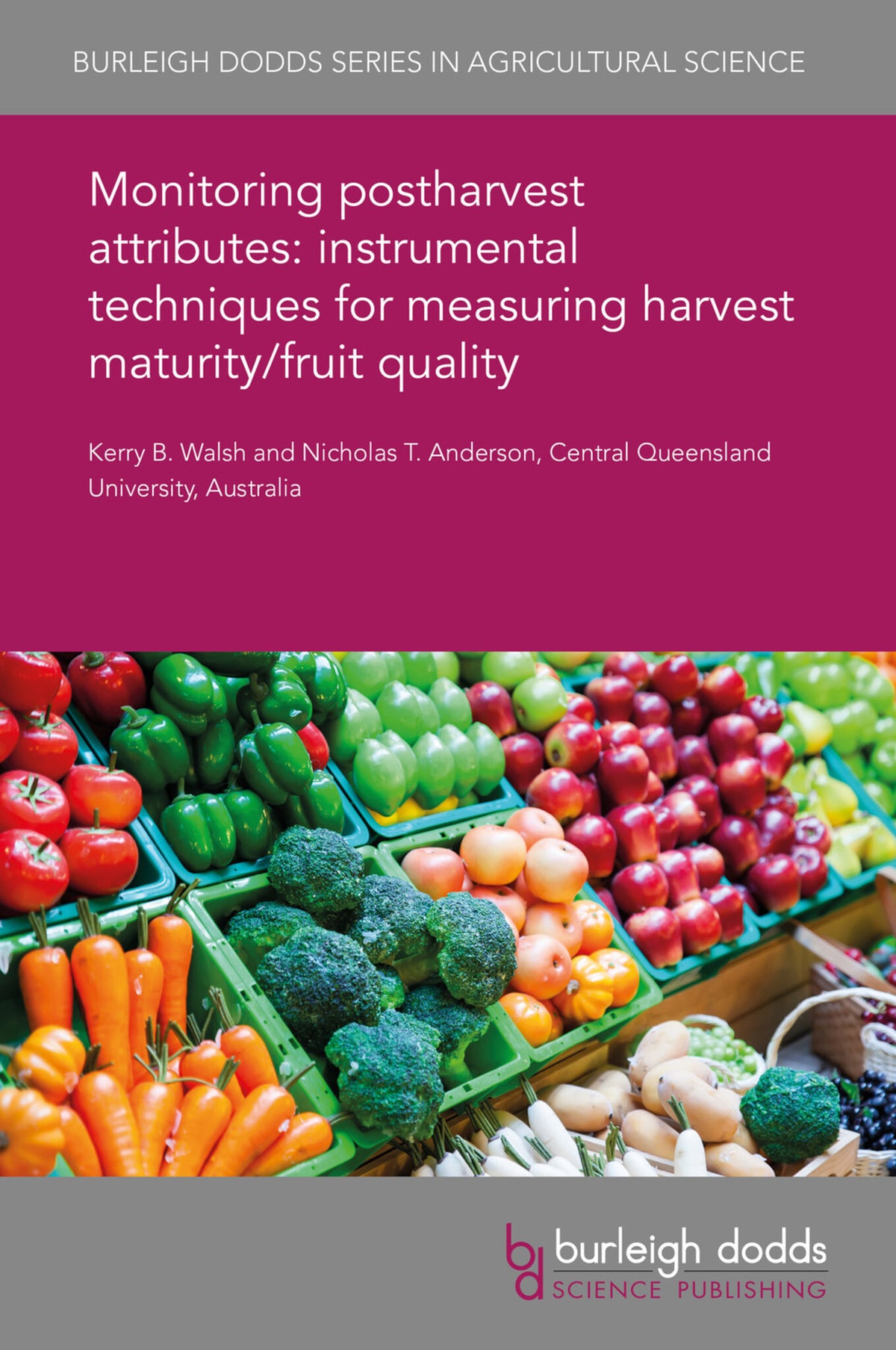
Measurement precedes management. In this chapter, measurement technologies relevant to postharvest management are reviewed, both in context of technologies in current industry use and those with apparent promise for future use. A brief description of these techniques is made in relation to their theory of operation, their limitations, and potential alternative methodologies. The use of these measurements technologies is discussed in a wider context, with attention given to fruit and vegetable specifications, the point within the value chain at which the various measurements can be made, sampling and sorting statistics, communication options for remote logging, and labelling options. This information should be of practical use to those working in postharvest chains as well as to students and researchers involved in postharvest measurements.

Price: £25.00
Publisher: Burleigh Dodds Science Publishing
Imprint: Burleigh Dodds Science Publishing
Series: Burleigh Dodds Series in Agricultural Science
Publication Date:
20 January 2020
ISBN: 9781838799977
Format: eBook
BISACs:

1 Introduction 2 Sampling strategies 3 Sorting statistics 4 Currently available technologies for the measurement of different attributes 5 Future technologies for the measurement of different attributes 6 Conclusion 7 Where to look for further information 8 References