





Some error occured while loading the Quick View. Please close the Quick View and try reloading the page.
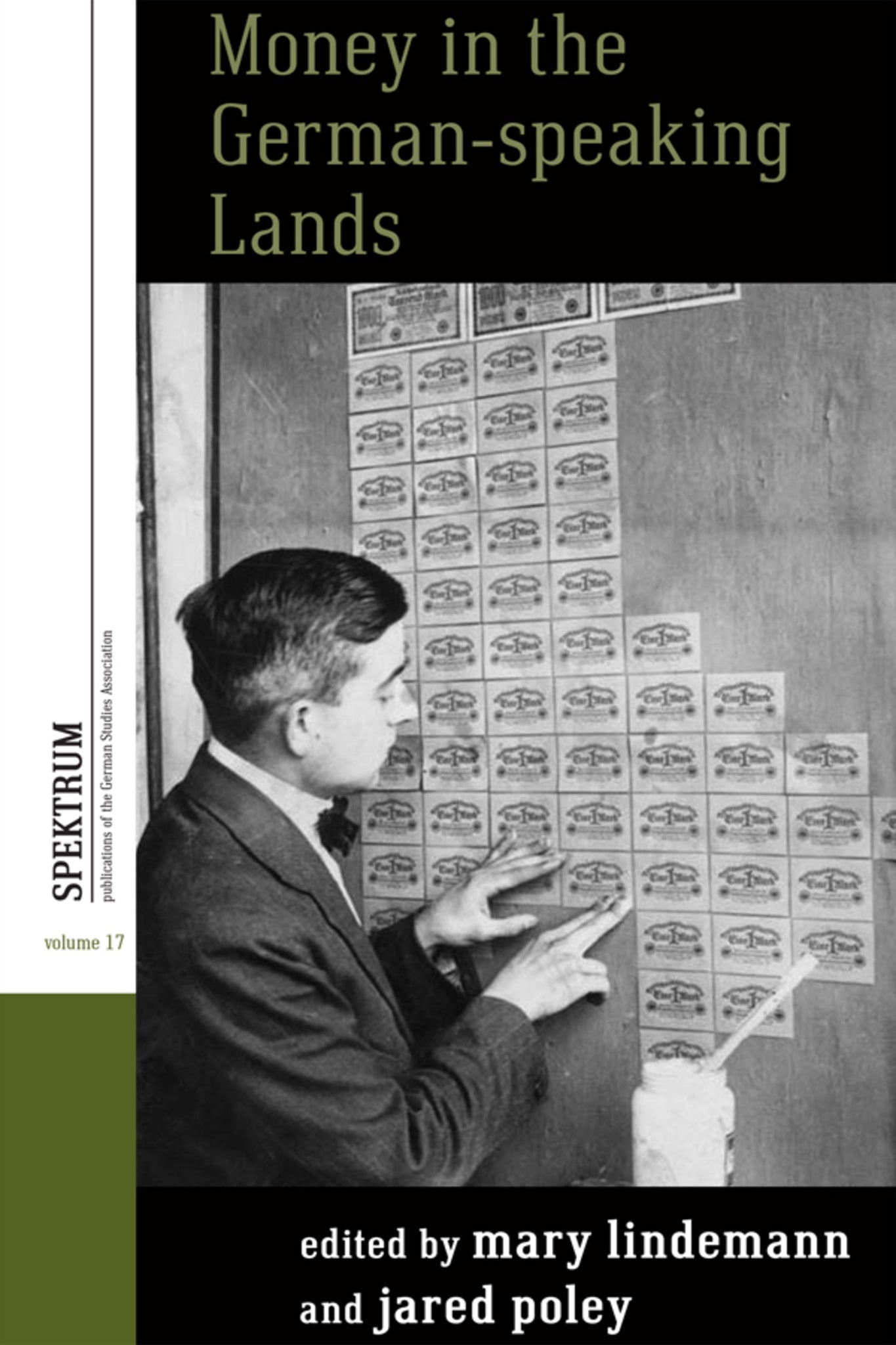
Money is more than just a medium of financial exchange: across time and place, it has performed all sorts of cultural, political, and social functions. This volume traces money in German-speaking Europe from the late Renaissance until the close of the twentieth century, exploring how people have used it and endowed it with multiple meanings. The fascinating studies gathered here collectively demonstrate money’s vast symbolic and practical significance, from its place in debates about religion and the natural world to its central role in statecraft and the formation of national identity.


“This volume, with the essays’ rich bibliographies, is an excellent resource for scholars and teachers of both undergraduates and graduate students who wish to engage in historical reflection on the issues [of money in German lands].” • German Studies Review
“This volume… offers much more than its narrowly framed title subject ‘money’ might imply… Although these essays range far and wide in pursuing German attitudes about wealth, there is also plenty of material here for readers interested in German economic and financial history.” • German History
“This fascinating collection of essays brings together empirical and theoretical case studies that are clear, accessible, and succinct. It also serves as an excellent primer on some of the most cutting-edge research on German history being undertaken by Anglophone scholars.” • Philipp Roessner, University of Manchester
List of Tables and Figures
Introduction
Mary Lindemann and Jared Poley
Chapter 1. Money from the Spirit World: Treasure Spirits, Geldmännchen, Drache
Johannes Dillinger
Chapter 2. Perfecting the State: Alchemy and Oeconomy as Academic Forms of Knowledge in Early Modern German-speaking Lands
Vera Keller
Chapter 3. The Money Tree: Living in the Shadow of a Patrician Family in Hamburg
Almut Spalding
Chapter 4. Silver Thaler and Ur-Cameralists
Andre Wakefield
Chapter 5. “All that glitters is not gold, but…”: German Responses to the Financial Bubbles of 1720
Eve Rosenhaft
Chapter 6. A Conspicuous Lack of Consumption: Money, Luxury, and Fashion in King Frederick William I’s Prussia (c. 1713-1740)
Benjamin Marschke
Chapter 7. “Alles Geld gehet immer auf”: Money in an Emerging Consumer and Cash Economy, Göppingen (1735-1860)
Dennis Frey, Jr.
Chapter 8. Status, Friendship, and Money in Hamburg around 1800: Debit and Credit in the Diaries of Ferdinand Beneke (1774-1848)
Frank Hatje
Chapter 9. Luxury and the Nineteenth-Century Württemberg Pietists
Jan Carsten Schnurr
Chapter 10. Marx on Money
Jonathan Sperber
Chapter 11. Modernism, Relativism, and the Philosophy of Money
Elizabeth S. Goodstein
Chapter 12. A Narrative in Notgeld: Collecting, Emergency Money, and National Identity in Weimar Germany
Erika L. Briesacher
Chapter 13. Predatory Speculators, Honest Creditors: Money as Root of Evil or Proof of Virtue in Weimar Germany
Michael L. Hughes
Chapter 14. Mobilizing Citizens and their Savings: Germany’s Public Savings Banks, 1933-1939
Pamela E. Swett
Chapter 15. “One Would Not Get Far Without Cigarettes”: The Cigarette Economy in Occupied Germany, 1945-1948
Kraig Larkin
Chapter 16. When the Deutsch Mark Was in Short Supply: Reconstruction Finance Between Currency Reform and “Economic Miracle"
Armin Grünbacher
Chapter 17. Between Memorialization and Monetary Re-Valuation: The 1990 Currency Union as a Site of Post-Unification Memory Work
Ursula M. Dalinghaus
Afterword: Simmel’s Berlin and Money as Social Consensus
Michael J. Sauter
Index