





Some error occured while loading the Quick View. Please close the Quick View and try reloading the page.
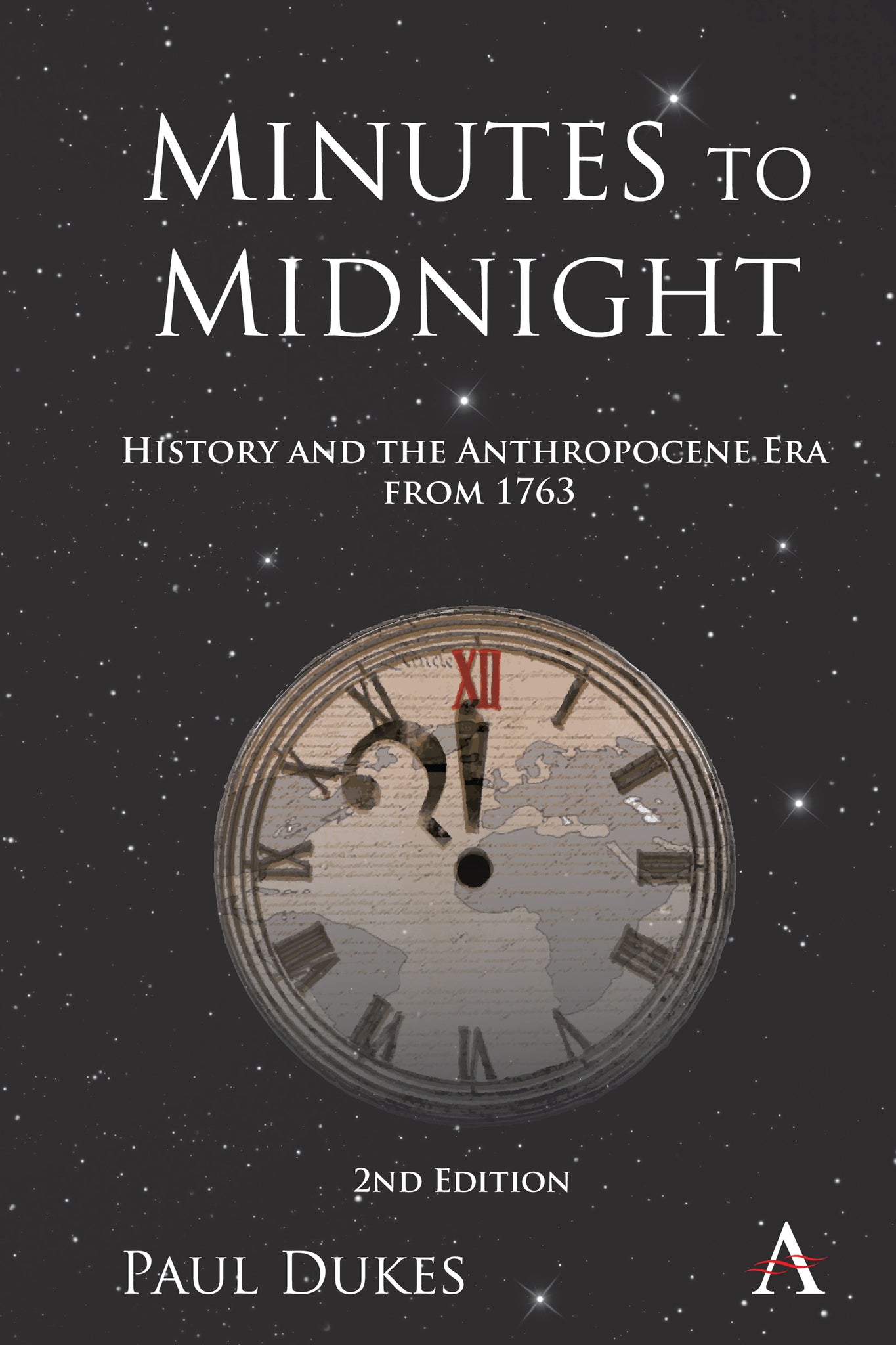
The book examines the evolution of the predicament symbolised by the setting of the Doomsday Clock at a few minutes to midnight in the context of the Anthropocene Era from 1763, making special reference to the study of history throughout the period. It seeks to demonstrate the necessity for history as science, pointing out the inadequacy of some previous approaches. It argues for a pandisciplinary approach to today’s crisis.


‘Minutes to Midnight’ is a profoundly erudite and original work, formidable in intellectual scope and bristling with insight. It should be essential reading for anyone who wants to understand the contemporary world and the role of history.' —Dr Murray Frame, University of Dundee
Preface to the Second Edition; Preface to the First Edition; 1. Introduction: Times and Approaches; 2. Enlightenment and Revolutions, 1763–815; 3. Nations and Isms, 1815–71; 4. Natural Selection, 1871–1921; 5. From Relativity to Totalitarianism, 1921–45; 6. Superpower, 1945–68; 7. Planet Earth, 1968–91; 8. The Anthropocene: Worlds Real and Virtual, 1991–2015; 9. Times and Departures: Conclusion; Notes; Index.