





Some error occured while loading the Quick View. Please close the Quick View and try reloading the page.
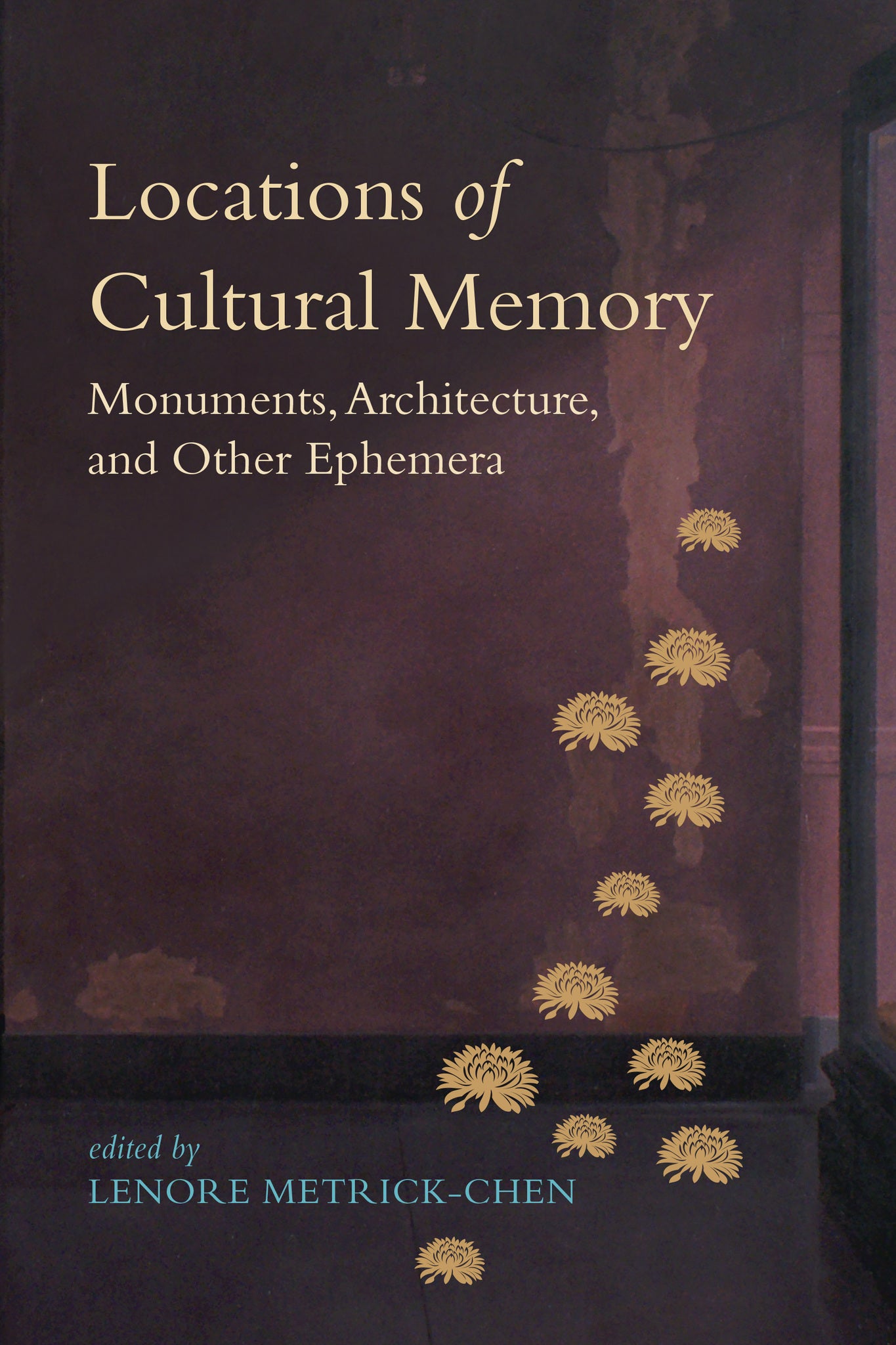
Demonstrates that cultural memory endures not in stone but in the living actions that continually reshape it.
Locations of Cultural Memory offers a comprehensive and incisive exploration of how societies and cultures both remember and forget. Drawing on global case studies and weaving together history, aesthetics, cultural studies, and sociology, this book is unique in revealing with critical acuity how and why monuments and architecture, often assumed to preserve cultural memory, instead prove to be fragile due to power shifts and changing contexts. In contrast, ephemeral practices—embodied actions and relationships—can transform personal memory into collective understanding, generating relational ties that extend beyond the individual and allowing personal memories and interpretations to coalesce into shared cultural memory. Bridging material and nonmaterial approaches, the volume's intention is to expand our idea of the monument and to reveal the magnitude of ethical concerns comprehended in representing and transmitting cultural memory.


"This ambitious collection seeks, through an eclectic and international array of case studies, to expand our 'idea of a monument.' In addition to examining tangible commemorative artifacts and their relationship to politics (especially colonialism and totalitarianism) and aesthetics, the book also treats monuments more metaphorically—as features of consciousness or even individual human beings. I know of no other collection on the theme of memorialization that theorizes quite so boldly in this direction." — Steven Trout, University of Alabama