





Some error occured while loading the Quick View. Please close the Quick View and try reloading the page.
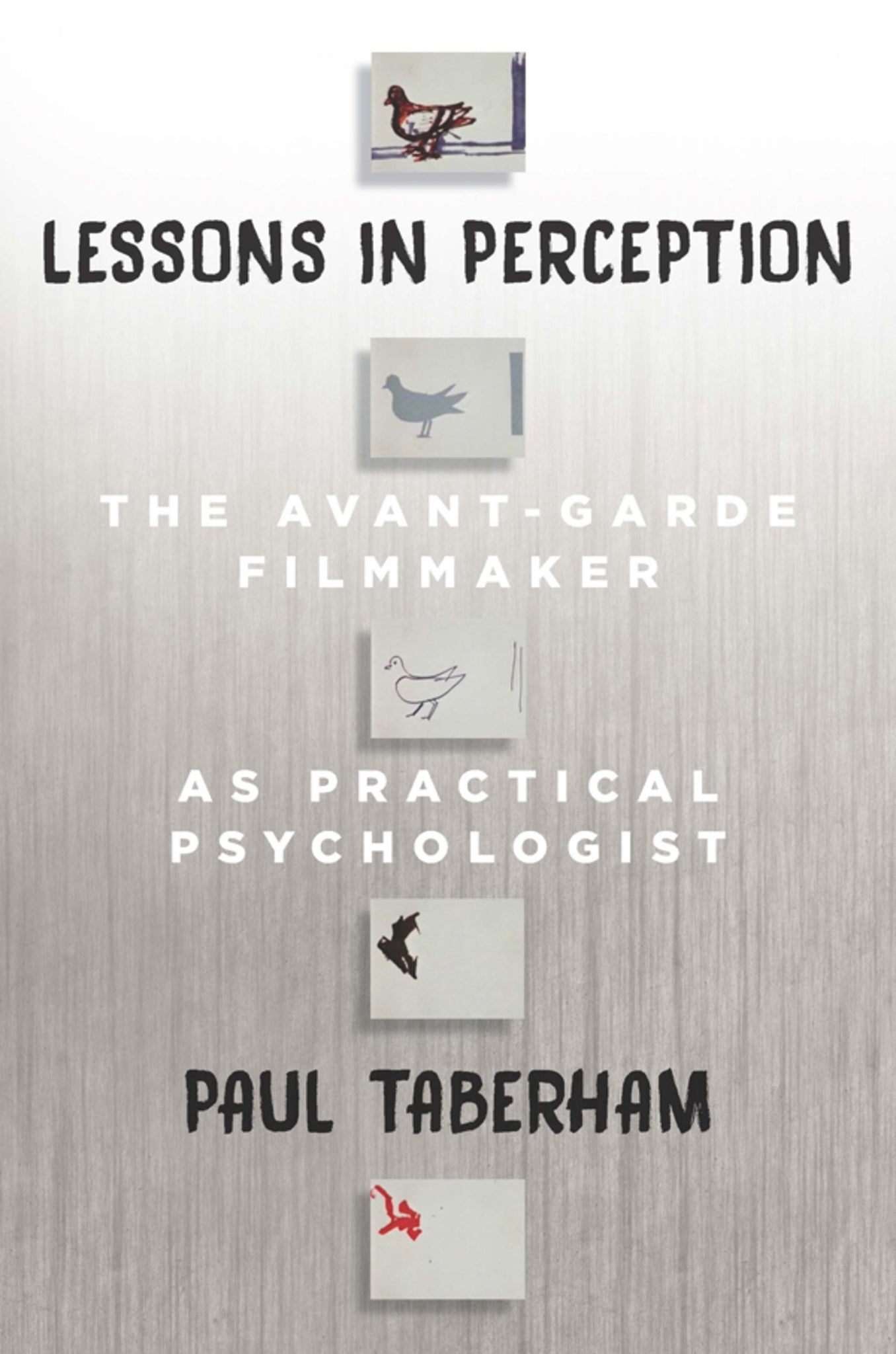
Narrative comprehension, memory, motion, depth perception, synesthesia, hallucination, and dreaming have long been objects of fascination for cognitive psychologists. They have also been among the most potent sources of creative inspiration for experimental filmmakers. Lessons in Perception melds film theory and cognitive science in a stimulating investigation of the work of iconic experimental artists such as Stan Brakhage, Robert Breer, Maya Deren, and Jordan Belson. In illustrating how avant-garde filmmakers draw from their own mental and perceptual capacities, author Paul Taberham offers a compelling account of how their works expand the spectator’s range of aesthetic sensitivities and open creative vistas uncharted by commercial cinema.


“This intense, compact book examines avant-garde and experimental film in an entirely new light…Armed with an authoritative grasp of the subject matter and aided by numerous frame grabs throughout the volume, Taberham …[offers] something new: an exploration into the psychological terrain of the cinematic avant-garde, demonstrating how it completely abrogates the conventions of commercial cinema…Highly Recommended.” • Choice
“The author’s desire to synthesize experimental artwork with psychology yields some fascinating insights and will hopefully inspire similar analyses of other avant-garde films.” • FilmInt
“…precisely constructed, and effortlessly written… a very teachable book. Taberham has written an accessible and brilliant text, which can foster interest and passion for theory in others. And in this sense, LIP makes for an ideal source for satisfying a variety of curricular purposes from film theory courses, to courses on the history and theory of avant-garde and experimental cinema, to methodologies of film analysis. LIP is not only, then, a solid, intriguingly uncommon, and welcome new work in cognitive film theory; it is also a versatile and flexible pedagogical tool, which could successfully enrich, if properly framed, students’ experiences in film studies.” • Projections
“This lucid, informative text allows readers to consider the ongoing relevance of—and perhaps the need for—avant-garde filmmaking in a world driven increasingly by the economic demands of mainstream spectacle.” • William Brown, University of Roehampton
List of Illustrations
Acknowledgements
PART I: COGNITION
Chapter 1. The Specter of Narrative
Chapter 2. Ghost Films of the Avant-Garde
PART II: VISUAL PERCEPTION
Chapter 3. Bottom Up Processing, Entoptic Vision and the Innocent Eye in the Films of Stan Brakhage
Chapter 4. Robert Breer and the Dialectic of Eye and Camera
PART III: AUDIO-VISUAL PERCEPTION
Chapter 5. Synaesthetic Film Reconsidered
Chapter 6. Three Dimensions of Visual Music