





Some error occured while loading the Quick View. Please close the Quick View and try reloading the page.
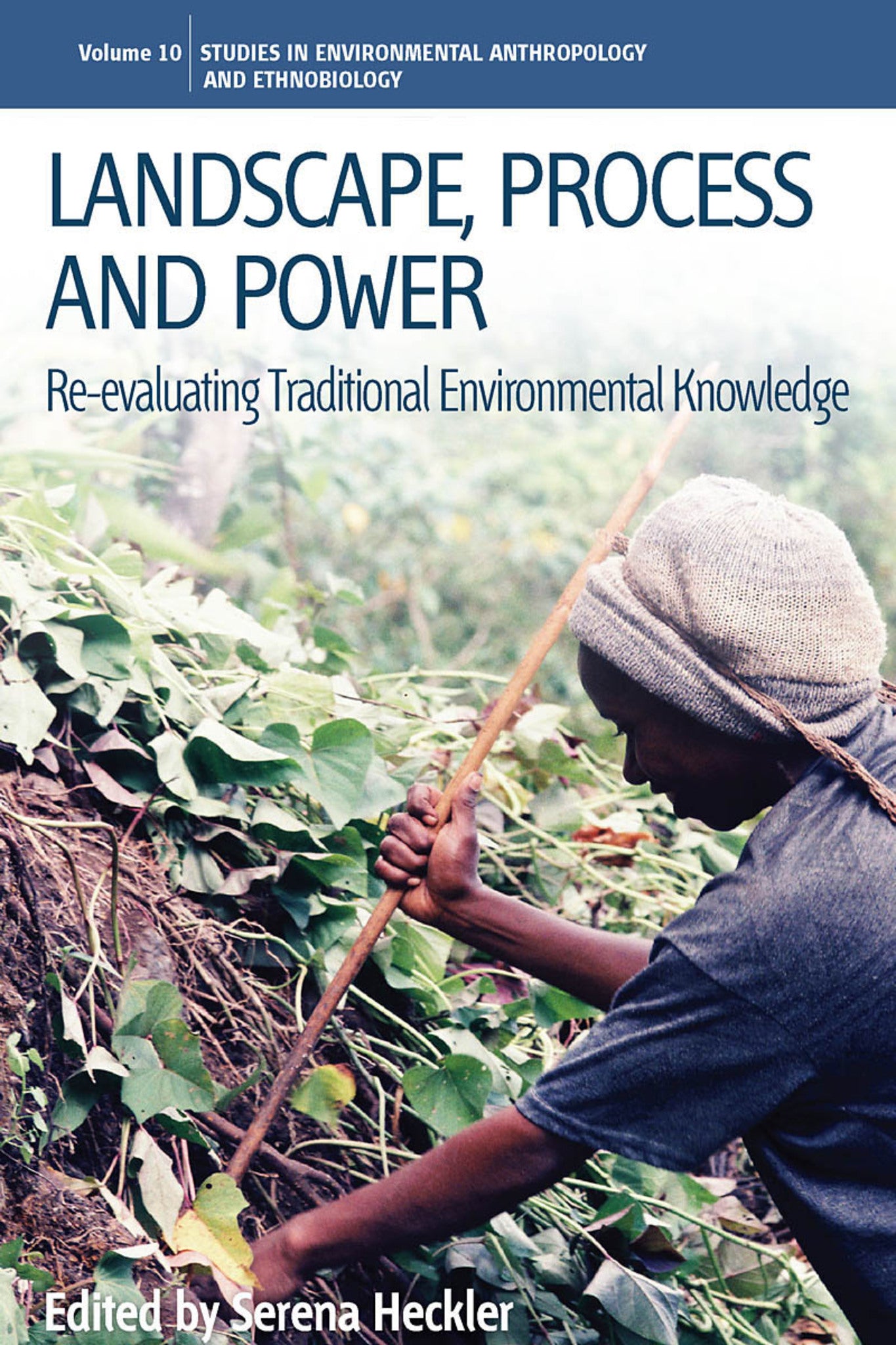
In recent years, the field of study variously called local, indigenous or traditional environmental knowledge (TEK) has experienced a crisis brought about by the questioning of some of its basic assumptions. This has included reassessing notions that scientific methods can accurately elicit and describe TEK or that incorporating it into development projects will improve the physical, social or economic well-being of marginalized peoples. The contributors to this volume argue that to accurately and appropriately describe TEK, the historical and political forces that have shaped it, as well as people’s day-to-day engagement with the landscape around them must be taken into account. TEK thus emerges, not as an easily translatable tool for development experts, but as a rich and complex element of contemporary lives that should be defined and managed by indigenous and local peoples themselves.


“…presents an excellent overview of the study of traditional environmental knowledge (TEK)and the directions in which it has evolved in recent years…Individually but especially together, the contributors of this volume do a fine job at providing a contextualized and fluid understanding of TEK…I have no hesitation in recommending this volume not only to anyone wishing to catch up on recent developments in TEK research, but also as a useful teaching resource in a range of anthropology courses.” · JRAI
“This volume succeeds in its purpose to dislodge enduring western notions of TEK [traditional environmental knowledge] as static and to firmly center it within an analytical framework of landscape, process, and power…The critical perspectives of the authors of this book would prompt lively discussion in the classroom, and the books grounding in ethnographic detail and applications are of interest to both research academics and practitioners.” · Ethnobiology Letters
List of figures, maps and tables
List of contributors
Preface
Roy Ellen
PART I: THE CURRENT STATE OF ENVIRONMENTAL KNOWLEDGE RESEARCH
Chapter 1. Introduction
Serena Heckler
Chapter 2. A genealogy of scientific representations of indigenous knowledge
Stanford Zent
PART II: ENVIRONMENTAL KNOWLEDGE AND POWER
Chapter 3. The cultural and economic globalisation of traditional environmental knowledge systems
Miguel Alexiades
Chapter 4. Competing and coexisting with cormorants: Ambiguity and change in European wetlands
David N. Carss and Mariella Marzano
Chapter 5. Pathways to developmen: Identity, landscape & industry in Papua New Guinea
Emma Gilberthorpe
PART III: PROCESS IN ENVIRONMENTAL KNOWLEDGE
Chapter 6. How do they see it? Traditional resource management, disturbance and biodiversity conservation in Papua New Guinea
William Thomas
Chapter 7. Wild plants as agricultural indicators: Linking Ethnobotany with traditional ecological knowledge
Takeshi Fujimoto
Chapter 8. How does migration affect ethnobotanical knowledge and social organisation in a west Papuan village?
Manuel Boissière
PART IV: LANDSCAPE AND ENVIRONMENTAL KNOWLEDGE
Chapter 9. Reproduction and development of expertise within communities of practice: A case study of fishing activities in south Buton
Daniel Vermonden
Chapter 10. Review of an attempt to apply the carrying capacity concept in the New Guinea highlands: Cultural practice disconcerts ecological expectation
Paul Sillitoe
Chapter 11. Managing the Gabra Oromo commons of Kenya, past and present
Aneesa Kassam and Francis Chachu Ganya
Notes on contributors
Index