





Some error occured while loading the Quick View. Please close the Quick View and try reloading the page.
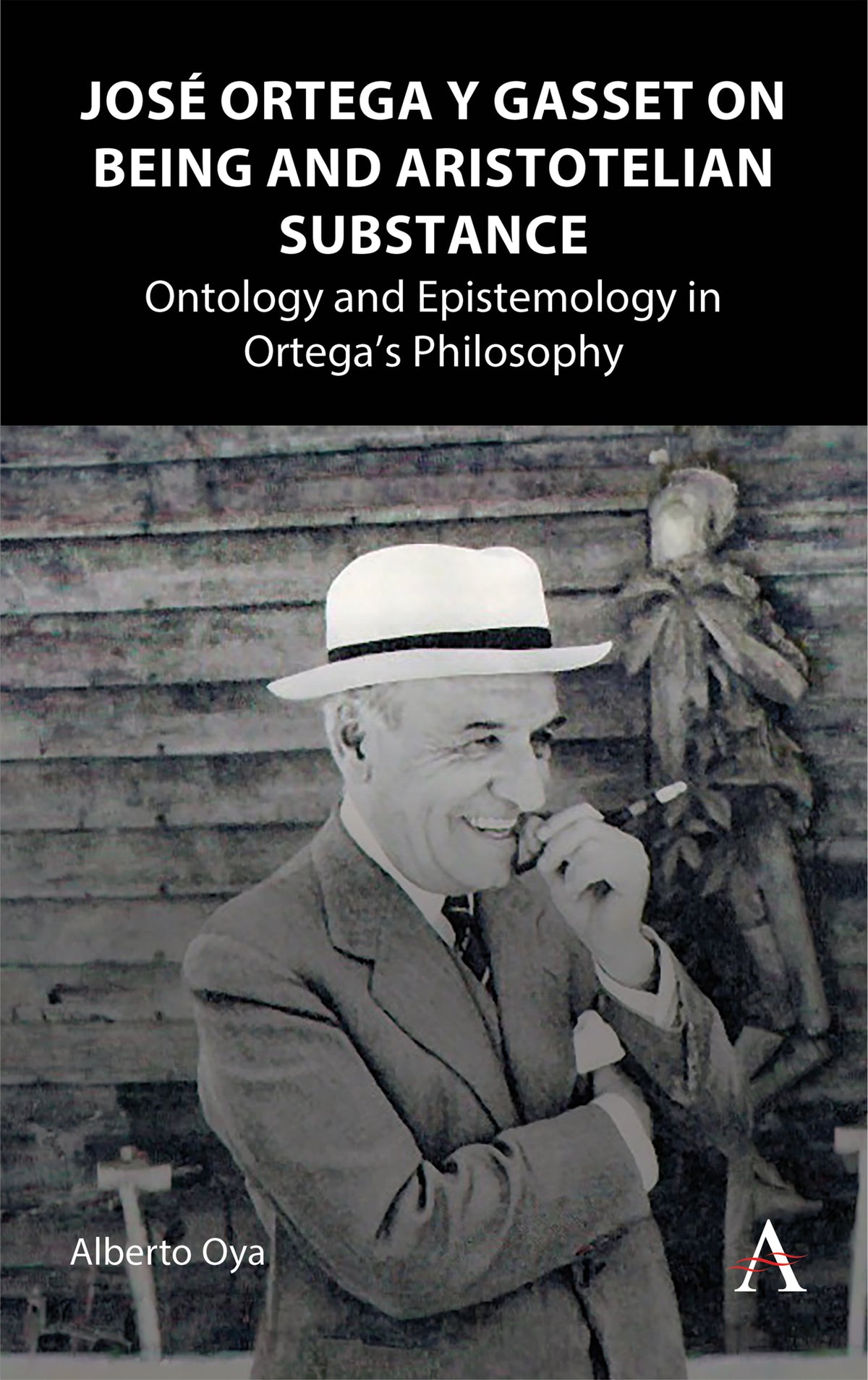
Explores José Ortega y Gasset's philosophy by analysing his ontological and epistemological views, with particular emphasis on his interpretation of Aristotelian substance as a historical, socially inherited interpretation of reality.
The aim of this book is to offer a concise and accessible exposition of Ortega’s core philosophical claims, with the ultimate aim of analysing his account of the Aristotelian notion of substance (‘ousía’), and of the question of being more generally, as a belief in the Orteguian sense of the term – that is, as a historical, socially inherited interpretation of reality. The book is divided into three chapters, the aims of which can be briefly outlined as follows. Chapter One comments on Ortega’s foundational ontological claim that my life (each one’s) is the radical reality. His argumentation for this position is examined and its major philosophical implications are detailed. Chapter Two analyses Ortega’s epistemological views. The chapter starts with a discussion of Ortega’s distinction between ideas and beliefs, as well as commentary on Ortega’s sociological views, with a special focus on elucidating his notion of vigencias and his conception of generations as the driving force of social change. The chapter also includes an analysis of Ortega’s so-called perspectivism and his rejection of the traditional criterion of truth as correspondence or adequatio with reality. Ortega’s argumentation for concluding that theories of physical science lack any correspondence of similarity or resemblance with reality, and that therefore they should be considered as ideas in Ortega’s specific sense of the term, is also analysed. The chapter proceeds with a discussion of Ortega’s account of the principial or radical role that beliefs play in my life (each one’s). Last, Ortega’s conception of truth in light of his notion of historical reason is analysed. Chapter Three focuses on Ortega’s account of the Aristotelian notion of substance, and the question of being more generally, as a belief, in the Orteguian sense of the term. The chapter includes a discussion of Ortega’s reading of Aristotle’s principle of non-contradiction and Parmenides’s principle of identity, as well as an analysis of Ortega’s account of the birth of Philosophy in Ancient Greece. The book ends with a short concluding section in which the core claims of the analysis offered in this book are summarised.


Alberto Oya (PhD) is a Research Fellow at the Instituto de Filosofia da Nova (Universidade Nova de Lisboa, Portugal). Oya is the author of the books The Metaphysical Anthropology of Julián Marías (2024), First-Person Shooter Videogames (2023), Unamuno’s Religious Fictionalism (2020) and An Introduction to Logical Positivism (2020).