





Some error occured while loading the Quick View. Please close the Quick View and try reloading the page.
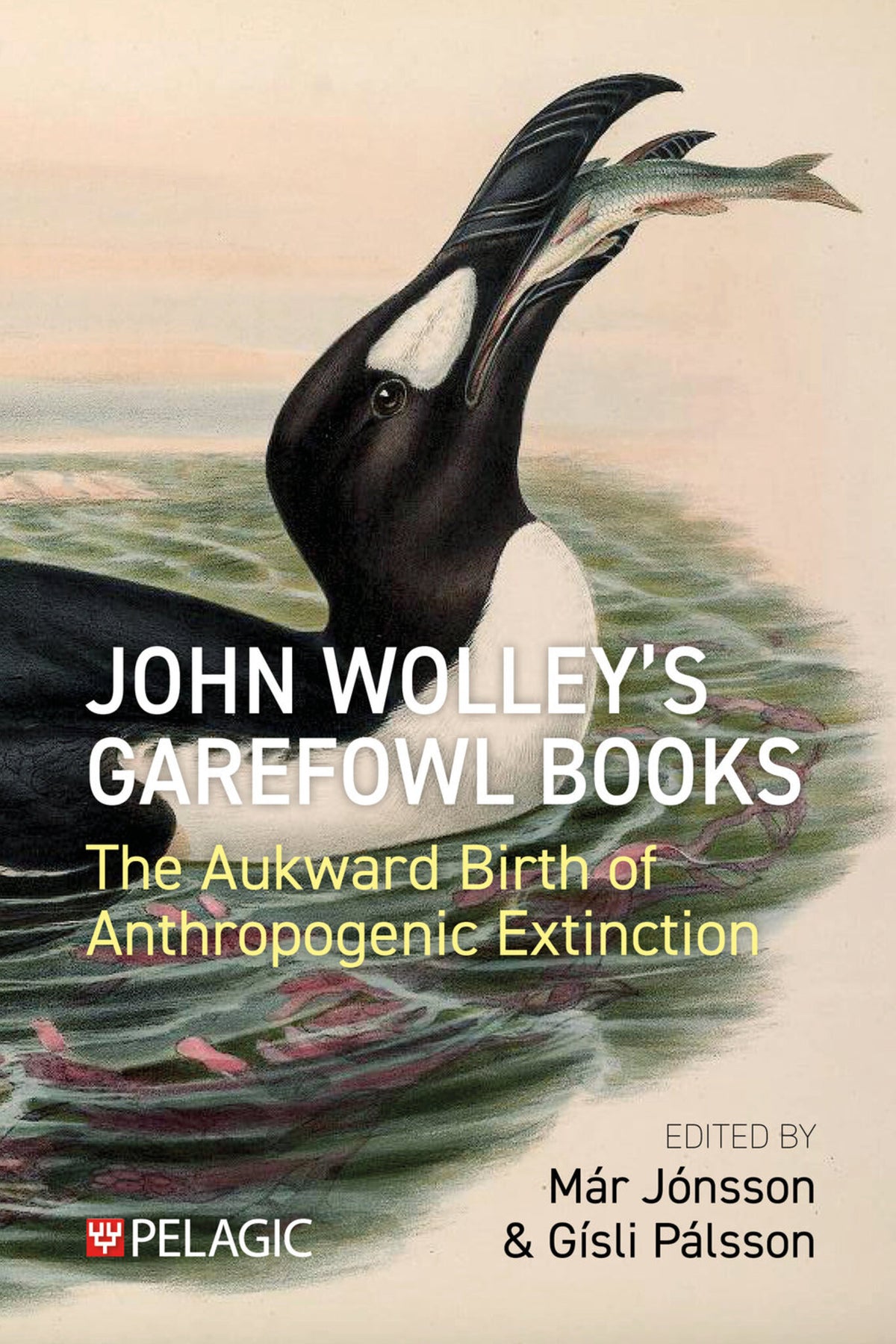
The great auk is gone. The last known individuals were killed on a rocky Icelandic islet in 1844 – and the naturalist who documented this moment of extinction would unknowingly help birth an entirely new concept: that humans could drive a species to oblivion.
John Wolley’s Garefowl Books presents the remarkable manuscripts produced by naturalist John Wolley during an 1858 expedition to Iceland in search of surviving great auks. Accompanied by Alfred Newton – later Professor of Zoology at Cambridge and one of the Victorian era’s most influential ornithologists – Wolley interviewed the last crew who had hunted the birds off the coast of southern Iceland fourteen years earlier, meticulously recording their testimonies and observations.
The expedition’s conclusion – that there were almost certainly no more great auks anywhere – set in motion a radical shift in thinking. At a time when Darwinian thought held that extinction was a natural process, Wolley and Newton’s findings sparked the notion of ‘unnatural’ extinction: species loss caused directly by human activity. This was the awkward birth of anthropogenic extinction, and it would reverberate through environmental discourse for generations, eventually shaping the modern concept of the Anthropocene.
The volume presents for the first time the full text of the Garefowl Books, accompanied by editorial commentary on the manuscripts themselves, the lives of the fourteen Icelandic crew members and two women taxidermists who feature in the accounts, and the diplomatic and scientific aftermath of the expedition. Supplementary primary sources include letters between Alfred Newton and his brother Edward, Wolley’s observations on the birds of the Faroe Islands, and Alfred Newton’s memoir of Wolley.
Three specially commissioned essays by leading scholars – Tim R. Birkhead on the lives of great auks, Petra Tjitske Kalshoven on Wolley’s ethnographic method, and William A. Montevecchi with Gioia Montevecchi on European and Beothuk interactions at Funk Island – place the manuscripts in their broader natural-historical and anthropological context.
This unique volume will appeal to ornithologists, natural historians and birders with an interest in extinct species, as well as to historians of science, scholars of extinction studies and environmental humanities, and anyone fascinated by the deep roots of conservation thought.


Már Jónsson is Professor of History at the University of Iceland, specialising in historiography and the editing of historical Icelandic texts. His recent books include Witchcraft and Blasphemy in the 17th Century (2021) and These Famous Crimes: The Murders at Sjöundá and Illugastaðir (2024, with Jón Torfason).
Gísli Pálsson is Professor Emeritus at the University of Iceland. He has written widely on human–animal relations, slavery, extinction and environmental discourse. His books include The Man Who Stole Himself (2016) and The Last of Its Kind (Princeton University Press, 2024).