





Some error occured while loading the Quick View. Please close the Quick View and try reloading the page.
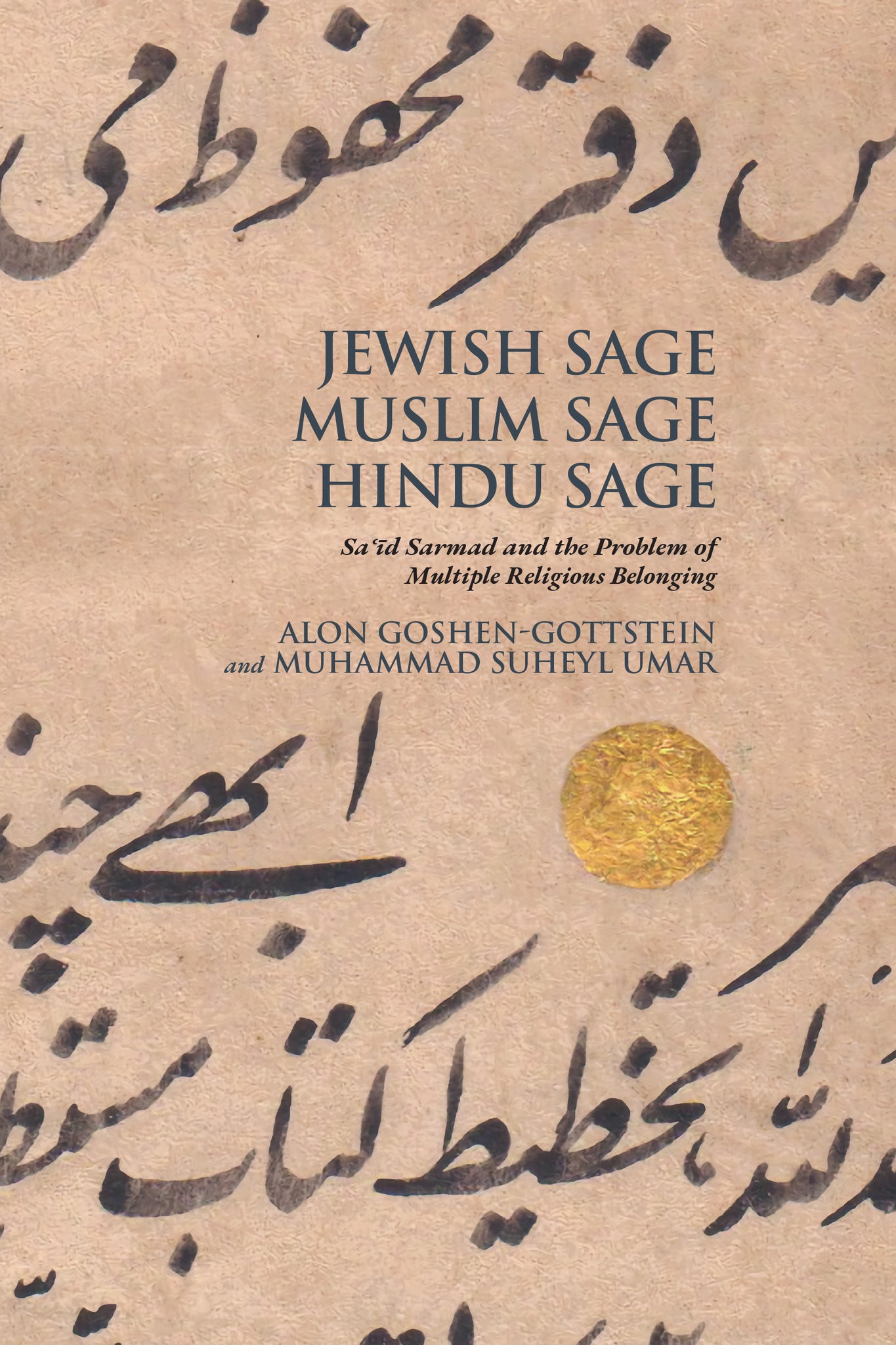
A critical study of this highly venerated yet religiously complex mystic.
Sa'īd Sarmad (c. 1590–1661), sometimes referred to as Sarmad Kāshānī, was a Sufi mystic-poet of Jewish Persian origin. He was active in India, had dealings with royalty, and was executed as part of political power games in the Mughal empire. His memory is venerated by many, especially in India, and some consider him an outstanding and exemplary mystic. This book is a critical study of his life and works. It offers the first-ever comprehensive analysis of all his writings, and those attributed to him, in an attempt to gain a balanced historical view of the person. It is based on newly discovered manuscripts that add vital information to Sarmad's story and answer key questions that were previously left to speculation and religious exaggeration. Sarmad seems to have had dealings with Judaism, Islam, and Hinduism, and these are explored through the contemporary lens of multiple religious belonging. This is the first time Sarmad has been viewed through this lens. The case study provides an important contribution to the theoretical literature on the subject. The fruit of a collaboration between a Jewish and a Muslim scholar, this brings to light complementary, as well as competing, theoretical perspectives on Sarmad who, at the end of the day, emerges as more of a spiritual seeker of love divine than an accomplished spiritual master.


"This is a wonderfully rich and compelling intellectual portrait of a creative spiritual teacher who wrote from within the fertile contact zone between different religious traditions and identities. The texts offered in translation are remarkable and are themselves a very important new academic resource. Together with the critical analysis of Sarmad, they offer a substantive contribution to multiple fields: the varieties of religion and religious belonging in early modernity, conceptions of mysticism, the study of sainthood and religious leadership, and, of course, the complexities and possibilities of interreligious encounter." — Ariel Evan Mayse, Stanford University
Alon Goshen-Gottstein is the Founder and Director of the Elijah Interfaith Institute. His previous books include In God's Presence: A Theological Reintroduction to Judaism and Covenant and World Religions: Irving Greenberg, Jonathan Sacks, and the Quest for Orthodox Pluralism. Muhammad Suheyl Umar is Academic Advisor and Director of Social Sciences at Alliant College of Professional Studies, Lahore, Pakistan. His previous books include "That I May See and Tell": Significance of Iqbal's Wisdom Poetry and In the Wake of 11th September: Perspectives on Settled Convictions Changes and Challenges.
Preface
Alon Goshen-Gottstein
Part I – (Alon Goshen-Gottstein)
1: Introduction: Sarmadology - The Many Faces of Sarmad
2: Religion or Mysticism: Scholarly Assumptions and Presentations
3: Methodology of the Study of Sarmad
4: The Jewish Sarmad: The Testimony of the Dabistān
5: Sarmad of the Rubāʿiyāt: Portrait of a Hindu Sage?
6: Sarmad's Letters: Portrait of a Muslim Sage
7: The Many Meanings of Sarmad
8: Sarmad and Multiple Religious Belonging
9: Abhay Chand: The Final Word
Part II – Texts and Translations by (Muhammad Suheyl Umar)
10: Ruqʿāt of Sarmad, Aligarh Manuscript, English Version
11: Ruqʿāt of Sarmad, Aligarh Manuscript, Persian Version
12: Dabistān, Chapter 4, New English Translation
13: Rubāʿiyāt-i-Sarmad: Colophon– Abhay Chand, English Translation
14: Rubāʿiyāt-i-Sarmad: Colophon– Abhay Chand, Persian Version
15: Muhammad Saʿīd Sarmad: Bibliography of manuscripts and sources
Appendix A– Rubāʿiyāt-i-Sarmad– English Translation by Asiri
Appendix B– Rubāʿiyāt analysed by subject
Appendix C– Rubāʿiyāt relating to God
Appendix D: Comments by Suheyl Umar
Notes
General Bibliography
Index