





Some error occured while loading the Quick View. Please close the Quick View and try reloading the page.
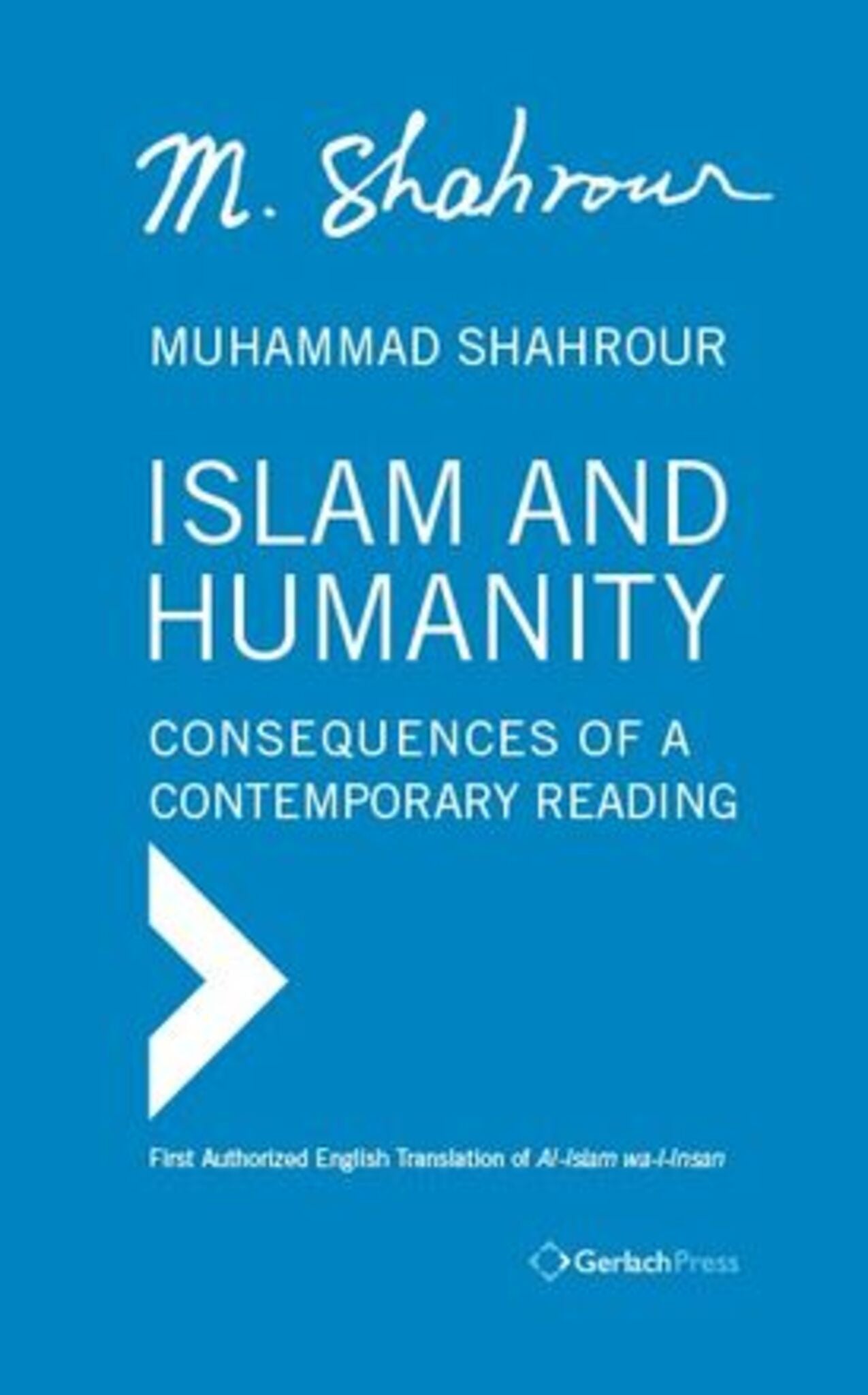
This new book by Mohammed Shahrour is about the implications of a contemporary reading of the Qur'an. "We must re-examine the prior reading of religion and introduce Islam from its original source, the authoritative revelation, on the basis of a contemporary reading that takes into account the level of knowledge of the 21st century and the scientific and ethical development that have been achieved.

Price: £85.00
Pages: 224
Publisher: Gerlach Press
Imprint: Gerlach Press
Publication Date:
15 October 2017
ISBN: 9783959940184
Format: Hardcover
BISACs:

The ambitious goal of Islam and Humanity is to set out in a single, compact volume an approach to understanding the Qur'an--meant here in the broadest sense of God's message to humankind. From his first book in 1990 to the present Shahrour appeals to logic and reason make his case.
(from the foreword by Dale F. Eickelman)
(from the foreword by Dale F. Eickelman)
Muhammad Shahrour, born in Damascus in 1938, Emeritus of Damascus University where he was a faculty member between 1972 and 2000. His first book as an Islamic thinker "Al-Islam wa-l-Kitab" was an instant bestseller and one of the most discussed books in the whole Arab world. It remains banned in many Arab countries.
Shahrour received the 2017 Sheikh Zayed Book Award in the category "Contribution to the Development of Nations"
Shahrour received the 2017 Sheikh Zayed Book Award in the category "Contribution to the Development of Nations"
Foreword by Dale F. Eickelman
Translators Introduction by George Stergios
A Word of Thanks
Consequences of a Contemporary Reading
Introduction
Preface
Chapter One: Who are the Muslims?
1-The Meaning of Islam from the Book
2-The Righteous Deed
3-Dissent is the Meaning of Opposition to Islam in the Book
4-God's Approval Applies to All Muslims
Chapter Two: Who are the Believers?
1-The Meaning of Iman (Faith) in the Book of God
2-The Difference between the Messengerhood and the Prophethood
3-The Sunna of the Messenger and the Sunna of the Prophet
4-Necessary Obedience in the Realm of Messengerhood
5-Obedience to Him (s) in the Messengerhood is Combined Obedience
Chapter Three: There is No Force in Islam
1-The Difference between Obedience and Force
2-Freedom is the Foundation of Worship
3-Types of Despotism that the Human Being Must Confront
4-The Guilt Complex
5-The Case of Covering
Chapter Four: The Citizen and Loyalty to Islam
1-The Meaning of Community, People, and Nation
2-Loyalty to Islam is Loyalty to Human Values
3-The Citizen (Attachment to the Nation-State is an "Attachment to the Homeland")
4-The Fighting Belief
5-The Difference between Shahid (Witness on the Basis of Previously Acquired Knowledge) and Shahid (Eyewitness)
Conclusion
Translators Introduction by George Stergios
A Word of Thanks
Consequences of a Contemporary Reading
Introduction
Preface
Chapter One: Who are the Muslims?
1-The Meaning of Islam from the Book
2-The Righteous Deed
3-Dissent is the Meaning of Opposition to Islam in the Book
4-God's Approval Applies to All Muslims
Chapter Two: Who are the Believers?
1-The Meaning of Iman (Faith) in the Book of God
2-The Difference between the Messengerhood and the Prophethood
3-The Sunna of the Messenger and the Sunna of the Prophet
4-Necessary Obedience in the Realm of Messengerhood
5-Obedience to Him (s) in the Messengerhood is Combined Obedience
Chapter Three: There is No Force in Islam
1-The Difference between Obedience and Force
2-Freedom is the Foundation of Worship
3-Types of Despotism that the Human Being Must Confront
4-The Guilt Complex
5-The Case of Covering
Chapter Four: The Citizen and Loyalty to Islam
1-The Meaning of Community, People, and Nation
2-Loyalty to Islam is Loyalty to Human Values
3-The Citizen (Attachment to the Nation-State is an "Attachment to the Homeland")
4-The Fighting Belief
5-The Difference between Shahid (Witness on the Basis of Previously Acquired Knowledge) and Shahid (Eyewitness)
Conclusion