





Some error occured while loading the Quick View. Please close the Quick View and try reloading the page.
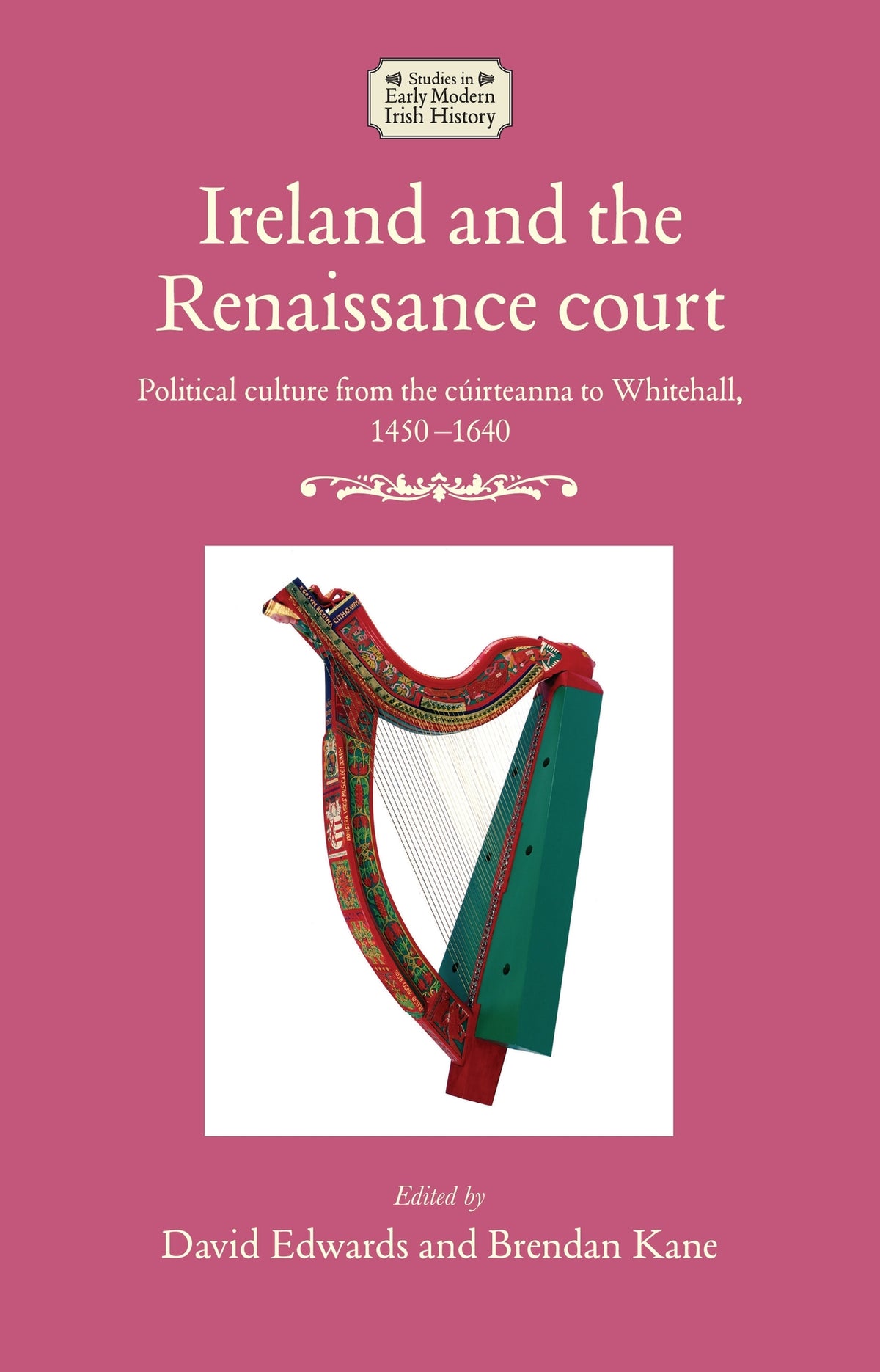


"Ireland and the Renaissance Court represents an important and first-of-its-kind contribution to our understanding of the political governance, cultural politics and interconnections that took place between courts in early modern Ireland and England. The book’s use of Irish-language sources, innovative methodologies, interdisciplinary approaches, and keen insights makes it an essential collection, and one that will influence the field for years to come."
Prof. Sarah Covington, Queens College and the Graduate Center, CUNY
David Edwards is Senior Lecturer in History, University College Cork.
Brendan Kane is Professor of History, University of Connecticut.
Introduction: Contiguous court societies: The Renaissance Irish lordships and the Tudor and Early Stuart English monarchy – David Edwards and Brendan Kane
Part I: Indigenous court society in Ireland
1 Bouncers, stewards and gate-crashers: Access and hierarchy at the Gaelic court in Early Modern Irish literature, c.1400-c.1650 – Micheál Hoyne
2 Court society in the south of Ireland, c.1430-c.1620: Evidence from the Butler bardic poems and other Irish sources – Gearóidín de Buitléir
3 The Gaelic court and Irish country-house poetry: The politics of an overlooked genre – Patricia Palmer
4 Latin letters and Renaissance civility in sixteenth-century Ireland – Jason Harris
Part II: Made in Whitehall: Irish policy and a regnal court
5 Debating Irish policy at the court of Elizabeth I – David Heffernan
6 How to govern Ireland without leaving your armchair: The production of Irish knowledge in Elizabethan secretariats – Nicholas Popper
7 Court discourse, the mid-Elizabethan polity and Ireland, 1571-75 – Christopher Maginn
8 Magnificence and massacre: Essex and the Enterprise of Ulster, 1573-76 – Hiram Morgan
9 Counsel in extremis: Sir James Croft’s A Discourse of 1583 and Elizabeth I’s reform of Irish policy – David Edwards
Part III: Positioning Ireland in the Renaissance court world
10 Our men in Scotland: The Gaelic Irish nobility and the Scottish Renaissance court, c.1400-c.1600 – Simon Egan
11 Ireland’s militarized itinerate court and the Tudor state – Malcolm Smuts
12 Winning hearts and minds: Proclamations, audience, and the discourse of Old English displacement – Valerie McGowan-Doyle
13 From court to courtliness: The verse epistle as imperial genre – Brendan Kane