





Some error occured while loading the Quick View. Please close the Quick View and try reloading the page.
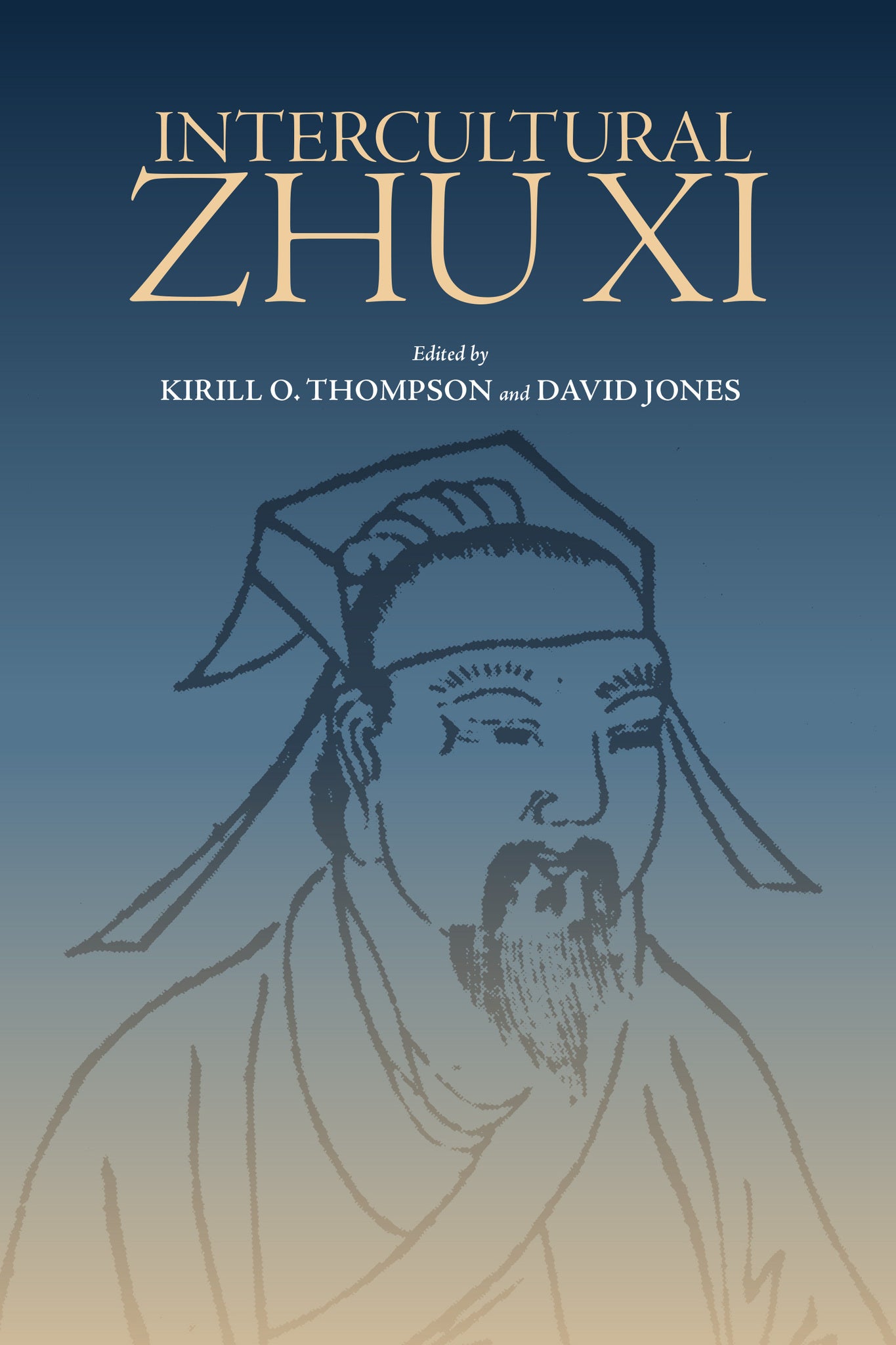
Revisits Zhu Xi's philosophy from a broader intercultural perspective and considers the relevance of his thought to our contemporary moment.
As the chief architect of Neo-Confucian thought, the philosopher Zhu Xi (1130–1200) brought about a momentous transformation in Chinese philosophy, drawing strands of Confucian thought together with Daoism and Buddhism to form a coherent, holistic system. Moreover, his editions and commentaries on the Confucian classics were the standard for the imperial examination system for over five centuries, until the late Qing dynasty. The present volume takes a new route in Zhu Xi studies by revisiting his thought and scholarship from a broader, intercultural perspective. Bringing together East Asian and Western scholars in history and philosophy to reveal the relevance and application of Zhu Xi's thought across a variety of cultures—East Asian, Southeast Asian, and American—the book confirms his status as a major world philosopher with a timely cosmopolitan spirit sorely needed in the twenty-first century.


"This meticulously crafted volume represents a remarkable contribution to Western knowledge regarding one of the most important thinkers in Chinese philosophy. It fills a significant gap by systematically introducing the work of Zhu Xi to Western readers, exploring his intellectual legacy while profoundly enriching our understanding of Chinese philosophy more broadly. Particularly valuable are the translations of important essays by Sinophone scholars. Drawing from their rich cultural and intellectual heritage to offer fresh and comprehensive insights into Zhu Xi's philosophical ideas and teachings, these scholars not only shed light on Zhu Xi's work itself but also provide a deeper understanding of his broader influence and significance within the context of Chinese intellectual history." — Jana Rošker, University of Ljubljana
Kirill O. Thompson is Professor at National Taiwan University. He is the author of many book chapters, journal articles, book reviews, and encyclopedia articles on Zhu Xi and Chinese philosophy. David Jones is Professor Emeritus at Kennesaw State University in Atlanta where he was a University Foundation Distinguished Professor and is now Affiliate Professor of Philosophy at the University of Hawai'i at Hilo. His previous books include The Fractal Self: Science, Philosophy, and the Evolution of Human Cooperation (with John L. Culliney) and Returning to Zhu Xi: Emerging Patterns within the Supreme Polarity (coedited with Jinli He), also by SUNY Press.
Preface: The Three Teachings
David Jones
Acknowledgments
Introduction: Contextual Turn and Intercultural Zhu Xi
Chun-chieh Huang and Kirill Thompson
Part I: Zhu Xi's Encounter with Other Intellectual Contexts
1: From Interpretation to Philosophy: Zhu Xi on the Four Books
Chun-chieh Huang, translated by Yahui Anita Huang and Daniel J. Coyle
2: Zhu Xi, Daoism, and Inner-Meditative Alchemy
James D. D. Sellmann
3: Zhu Xi's Grasp of Buddhism and its Limitations
Chen-feng Tsai, translated by Yahui Anita Huang and Daniel J. Coyle
4: A Hermeneutical Exchange Between the Chan Scholar-Monk Qisong and Zhu Xi on the Inside-Outside Continuum (Neiwei內外)
Diana Arghirescu
5: Synthesis: "The One and the Many" in the Lotus Sūtra and Zhu Xi
Joseph A. Adler
6: Zhu Xi's Study of the Chuci and the Tradition of Confucian Aesthetics
Chen Chao-ying, translated by Yahui Anita Huang and Daniel J. Coyle
Part II: Zhu Xi in Different Cultural Contexts
7: Korean Confucian Scholarship on Zhu Xi Learning in the Seventeenth Century
Jieun Kang
8: Zhu Xi and Korea: Modifications of Song Neo-Confucianism in Joseon Korea
Don Baker
9: Yi Toegye on Self-Cultivation: A Korean Neo-Confucian and Comparative Interpretation
Edward Y.J. Chung
10: On the Contextual Turn of Ethical Stance from Zhu Xi to the Tokugawa Japanese Confucians
Chun-chieh Huang
11: Shinto Thought in Early Tokugawa Zhu Xi Studies: Hayashi Razan and Yamazaki Ansai
Kun-chiang Chang, translated by Yahui Anita Huang and Daniel J. Coyle
12: Zhū Xī(1130–1200) in Early-Modern and Modern Japan: Philosophical Receptivity, International Relations, and Geo-Political Contexts
John A. Tucker
13: On the Problem of Contextual Turn in East Asian Intellectual Exchange – Examples of Le Quy Don and Pham Nguyen
Wei-Chieh Lin, translated by Jan Vrhovski
14: Zhu Xi and Boston Confucianism
Robert Cummings Neville
15: Significance of Zhu Xi's "Principle is One, Its Manifestations Many" for the 21st Century
Chun-chieh Huang, translated by Yahui Anita Huang and Daniel J. Coyle
Conclusion: Contextual Turning and Becoming Intercultural
David Jones