





Some error occured while loading the Quick View. Please close the Quick View and try reloading the page.
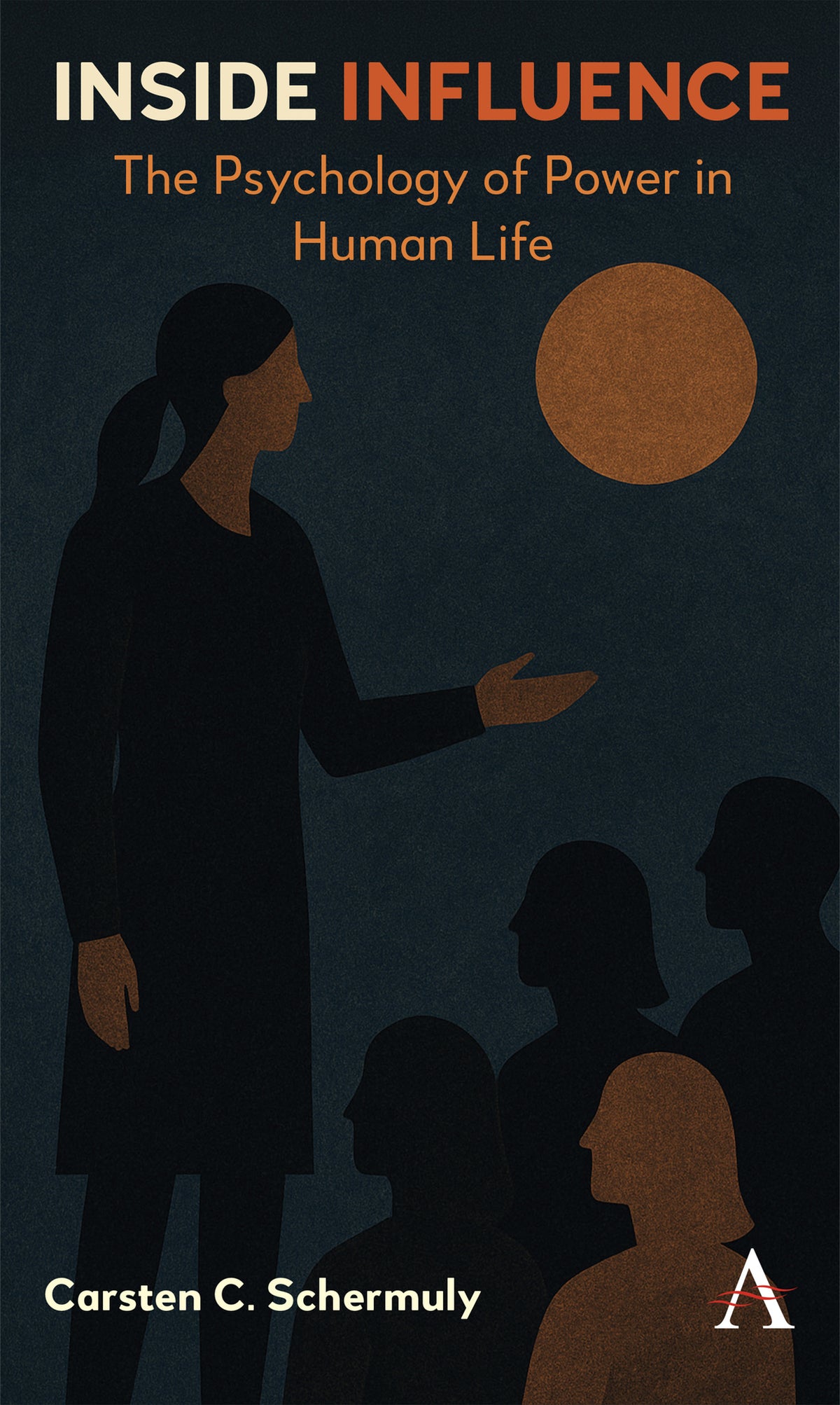
Explores the psychology of power, showing how it shapes behaviour and leadership, and offers a research-based framework for engaging with power ethically, responsibly and for the common good.
In an era marked by uncertainty, polarisation and rapid change, growing numbers of people are placing disproportionate amounts of power in the hands of a few people. This trend reflects a widespread longing for strong, authoritative leadership, particularly in times of crisis, yet it also exposes a dangerous paradox: While power can provide stability and direction, it can just as easily distort judgement, encourage impulsive behaviour and erode empathy. Research consistently shows that power can act like a drug, producing feelings of euphoria, confidence and invincibility that make it both attractive and deeply addictive. These effects help explain why those who gain power often struggle to relinquish it, and why even well-intentioned leaders may undergo a troubling psychological transformation once they ascend to positions of power.
Carsten C. Schermuly argues that the solution is not to reject power but to understand it more clearly. His book is a call for a more mindful, transparent and responsible engagement with power across all areas of life, within personal relationships, organisations and society as a whole. By drawing on insights from psychological research, he illustrates the many layers through which power operates: the personal resources that grant individuals influence; the biological and neuropsychological changes that occur when power is gained or lost; and the shifts in perception, cognition and behaviour that can accompany power.
Schermuly also explores why certain individuals rise to power in organisational contexts, how power can corrupt decision-making and which structural conditions can help reduce its negative side effects. He highlights the importance of psychological empowerment as a healthier, more sustainable alternative to traditional top-down authority. Rather than relying on concentrated control, organisations can cultivate distributed power structures, improved leadership selection processes, and cultures that reward responsibility over dominance.
Importantly, this book is not a manual for acquiring power or manipulating others. Instead, it reveals how power manipulates us and shapes our actions, identities and vulnerabilities. By acknowledging and understanding these mechanisms, individuals and organisations can prepare more effectively for the challenges of leadership. Ultimately, Schermuly offers a research-based framework for using power ethically, constructively and for the benefit of the common good.


‘Inside Influence occupies a valuable and underserved niche: more rigorous, evidence-based books on leadership that are more readable than academic monographs and more constructive than books that mainly focus on power’s corrupting effects. Schermuly has produced a psychologically serious, historically grounded, and practically useful guide to understanding power – what it does to those who hold it, and what individuals and institutions can do about it. It is a timely contribution in an era when the dynamics of power deserve far more careful attention than they typically receive’. - Professor Dr. Eric Kearney, Chair of Business Administration, University of Potsdam in Germany, Germany.
‘An engaging, readable exploration of power’s psychological and structural mechanisms. Schermuly moves seamlessly from individual motives to organisational interventions, offering a research-backed guide for understanding our own need for power and learning to exercise it responsibly, ethically, and effectively’. - Professor Mary Zellmer-Bruhn, Associate Dean and David M. Bond Fellowship for Ethics and Corporate Behavior, Carlson School of Management, University of Minnesota, USA.
‘Power is the elephant organisations never talk about – and Carsten Schermuly unpacks it with the psychological rigour and dry wit it deserves. A rare combination: serious science, genuinely readable’. - Dr. Antoinette Weibel, Professor of Human Resource Management at the University of St. Gallen, Switzerland.
‘Dr. Schermuly takes us on an instructive tour of the types of power over our fellow humans. Along with insight into the psychology of power and the nature of organisational power structures, most importantly, he describes the necessity of empowerment for all people’. - Joel A. DiGirolamo, Vice President of Research and Data Science, International Coaching Federation, USA.
‘No researcher I know has more to say about psychology and power than Carsten Schermuly, and certainly no one writes about it in prose that is as engaging and accessible as it is insightful. I loved this book for the way it made me think and the way it made me hope’. - John Stepper, Founder, Working Out Loud, USA.
‘This book is both timeless and timely: given current political and societal developments across the world, a broader audience should understand the psychological mechanisms of power and their scientific foundation. Carsten Schermuly provides a much-needed synthesis of existing research on the concept of power, combining it with his own scientific (and practical) work and insights, notably on empowering leadership’. - Professor Dr. Frauke Austermann, Future of Work & Workforce Transformation, Hochschule Niederrhein University of Applied Science, Germany
Prof Dr Carsten C. Schermuly is a psychologist and an award-winning researcher, long-standing organisational consultant, one of Germany’s leading HR thinkers, and the author of more than 100 international publications.
Acknowledgements; Introduction; Part 1: What is Power and how does it work psychologically; 1. Definition(s) of power; 2. The bases of power; 3. The Biology of Power; 4. Metamorphosis through power; 5. Paths to power; 6. The structures of power; Part 2: How can we deal with power responsibly?; 7. Proposals at an individual level; 8. Proposals at an organisational level; 9. Proposal on a societal level; Bibliography.