





Some error occured while loading the Quick View. Please close the Quick View and try reloading the page.
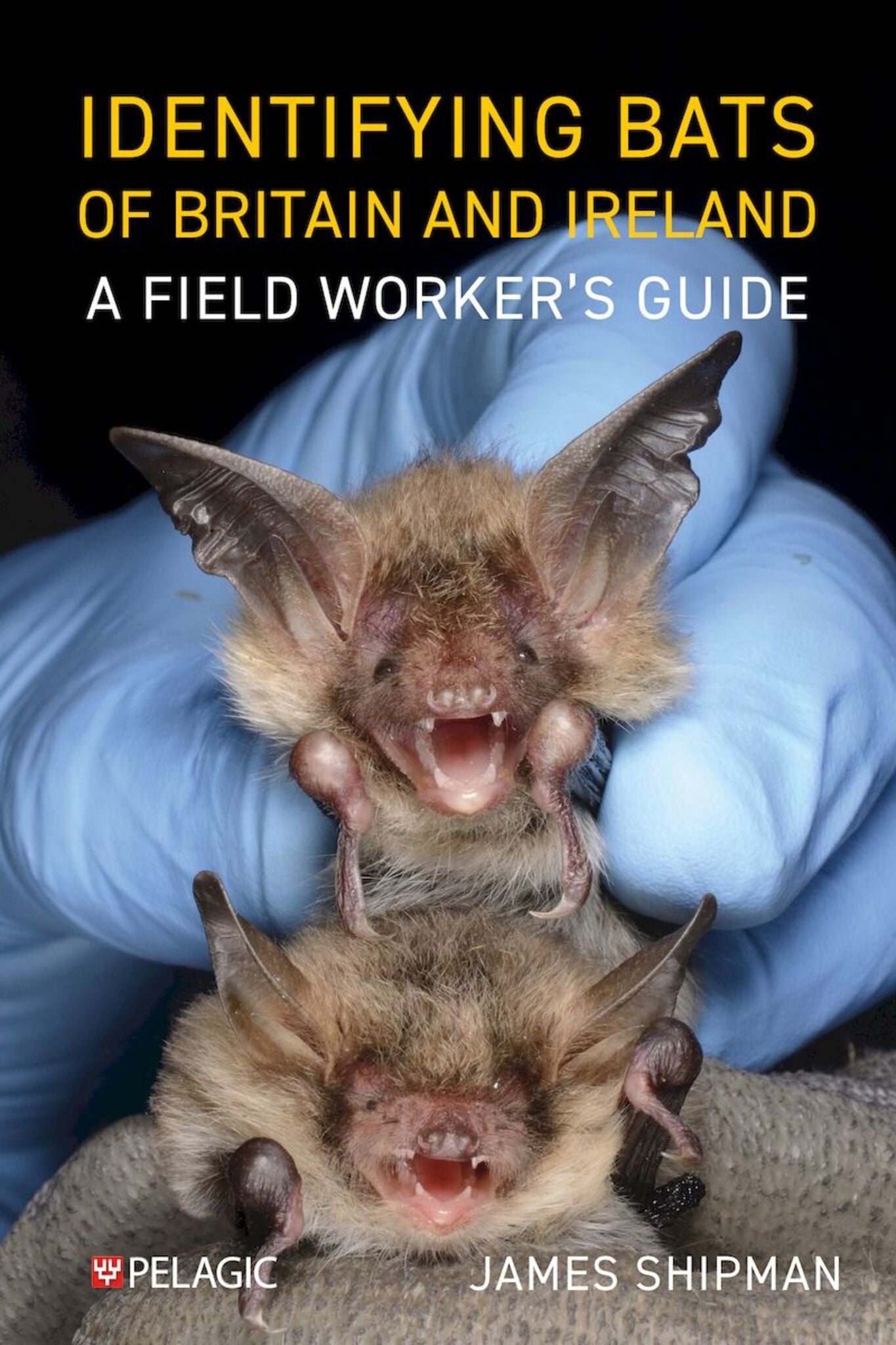
This book will help anyone understand the fun and adventures to be had working with these fascinating animals. Packed with insider information, it offers expert guidance on how to identify bats in the hand. As you learn the process of handling them safely, you will also discover the key features that distinguish one species from another.
Filling a gap between basic books and more technical volumes, this guide uses humour, mnemonics, rhymes and images as it communicates in simple terms the techniques required when training for a bat licence. Detailed images, diagrams and tables help in comparison between species, and the fundamentals of bat ecology and survey equipment are discussed. All British bat species are covered, as well as possible vagrants.
Warning: James’s infectious enthusiasm for bats is likely to rub off – these fascinating mammals may well become an obsession.


This concise, well-illustrated volume has a useful summary identification table on the inside of the front cover and a flow chart inside the back one... a useful book for those beginning in bat work.
— In Practice
James Shipman is a lifelong bat enthusiast who loves to inspire and motivate future bat workers. He works as a senior ecologist and is involved in numerous bat-related projects. In 2016 he was recognised with the Bat Conservation Trust’s Pete Guest Award for outstanding contribution to bat conservation.
Preface
Acknowledgements
1. Introduction
2. Bat to basics
3. Experience and equipment
4. Handling and identification techniques
5. British and Irish species identification
Rhinolophidae
Greater Horseshoe Bat (GHS)
Lesser Horseshoe Bat (LHS)
Vespertilionidae
Common Pipistrelle
Soprano Pipistrelle
Nathusius’ Pipistrelle
Noctule
Leisler’s Bat
Serotine
Barbastelle
Brown Long-eared Bat (BLE)
Grey Long-eared Bat (GLE)
Daubenton’s Bat
Natterer’s Bat
Bechstein’s Bat
Brandt’s Bat
Whiskered Bat
Alcathoe Bat
Greater Mouse-eared Bat
6. Vagrants
Geoffroy’s Bat
Kuhl’s Pipistrelle
Parti-coloured Bat
Molossidae
European Free-tailed Bat
7. Picture library and ID crib
Further reading and useful resources