





Some error occured while loading the Quick View. Please close the Quick View and try reloading the page.
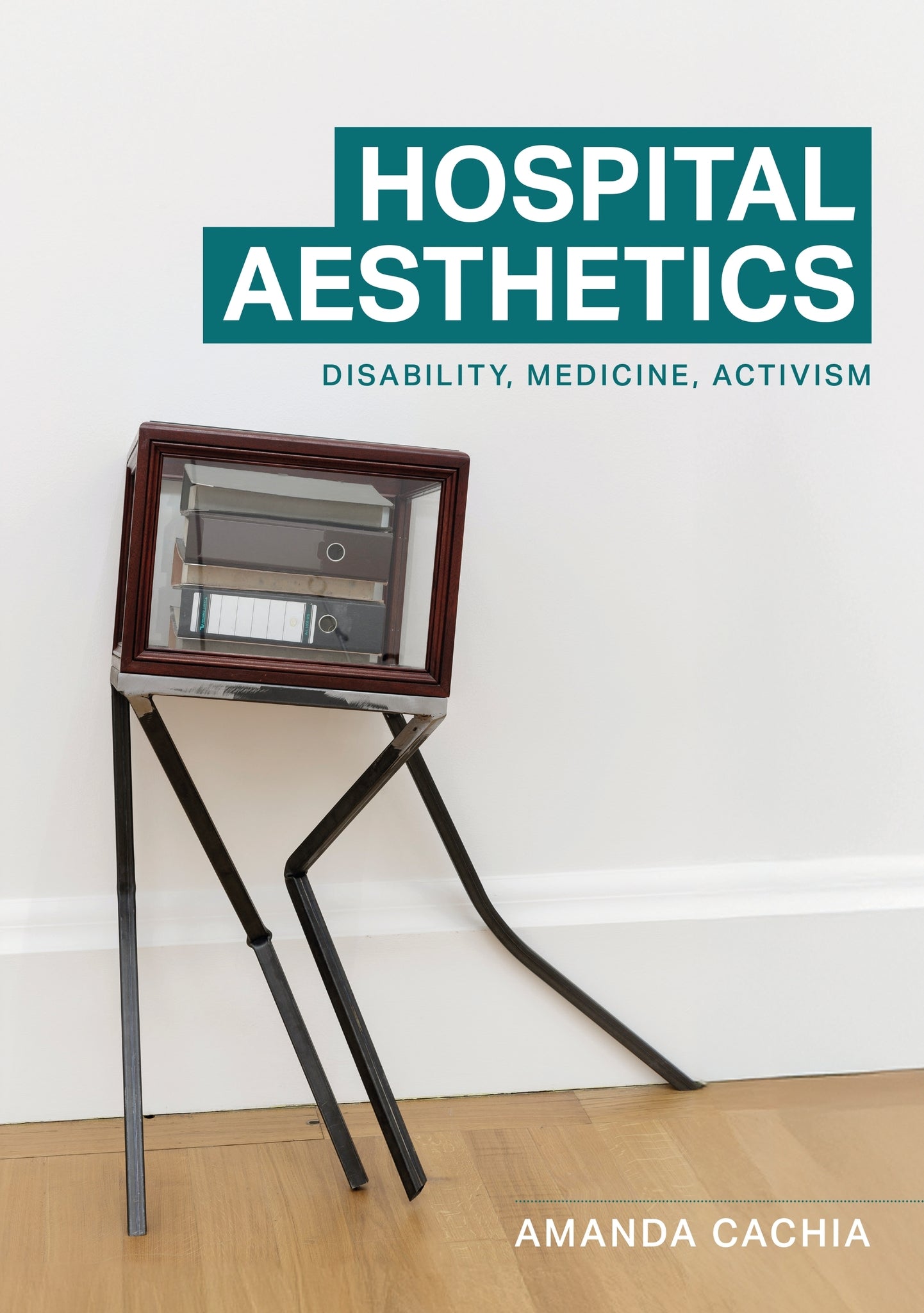
In Hospital aesthetics, Amanda Cachia introduces a broad array of contemporary artists who are engaging in relational aesthetic activism and socially engaged art practice. She analyzes practices in which artists are taking health and care into their own hands by making works that engage with the ever-subjective experience of being sick and ill.
The first truly comprehensive monograph in critical disability studies to be grounded in a deep and scholarly understanding of modern and contemporary art practice, this work presents hospital aesthetics as a decolonizing gesture, wherein contemporary artists go against the tendency for the medical industrial complex to treat disabled bodies as specimens and, eventually, archives. Cachia aims to codify “hospitable aesthetics” as a category or genre of disability art that is more relevant now than ever before, as increasing numbers of artists turn to the hospital or doctor’s office as a canvas, literally and symbolically.


‘Amanda Cachia builds on her leading role in disability art history with Hospital aesthetics, a field-defining book that brings a deep and scholarly understanding of modern and contemporary art to practices that are considered through the conceptual space of the hospital, a site introduced as a framework for discussions about pain, death, and disability experience, and a critical focus of institutional critique.’
—Lisa Cartwright, Professor of Visual Arts, University of California San Diego
‘In this beautifully written, compelling and extremely original book, Cachia focuses on outstanding artists whose works incorporate experiences of health impairments and long-term hospitalization. Their “rescripting” of medical affordances, she argues, is a powerful form of radical disability activism, decolonizing and transforming both the hospital and the gallery.’
—Faye Ginsburg, David B. Kriser Professor of Anthropology, New York University
‘In Hospital aesthetics: Disability, medicine, activism Amanda Cachia analyzes the work of artists who incorporate experiences with hospitalization and illness while rejecting the medical model of disability. Organized into case studies, the cumulative effect is that of a manifesto for disability activism. Urgent and impassioned, it burns with writing theorized from the body out.’
—Suzanne Hudson, Professor of Art History and Fine Arts, University of Southern California
Introduction
1 Charting immunocompromised bodies
2 Disabling medical assistive devices
3 Sensual hospital aesthetics
4 Intersectional crip networks of care
5 Alt medicine
Conclusion: Moving the needle
Bibliography
Index