





Some error occured while loading the Quick View. Please close the Quick View and try reloading the page.
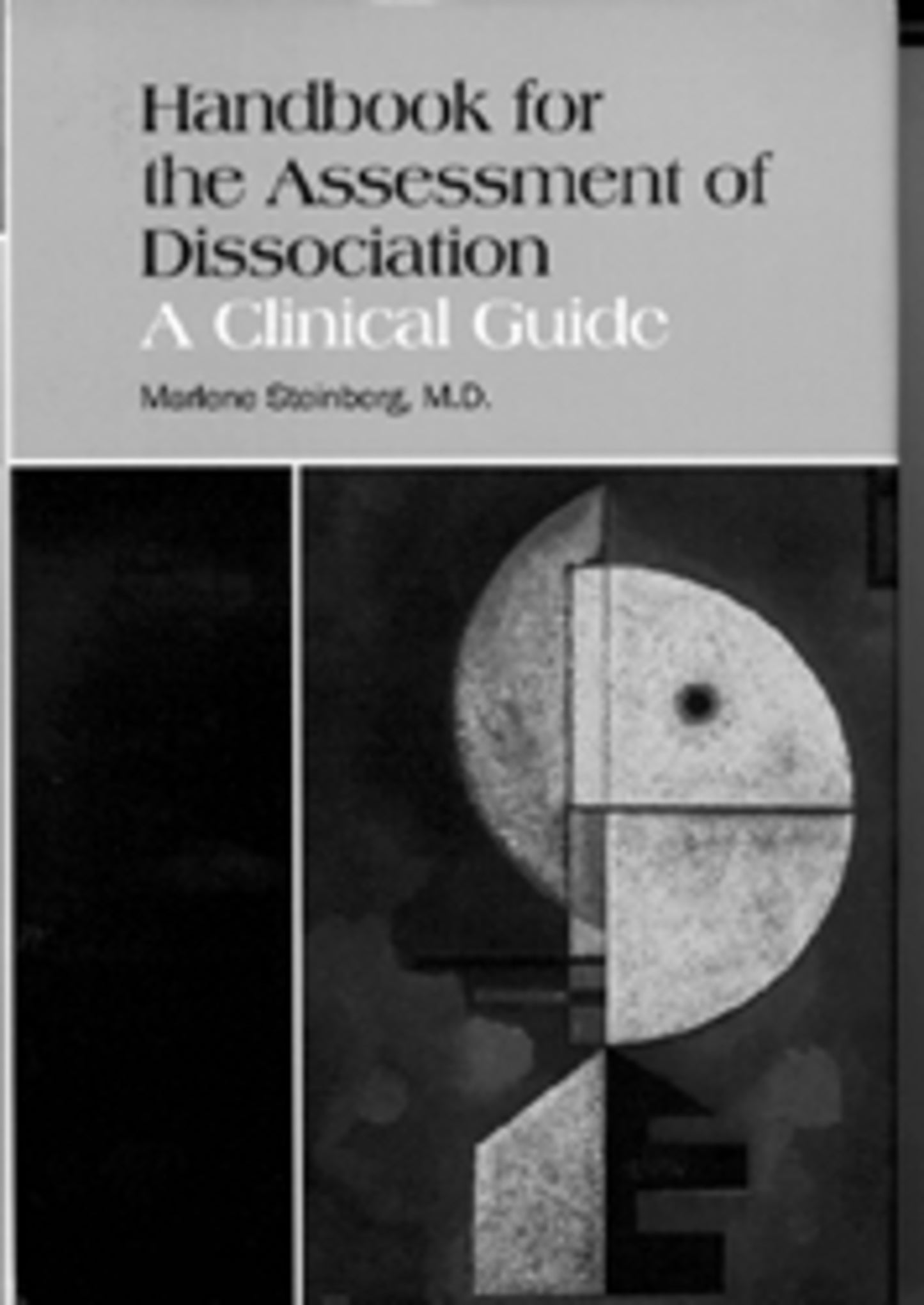
Handbook for the Assessment of Dissociation: A Clinical
Guide is the first book to offer guidelines for the systematic
assessment of dissociation and posttraumatic syndromes. This book
• provides a comprehensive overview of dissociative symptoms and
disorders, as well as an introduction to the use of the SCID-D, a diagnostic
interview for the dissociative disorders
• includes chapters on
differential diagnosis, a discussion of the relationship between
dissociation and trauma, and a sample patient interview
• serves the
needs of novices in the field as well as experienced clinicians and
researchers


To my knowledge, this is unquestionably the best single source on dissociative disturbance. . . . The book is a rarity in being so well written that, although directed toward a professional audience, it will be accessible to students at all levels and could well be recommended to patients who have an intellectual bent and wish to educate themselves about the diversity and developmental roots of dissociative experience.
An unequivocally superb work, this text will quickly become a prized reference mainstay for any serious mental health practitioner concerned with enriching his or her evaluation, assessment and intervention strategies involved in the treatment of dissociative disorders. It fills a long recognized professional need by bringing together in a single volume the best and latest of what is known about the concept of dissociation and its value as a survival mechanism of childhood sexual assault. The author is commended for the skill with which she presented both theoretical and clinical concepts in a comprehensive approach to an increasingly visible phenomenon.
This volume brings both conceptual clarity and operational specificity to an area of mental health practice which is at best a quagmire for concerned clinicians from various disciplines. The scholarship and clarity of conceptualization and expression in this volume are indeed impressive.
The handbook gives a clear picture of how to detect and diagnose dissociative symptoms that will prove invaluable for clinicians, whether or not they have experience in interviewing dissociative patients.
Preface. Acknowledgments. Introduction. Escape from consciousness: five core dissociative symptoms. Dissociation and trauma. Amnesia: the black hole of dissociation. Assessment of amnesia. Depersonalization: the detached self. Assessment of depersonalization. Derealization: the unreal world. Assessment of derealization. Identity: theoretical perspectives on the self. Assessment of identity confusion. Assessment of identity alteration. Differential diagnosis of the dissociative disorders. Intra-interview dissociative cues. The SCID-D in non-dissociative psychiatric disorders. The SCID-D in clinical practice: a sample interview. Conclusion. Appendix 1: Severity rating definitions of individual dissociative symptoms. Appendix 2: Sample SCID-D diagnostic report for inclusion in patient records. References. Index.