





Some error occured while loading the Quick View. Please close the Quick View and try reloading the page.
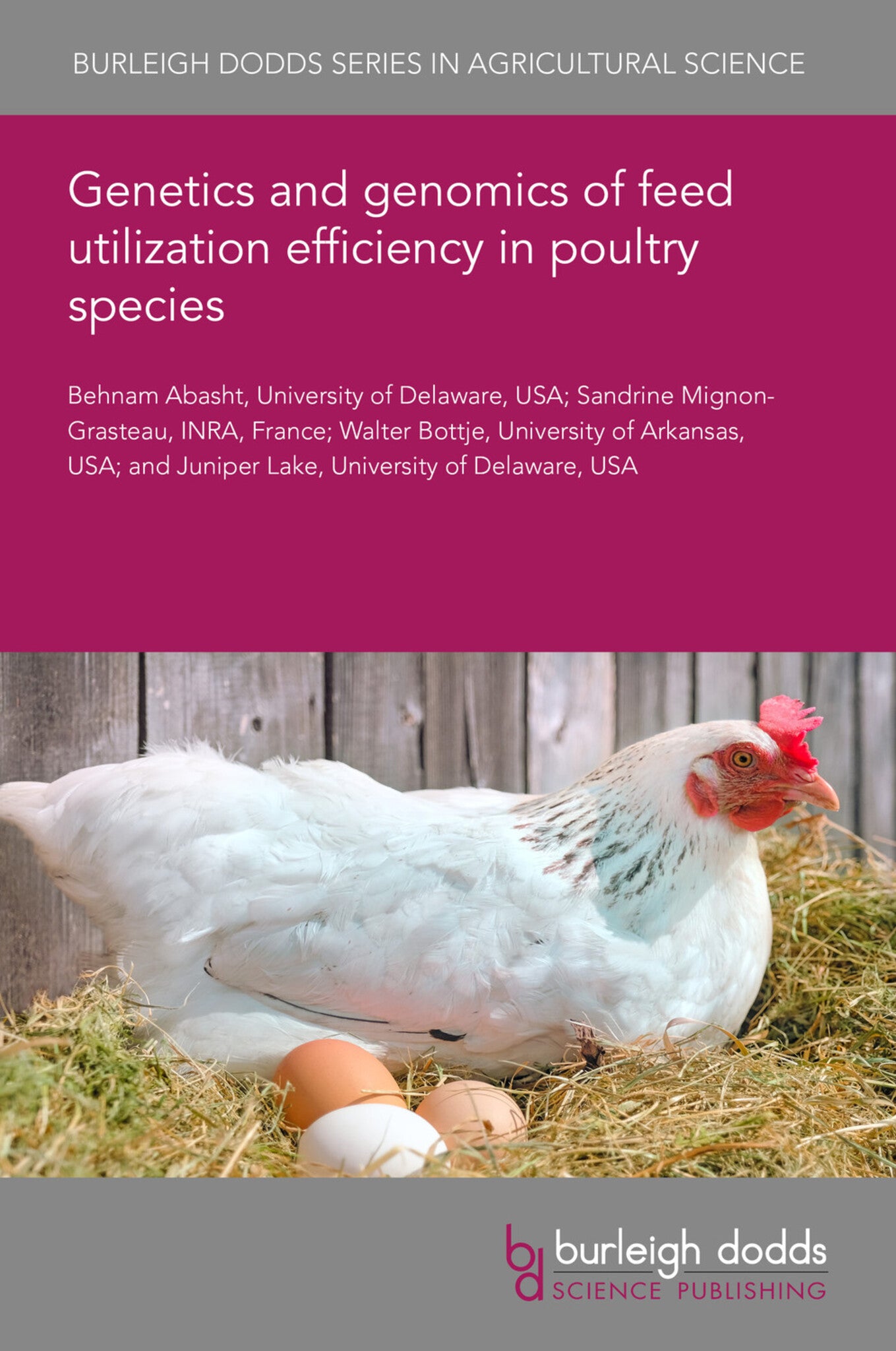
Feed utilization efficiency is a trait of high economic importance in livestock production. In poultry meat and egg production, feed accounts for over 70% of the total production costs. Consequently, improving feed utilization efficiency has been a major goal in the poultry industry. The efficient use of feed for livestock production also positively impacts environment. After a brief history of broiler breeding, this chapter summarizes the quantitative genetic properties (heritability and genetic correlation estimates) of feed efficiency and discusses some of its main contributing factors: basal metabolism, protein turnover, body composition, and digestive efficiency. Contribution of metabolic systems (liver, adipose tissue and skeletal muscle) and relevant genomic studies are also discussed. The chapter also includes a section on unfavorable meat quality consequences of improving feed efficiency and ends with discussion on future considerations.

Price: £25.00
Publisher: Burleigh Dodds Science Publishing
Imprint: Burleigh Dodds Science Publishing
Series: Burleigh Dodds Series in Agricultural Science
Publication Date:
29 June 2020
ISBN: 9781786767769
Format: eBook
BISACs:

1 Introduction 2 Breeding for poultry meat production 3 Feed efficiency 4 Factors contributing to genetic variation in feed efficiency 5 The role of metabolic systems in feed efficiency 6 Genetic architecture of feed efficiency 7 Mapping quantitative trait loci for feed efficiency 8 Unfavorable meat quality as a consequence of improving feed efficiency 9 Future trends 10 Conclusion 11 References