





Some error occured while loading the Quick View. Please close the Quick View and try reloading the page.
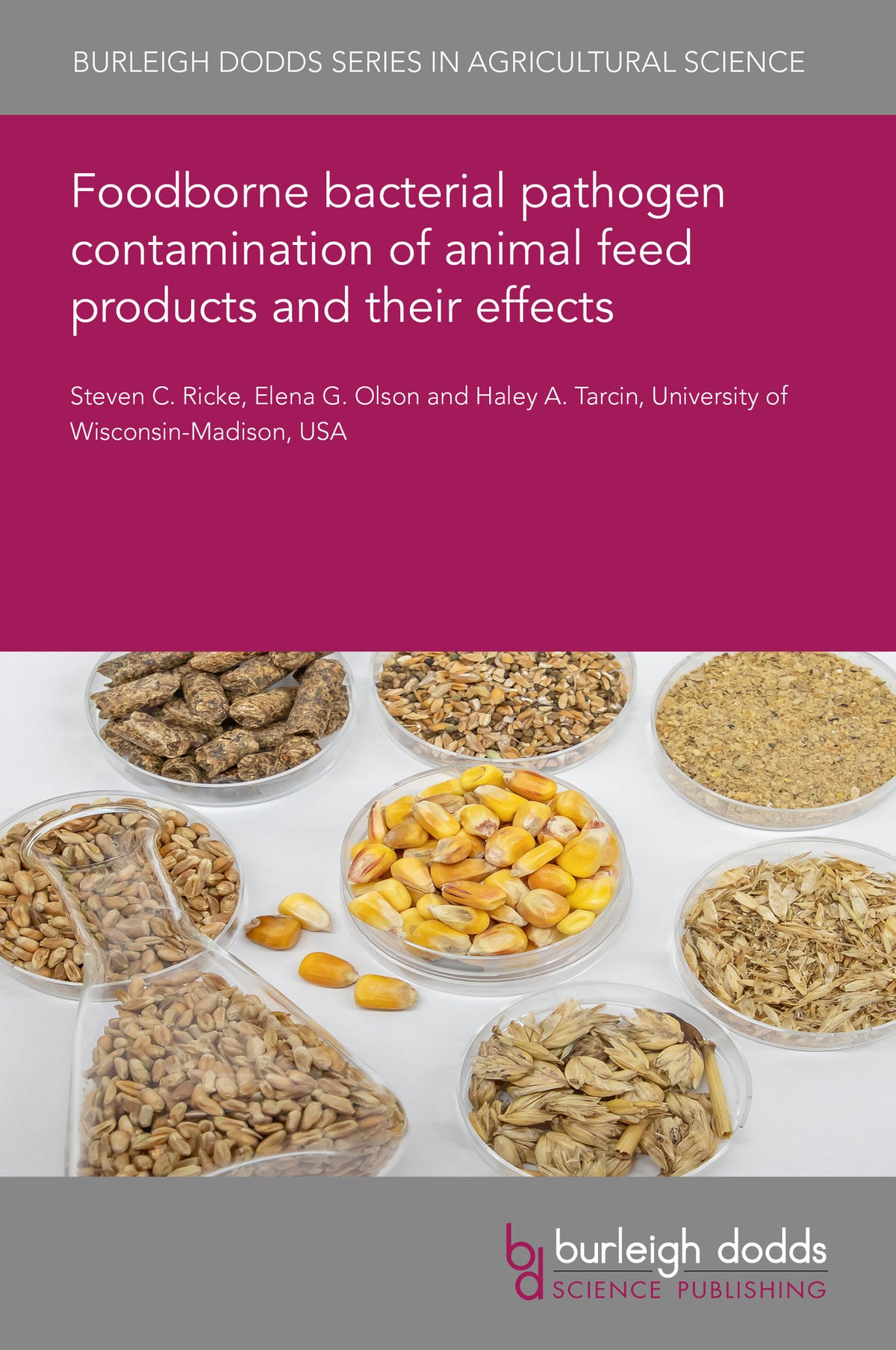
Foodborne disease remains a public health concern. Contributing to this issue is the persistence of foodborne pathogens in animal systems, which can originate from a multitude of food sources, including meat and egg products. These pathogens can be found in the environment where animals are raised and are transmitted by various sources. This chapter examines foodborne bacterial pathogen contamination of animal feed products and their effects. The chapter begins by first providing an overview of some of the general concepts of foodborne pathogens in feed. In then goes on to provide specific examples of key foodborne pathogens, such as Listeria, Campylobacter, Clostridia and other spore-formers. A section on pathogenic Escherichia coli is also provided, which is then followed by an overview of the pathogen most closely associated with animal feed contamination: Salmonella. The chapter also reviews other microorganisms and their effects on the feed microbiome.


- 1 Introduction
- 2 Foodborne pathogens in feed: general concepts
- 3 Listeria: feed and silage-based systems
- 4 Campylobacter: ecology and association with feed
- 5 Clostridia and other spore formers as indicators of feed hygiene
- 6 Pathogenic Escherichia coli
- 7 Salmonella
- 8 Other microorganisms and the feed microbiome
- 9 Conclusion and future trends in research
- 10 Where to look for further information
- 11 References