





Some error occured while loading the Quick View. Please close the Quick View and try reloading the page.
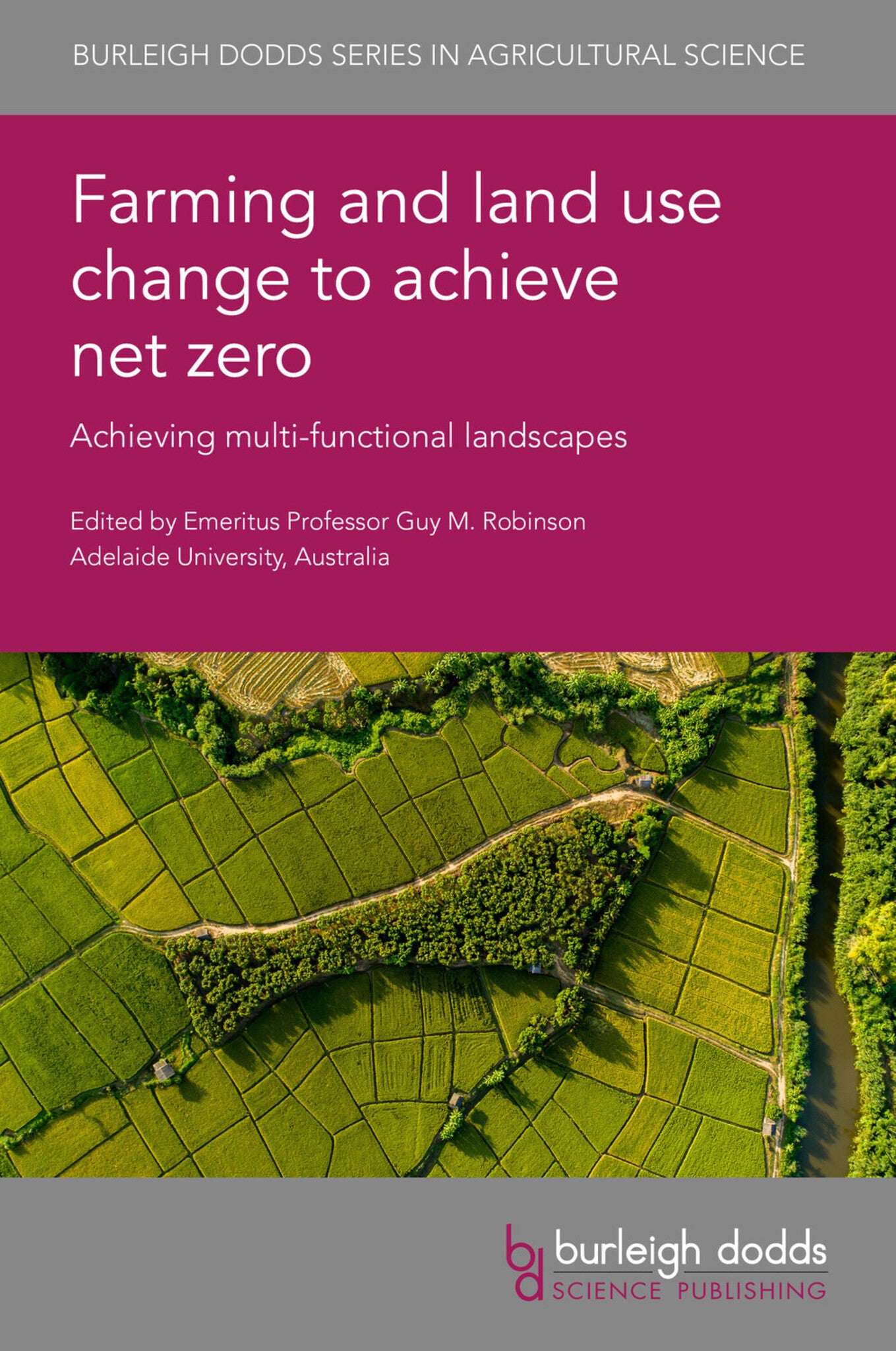
In 2015 over 190 countries signed the Paris Climate Change Agreement to achieve net zero by 2050. A decade later these same countries are now grappling with complex challenges concerning land use policy with profound implications for agriculture. For example, how much land should be retained for food production and how much should be repurposed to achieve key goals such as improved carbon sequestration?
Farming and land use change to achieve net zero: Achieving multi-functional landscapes reviews key issues in planning land use change at a national scale, highlighting the importance of involving and negotiating trade-offs with stakeholders such as farmers and landowners. The book also explores ways to implement particular land use changes such as rewetting farmland to restore peatland, reforestation and growing bioenergy crops.


Part 1 Planning land use change
1.Key challenges/issues in developing a national net zero land use strategy for agriculture
2.Using soil data to inform farming-related land use decisions for net zero
3.Using satellite data to inform farming-related land use decisions for net zero
4.Modelling farming-related land-use change scenarios for net zero
5.Developing and using land use decision support tools (DSTs) for farmers and landowners in achieving net zero
Part 2 Agricultural peatland management
6.Establishing land use priorities/national strategies for managing agricultural peatlands to achieve net zero
7.Measuring emissions from/assessing carbon sequestration potential of cultivated lowland peatland soils
8.Partial rewetting techniques for lowland agricultural peatland soils
9.Developing paludiculture in restored lowland peatland soils
Part 3 Reforestation of farmland
10.Establishing land use priorities/national strategies for reforestation of agricultural land to achieve net zero
11.Methods for measuring/modelling carbon sequestration potential from reforestation of farmland
12.Key challenges/issues in integrating trees into farmed landscapes
13.Managing reforested areas
Part 4 Managing bioenergy crops
14.Establishing land use priorities/national strategies for growing bioenergy crops
15.Optimising cultivation and use of Miscanthus as a bioenergy crop
16.Optimising cultivation and use of willow as a bioenergy crop
17.Optimising cultivation and use of switchgrass as a bioenergy crop
Part 5 Conclusion
18.Achieving multifunctional landscapes: implications for rural development policies