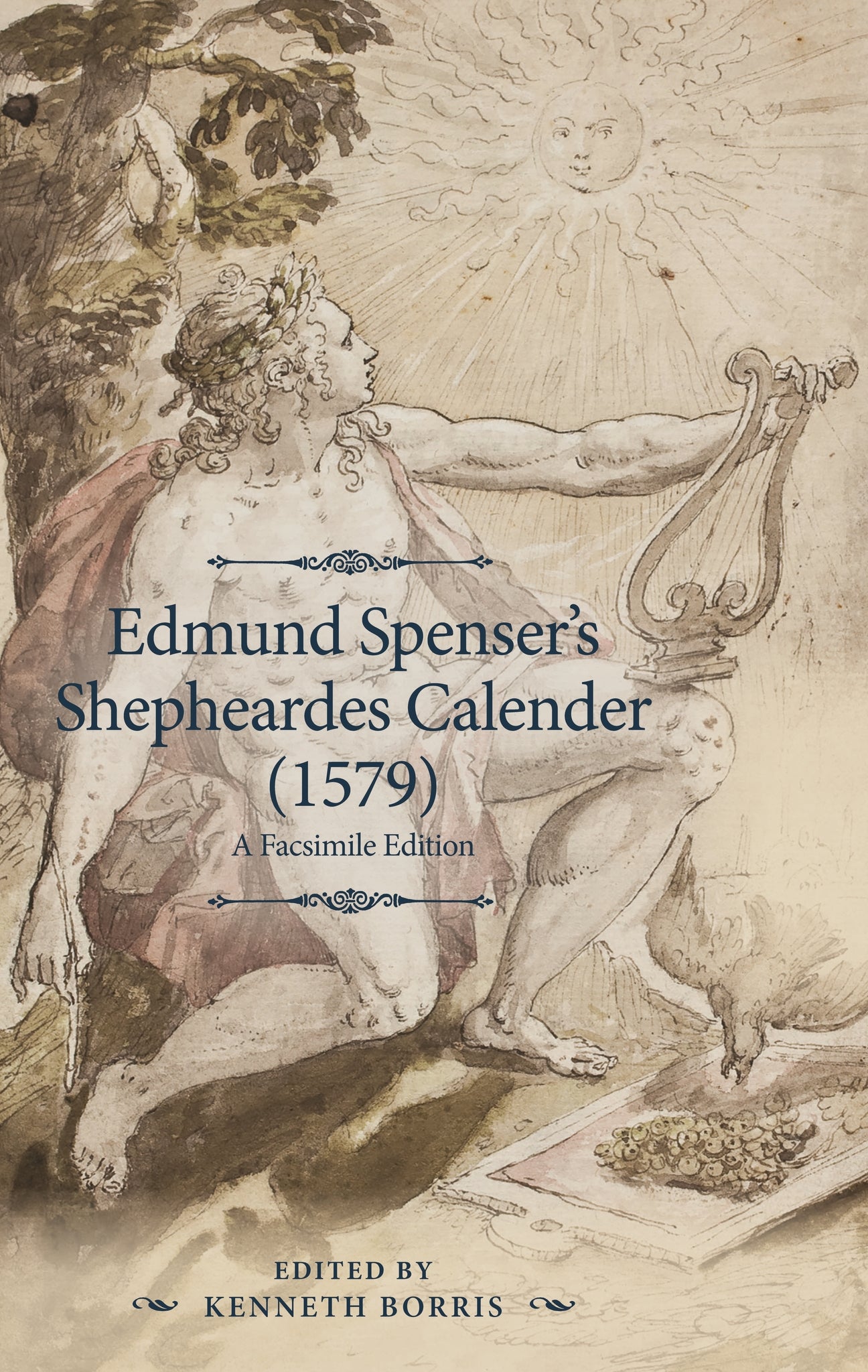
Spenser’s extraordinary Shepheardes Calender as first printed in 1579 is arguably the seminal book of the Elizabethan literary renaissance. This volume reassesses it as a material text in relation to book history, and provides the first clearly detailed facsimile of the 1579 Calender available as a book. The editor reconsiders the original book’s development, production, design, and particular characteristics, and demonstrates both its correlations with diverse precursors in print and its significant departures. Numerous illustrations of archival sources facilitate comparison. By reinvestigating the 1579 Calender’s twelve pictures, he shows that Spenser himself probably designed them, that they involve complex symbolism, and that this book’s meaning is thus profoundly verbal-visual. An analyzed facsimile is an essential new resource for study of Spenser’s Calender, Spenser, Elizabethan print and poetics, and early modern English literary history.
Price: £90.00
Pages: 304
Publisher: Manchester University Press
Imprint: Manchester University Press
Publication Date:
08 March 2022
ISBN: 9781526133458
Format: Hardcover
BISACs:
LITERARY CRITICISM / General, Literature: history and criticism, POETRY / European / English, Irish, Scottish, Welsh, LITERARY CRITICISM / European / English, Irish, Scottish, Welsh, Literary studies: c 1400 to c 1600, Literary studies: poetry and poets
Kenneth Borris is Professor of English Literature at McGill University
Introduction:
1 Prologue
2 Hugh Singleton and the Calender's first publication
3 Designing the 1579 edition
4 Formal affinities, models, sources, and intertexts
5 The Calender and popular almanacs
6 Bibliographical format, paper, typography, and decoration
7 Textual components, their sequence, and the norms of bucolic print
8 The genesis of the illustrations
9 The illustrative mode
10 The pictorial symbology
11 Known copies, surrogates, and the copy reproduced
Appendices:
Appendix 1: Spenser's alleged pictorial naivety
Appendix 2: Enlargements of the Calender's twelve original pictures
A facsimile reprint of Spenser's 1579 Calender
Index