





Some error occured while loading the Quick View. Please close the Quick View and try reloading the page.
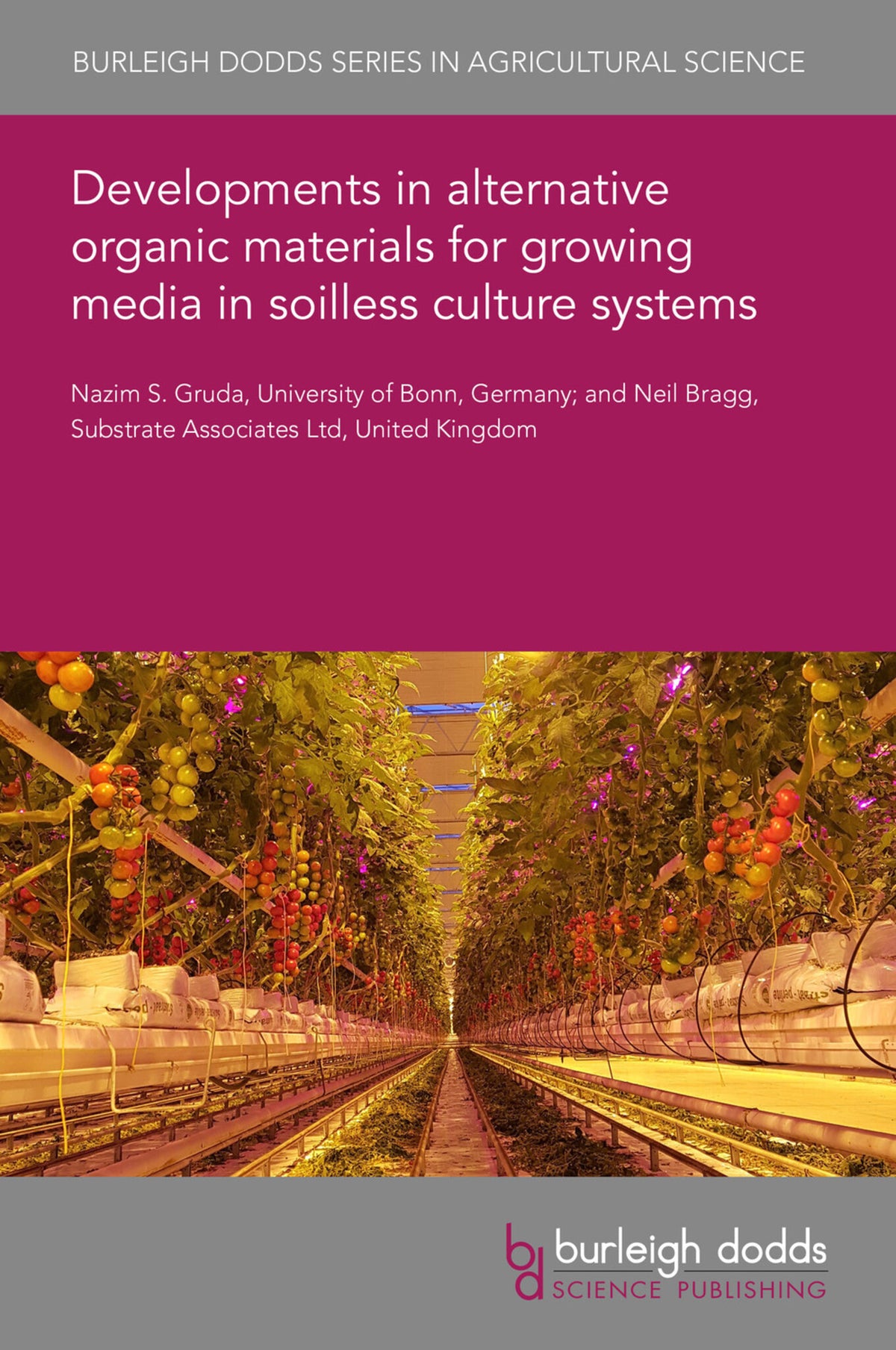
There is increasing pressure on both growing media manufacturers and horticulturists to significantly reduce their reliance on peat as a constituent of substrates. This chapter distils down the available information on alternative organic materials which have emerged as the major contenders for peat dilution or replacement. We discuss materials coming from residues of manufacturing processes, for instance, wood, tree bark and coconut fibres and coir; waste and composted materials, for instance, green compost; and materials specially cultivated for use as growing media components, for instance, Sphagnum and Miscanthus. The future of growing media will be based on blends of different components which will be renewable and locally produced materials with better life cycle assessment.

Price: £25.00
Publisher: Burleigh Dodds Science Publishing
Imprint: Burleigh Dodds Science Publishing
Series: Burleigh Dodds Series in Agricultural Science
Publication Date:
08 February 2021
ISBN: 9781801460408
Format: eBook
BISACs:

1 Introduction 2 Organic raw materials as residues of manufacturing processes: wood-based materials 3 Organic raw materials as residues of manufacturing processes: bark, coir, rice hulls and xylit 4 Waste and composted materials other than bark 5 Biochar and hydrochar 6 Cultivated organic raw materials 7 Case study: peat use reduction in European countries 8 Summary and future trends 9 Where to look for further information 10 References