Skip to product information
1 of 1

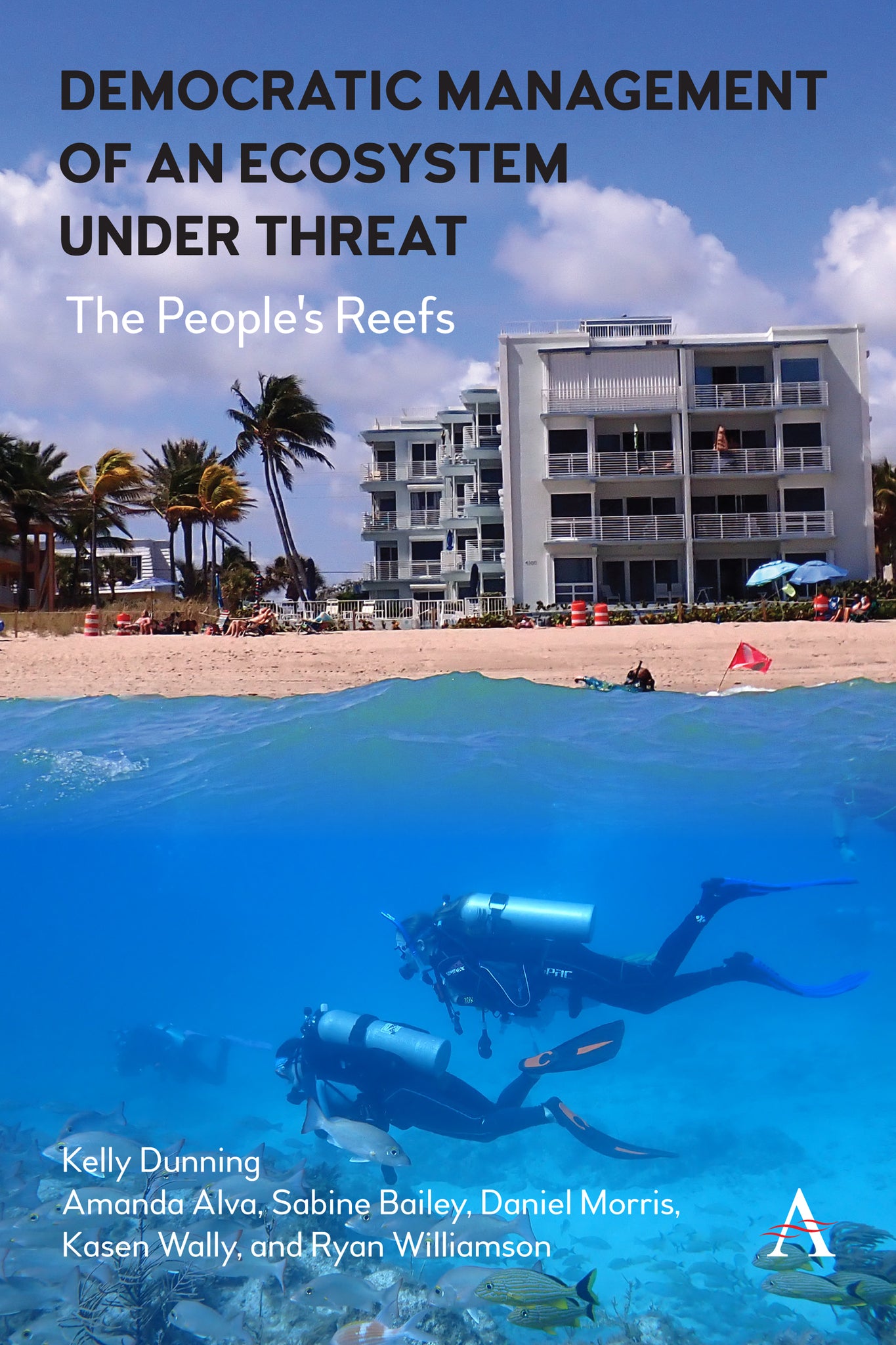
Democratic Management of an Ecosystem Under Threat

Publisher:

Regular price £25.00
Sale price £25.00 Regular price £25.00
Sale Sold out
Using case studies from Florida and the Caribbean, this book summarizes the state of coral reef conservation today, exploring the most effective way to protect vulnerable coral reef ecosystems whil...
Read More
  • Format:
  • 11 July 2023
View Product Details

Using case studies from Florida and the Caribbean region, this book summarizes the state of coral reef conservation today. The question this book answers is, what is the best way to protect the vulnerable coral reefs, with an ever-worsening climate crisis? The book’s contribution is looking closely at people’s avenues to participate in coral reef management, and how the public is increasingly making their voices heard in the management process. 

files/i.png Icon
Price: £25.00
Pages: 238
Publisher: Anthem Press
Imprint: Anthem Press
Series: Strategies for Sustainable Development Series
Publication Date: 11 July 2023
Trim Size: 9.00 X 6.00 in
ISBN: 9781839986734
Format: eBook
BISACs:

SCIENCE / Global Warming & Climate Change, Public administration / Public policy, POLITICAL SCIENCE / Public Policy / Environmental Policy, SCIENCE / Life Sciences / Marine Biology, Green politics / ecopolitics / environmentalism, Development and environmental geography

REVIEWS Icon

 The 11 chapters of this interesting work provide a focused, informative, and engaging discussion of how climatic factors and other environmental issues are promoting the decline of coral reefs and how necessary the restoration and maintenance of coral reefs are, preeminently for the health of the world’s oceans. -- Choice


"Democratic Management of an Ecosystem Under Threat: The People's Reefs" is a timely study in view of the peril of extinction facing so many marine ecosystem environments due to human activities enhanced climate change. "Democratic Management of an Ecosystem Under Threat: The People's Reefs" is especially and unreservedly recommended for personal, professional, community, college, and university library Marine Environmental Studies collections and supplemental curriculum studies lists —Midwest Review


“This is an important piece of scholarship that applies a solid theoretical foundation to real world situations. The blending of theories from ecosystem services, conflict studies, and environmental governance within this book will speak to a wide array of readers, and I expect this book to be on the shelf of marine biologists and public policy experts alike.” — Joshua A. Drew, Assistant Professor of Vertebrate Conservation Biology, Department of Environmental Biology, State University of New York College of Environmental Science and Forestry


“Employing striking photos with a familiar style, Professor Dunning and her students lead the reader on a dive into the rugosities of coral reef governance. Using clear arguments supported by salient examples, one is invited to consider the strengths of participatory management, comprising local adaptations in the face of human insults. A must-read for all who would conserve the beauty and diversity of the Peoples’ reefs.” — Porter Hoagland, Emeritus Research Scholar, Woods Hole Oceanographic Institution


“Based on case studies from Florida and the Cayman Islands, Dunning and colleagues apply policy concepts and theories to understand (and make suggestions about) how to successfully govern coral reefs. This is a must-read for students and practitioners of coral reef governance as well as those interested in adaptive governance in general.” — Tomas Olivier, Assistant Professor, Maxwell School of Citizenship and Public Affairs, Syracuse University

Kelly Dunning is an assistant professor and Director of the Conservation Governance Lab at Auburn University. She holds a Ph.D. from the Massachusetts Institute of Technology and is an expert on global coral reef management. 

Ryan Williamson is an assistant professor in the Department of Political Science at Auburn University. He received his Ph.D. from the University of Georgia and is an expert in congressional politics including policy, procedure, and elections.

Amanda Alva graduated with her MS from the Conservation Governance Lab at Auburn University studying coral reef policy in the United States. She received her BSc in Marine Science from the University of Texas at Austin. She is currently a Marine & Coastal Social Scientist at NOAA for CSS Inc. 

Sabine Bailey graduated with her MS from the Conservation Governance Lab at Auburn University studying coral reef management. She received her BSc in Biology from McGill University. She is currently an NOAA Digital Coast Fellow working with The Nature Conservancy and the Maryland Department of Natural Resources

Daniel Morris graduated with his MS from Conservation Governance Lab at Auburn University studying coral reef management. He received his BA from Auburn University in Political Science. He is currently a federal Presidential Management Fellow.

Kasen Wally graduated with his MS from the Conservation Governance Lab at Auburn University studying coral reef management in Florida. He received his BSc in Environmental Science from Western Carolina University. He is currently a Coastal Resiliency Specialist with the North Carolina Department of Environmental Quality

Part 1. The Climate Change Challenge to Coral Reefs that will require Conservation Theory and Practice to Evolve; Chapter 1. Introduction; Chapter 2. Climate Change, Coral Bleaching and Other Threats; Chapter 3. Status of Coral Reefs; Chapter 4. Approaches to Coral Reef Management ; Part 2: Case Studies; Chapter 5: The Case of The Florida Reef Tract: Bureaucracies, Participation, and Managing Novel Ecosystems ; Chapter 6. How communities are organizing to contest major infrastructure projects that may damage coral reefs: The Port of Miami Case; Chapter 7. How communities are organizing to contest major infrastructure projects that damage coral reefs: The Cayman Islands Case; Chapter 8: Cultural Services of Reefs: The Case of the Cayman Islands MPAs and What Would Be Lost With A Major Infrastructure Project; Chapter 9: How Coral Reefs are Placed on the Decision-making Agenda ; Chapter 10: Summary of case studies and the changes to stakeholder-driven, participatory management of reefs; Chapter 11: Call to Action: Participation and Managing Reefs Under Global Change; Appendix Chapter 5; Appendix Chapter 6; Appendix Chapter 7; Appendix Chapter 8; Appendix Chapter 9