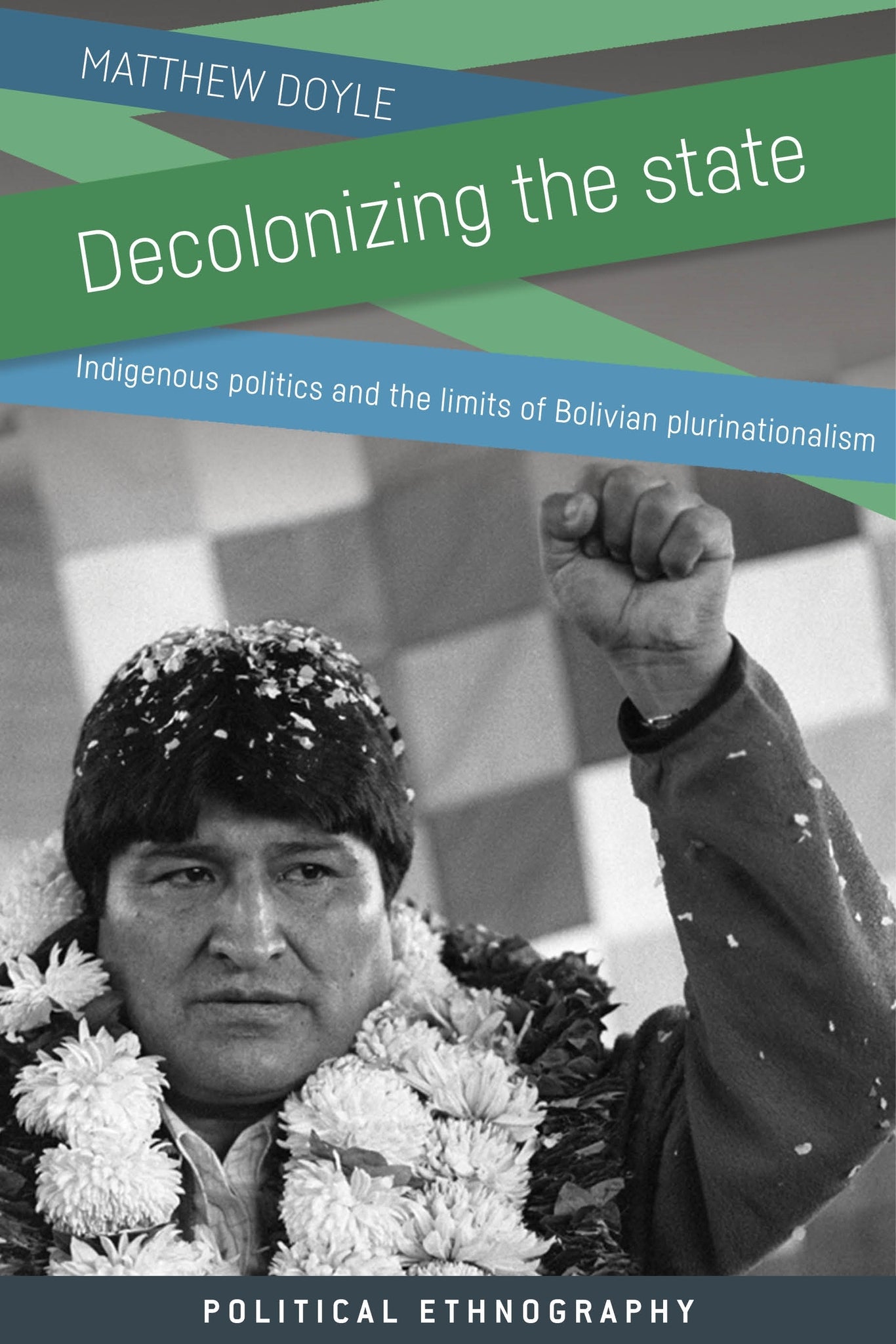
Decolonizing the state is an ethnographic exploration of the Bolivian Movement for Socialism (MAS) government's project of progressive state-building at the local level. While the MAS aimed to re-found the nation via legal and constitutional reforms aimed at empowering its majority indigenous population and dismantling colonial legacies, after twenty years in office it dramatically lost power. Based on long-term fieldwork in a Quechua-speaking community, this book examines first-hand the complex, often contradictory outcomes of state-led decolonization. It brings history and ethnography into dialogue with European critical theory, decolonial and indigenous thought to show how colonial state-making shaped Bolivia’s political order - and continues to constrain transformative change. At a time of growing uncertainty for the Latin American and global Left, Decolonizing the state offers a vital contribution to debates on state power, indigeneity, radical politics, and the practice of decolonization.
Price: £85.00
Pages: 224
Publisher: Manchester University Press
Imprint: Manchester University Press
Series: Political Ethnography
Publication Date:
01 September 2026
ISBN: 9781526175120
Format: Hardcover
BISACs:
SOCIAL SCIENCE / Indigenous Studies, Indigenous people: governance and politics, POLITICAL SCIENCE / Religion, Politics & State, SOCIAL SCIENCE / Ethnic Studies / Caribbean & Latin American Studies, Social and cultural anthropology
Matthew Doyle is a Lecturer in Social Anthropology at University College London
Introduction: Indigenous political conflict in the new Bolivia
I Decolonizing the state in Bolivia
1 Decolonization, states and legibility
2 Indigenous politics and the Bolivian state
II Indigenous local politics and the plurinational state
3 Territory and identity: the National Agrarian Reform (INRA) Law and the legal status of land
4 The meaning of living well: the Popular Participation (LPP) Law and the local politics of development
5 Indigenous autonomy: the Autonomies and Decentralization (LMAD) Law and local governance
6 Legal pluralism and Indigenous justice: the Jurisdictional Demarcation Law and the 2009 Bolivian constitution
Conclusion: The new Bolivia, decolonization and state reform
References
Index