





Some error occured while loading the Quick View. Please close the Quick View and try reloading the page.
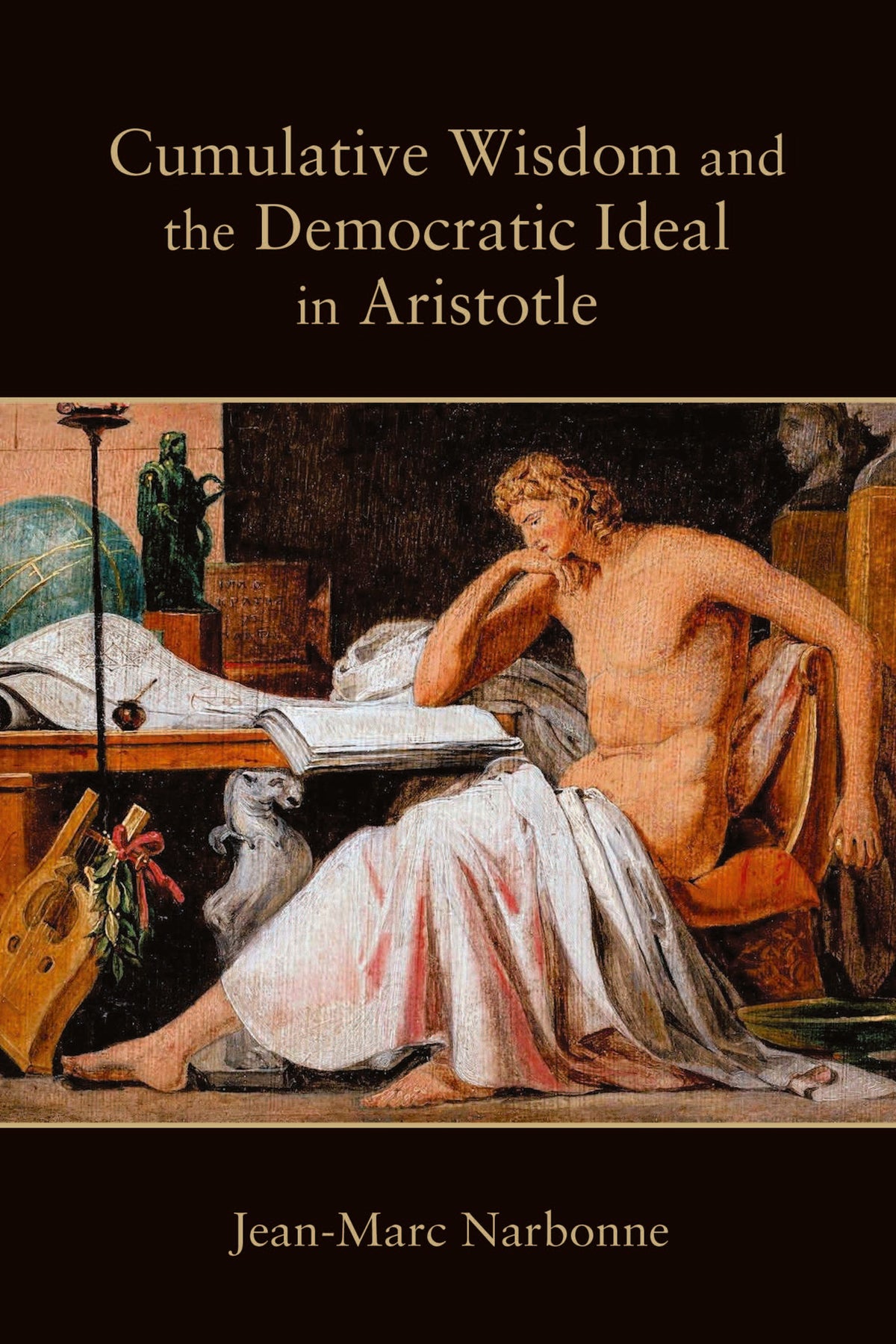
The revolutionary discovery by Aristotle of a middle-class government as the best regime.
In Politics, Book III, Chapter 11, Aristotle presents an argument in favor of a decision-making method based on the accumulation of opinions that are expressed within a deliberative meeting, whether in a political assembly, a court of law, or an artistic jury. Thanks to this cumulation—what has been called the Summierungstheorie—people who find themselves gathered would be able to arrive at judgments that are not only wise, but superior to those taken in isolation by scientists. And here Platonism is potentially overthrown. If Aristotle adopts this cumulative process (Summierungsverfahren), we can logically expect that the kind of regime he favors will be of a democratic type. And this is what happens: hence, the portrait that emerges of a quietly "revolutionary" Aristotle. After a general introduction (chapter 1) and following a critique of Plato's main political theses (chapter 2), the book analyzes Aristotle's discourse in favor of "cumulative wisdom" (chapter 3). It then attempts to identify the political regime that finally finds his favor, the polity (chapter 4), and questions the place of Books VII-VIII of the Politics in the treatise as a whole (chapter 5).


Jean-Marc Narbonne is Professor of Greek Philosophy at Laval University (Canada) and has published extensively. He is the author of Protagoras, premier penseur de la démocratie.