





Some error occured while loading the Quick View. Please close the Quick View and try reloading the page.
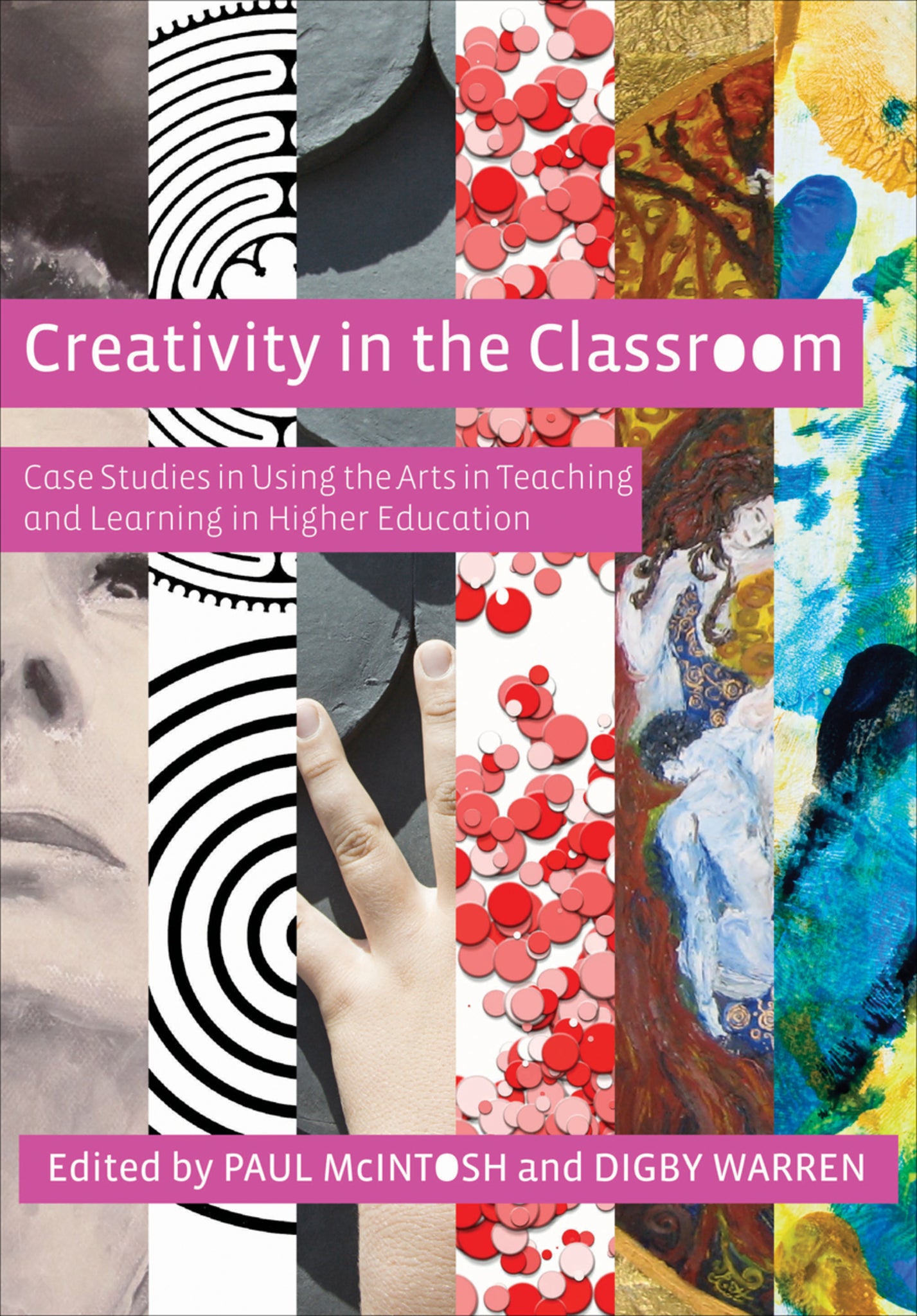


'The chapters provide great ideas for teachers to enliven their sessions and modules ... By aiming to close the gap between academic learning and professional application the writers have shown how an imaginative approach has real, practical and lasting value.'
Introduction: The Current Educational Climate: Why the Creative Arts and Humanities are so Important to Creativity and Learning in the Classroom – Paul McIntosh
PART I: Encouraging Creativity in the Classroom
Chapter 1: Using the Creative Arts for Collaboration – Babs Anderson and Jo Albin-Clark
Chapter 2: Introducing Arts-based Inquiry into Medical Education: ‘Exploring the Creative Arts in Health and Illness’ – Louise Younie
PART II: Using Performance
Chapter 3: Using Cinema to Enhance the Relevance of Economics to Students’ Lives – Gherardo Girardi
Chapter 4: Fascinatin’ Rhythm: Tapping into Themes of Leadership and Management by Making Music – Dave Griffiths
Chapter 5: A Dramatic Approach to Teaching Applied Ethics – Craig Duckworth
PART III: Using Poetry
Chapter 6: Using Poetry to Create Conditions for Dialogue in a Postgraduate Course on Managing Diversity – Christina Schwabenland
Chapter 7: Teaching and Using Poetry in Healthcare – Clare Hopkinson
Chapter 8: Gaining a Wider Perspective on Life in Medical Education – Mark Rickenbach
PART IV: Using Imagery
Chapter 9: Beyond Words: Surfacing Self in End-of-life Care Using Image-making – Sue Spencer
Chapter 10: Fashion Students Engaging in Iconic Designs in a Business World – Ruth Marciniak, Debbie Holley and Caroline Dobson-Davies
Chapter 11: Storytelling and Cycles of Development – Karen Stuart
Chapter 12: Developing Refl ective Learning Journals – Audrey Beaumont
Chapter 13: The Overlooked: Landscapes, Artistry and Teaching – Paul Key
Chapter 14: Mirror Mirror: Experiential Workshops Exploring ‘Self’ in Social Work Education and Practice – Debbie Amas, Judy Hicks and Roxanna Anghel
Chapter 15: The Labyrinth: A Journey of Discovery – Jan Sellers
PART V: Learning Technologies and Assessment
Chapter 16: Alternatives to the Essay: Creative Ways of Presenting Work for Assessment – Emma Bond and Jessica Clark
Chapter 17: Creativity-mediated Training, Social Networks and Practitioner Enquiry in Higher Education – Jouaquin Paredes, Agustin De La Herran and Daniel Velazquez
Conclusion: Arts-based Inquiry as Learning in Higher Education: Purposes, Processes and Responses – Digby Warren