





Some error occured while loading the Quick View. Please close the Quick View and try reloading the page.
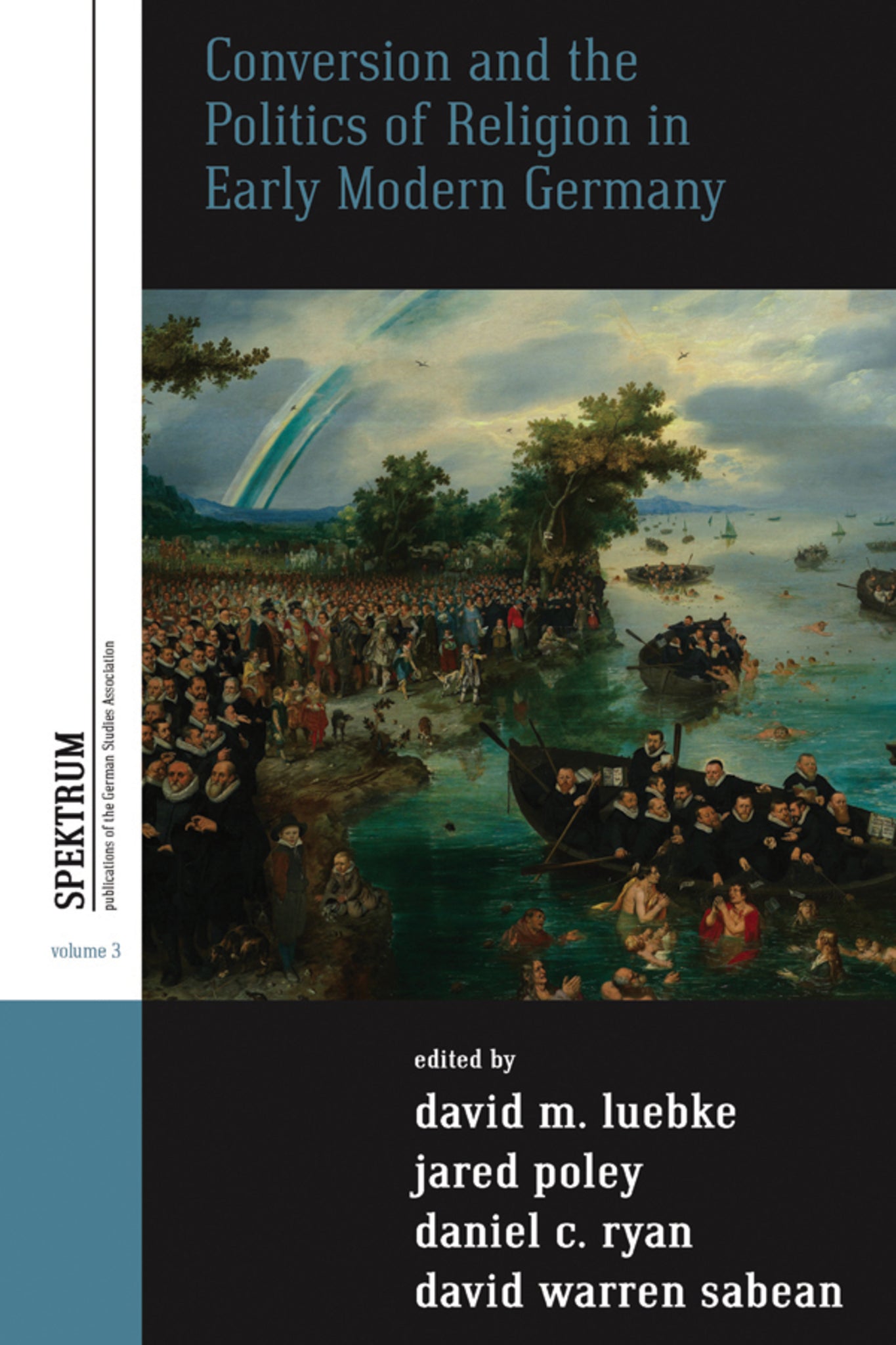
The Protestant and Catholic Reformations thrust the nature of conversion into the center of debate and politicking over religion as authorities and subjects imbued religious confession with novel meanings during the early modern era. The volume offers insights into the historicity of the very concept of “conversion.” One widely accepted modern notion of the phenomenon simply expresses denominational change. Yet this concept had no bearing at the outset of the Reformation. Instead, a variety of processes, such as the consolidation of territories along confessional lines, attempts to ensure civic concord, and diplomatic quarrels helped to usher in new ideas about the nature of religious boundaries and, therefore, conversion. However conceptualized, religious change— conversion—had deep social and political implications for early modern German states and societies.


“The book is unusually coherent for a collection of essays…One of the strengths of this volume is the long chronological perspective it takes. The essays cover issues from the first half of the sixteenth century to the middle of the eighteenth century. This perspective allows the reader to trace German ideas about conversion and to connect them in a nuanced way with political developments. The volume thus provides a new perspective on the issue of confessionalization.” · American Historical Review
“This well-conceived essay collection provides not only an excellent survey of the meanings of conversion in early modern Germany but also important insights into the whole concept of ‘conversion’ in the pre-modern period and the light this sheds on such associated ideas as the ‘confessionalization’ paradigm. In his lucid introduction, David Luebke not only provides the reader-in-a-hurry with useful summaries of each of the subsequent essays, but also an outline sketch of the different meanings of the term ‘conversion’ during the period under review…The volume is brought to a close by a brief afterword and is provided with an excellent index which makes this essay collection a must for all those increasing number of scholars who are becoming interested in conversion and religious identity formation beyond only the pre-modern world.” · European History Quarterly
Preface
Introduction: The Politics of Conversion in Early Modern Germany
David M. Luebke
Chapter 1. Paths of Salvation and Boundaries of Belief: Spatial Discourse and the Meanings of Conversion in Early Modern Germany
Duane J. Corpis
Chapter 2. Conversion Concepts in Early Modern Germany: Protestant and Catholic
Eric-Oliver Mader
Chapter 3. Turning Dutch? Conversion in Early Modern Wesel
Jesse Spohnholz
Chapter 4. The Right to be Catholic—The Right to be Protestant? Perspectives on Conversion Before and After the Peace of Westphalia
Ralf-Peter Fuchs
Chapter 5. Conversion and Diplomacy in Absolutist Northern Europe
Daniel Riches
Chapter 6. Irenicism and the Challenges of Conversion in the Early Eighteenth Century
Alexander Schunka
Chapter 7. Mish-Mash with the Enemy: Identity, Politics, Power, and the Threat of Forced Conversion in Frederick William I’s Prussia
Benjamin Marschke
Chapter 8. Pietist Conversion Narratives and Confessional Identity
Jonathan Strom
Chapter 9. Conversion and Sarcasm in the Autobiography of Johann Christian Edelmann
Douglas H. Shantz
Afterword
Jared Poley
Bibliography
Notes on the Contributors
Index