





Some error occured while loading the Quick View. Please close the Quick View and try reloading the page.
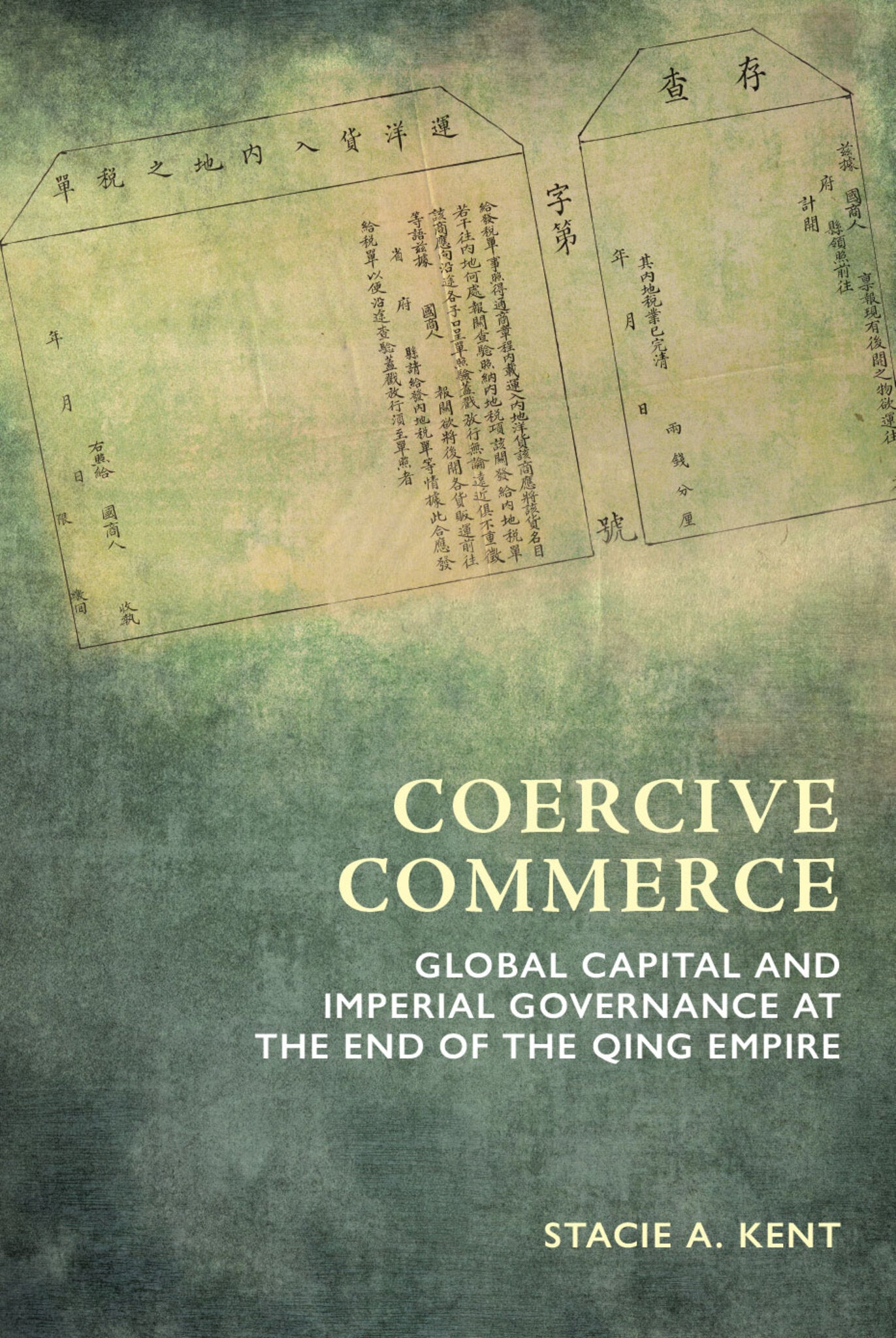
In 1842, the Qing Empire signed a watershed commercial treaty with Great Britain, beginning a century-long period in which geopolitical and global economic entanglements intruded on Qing territory and governance. Previously understood as an era of “semi-colonialism,” Stacie A. Kent reframes this century of intervention by shedding light on the generative force of global capital.
Based on extensive research conducted with British and Chinese government archives, Coercive Commerce shows how commercial treaties and the regulatory regime that grew out of them catalyzed a revised arts of governance in Qing-administered China. Capital, which had long been present in Chinese merchants’ pocket-books, came to shape and even govern Chinese statecraft during the “treaty era.” This book contends that Qing administrators alternately resisted and adapted to this new reality, through taxation systems such as transit passes and the Imperial Maritime Customs Service, by reorganizing Chinese territory into space where global circuits of capital could circulate and reproduce at ever greater scale.
Offering a deep dive into the coercive nature of capitalism and the historically specific ways global capital reproduction took root in Qing China, this book will interest historians of capital and modern China alike.


“This book delivers on its promise to recast how Qing China was impacted by nineteenth-century imperialism. By including treaties, commercial statistics, and tax regulation to the list of technologies designed to coercively incorporate China into a globalized, capitalist economy, Kent expertly uncovers hidden forces that utterly transformed the Qing empire.”
—C. Patterson Giersch, Wellesley College
“This is a wonderfully original study that rethinks the history of capitalist transformation in nineteenth-century China through the lens of capital’s circulatory needs and its viral effects on the practices, norms, and institutions of commercial governance.”
—Andrew Sartori, New York University