





Some error occured while loading the Quick View. Please close the Quick View and try reloading the page.
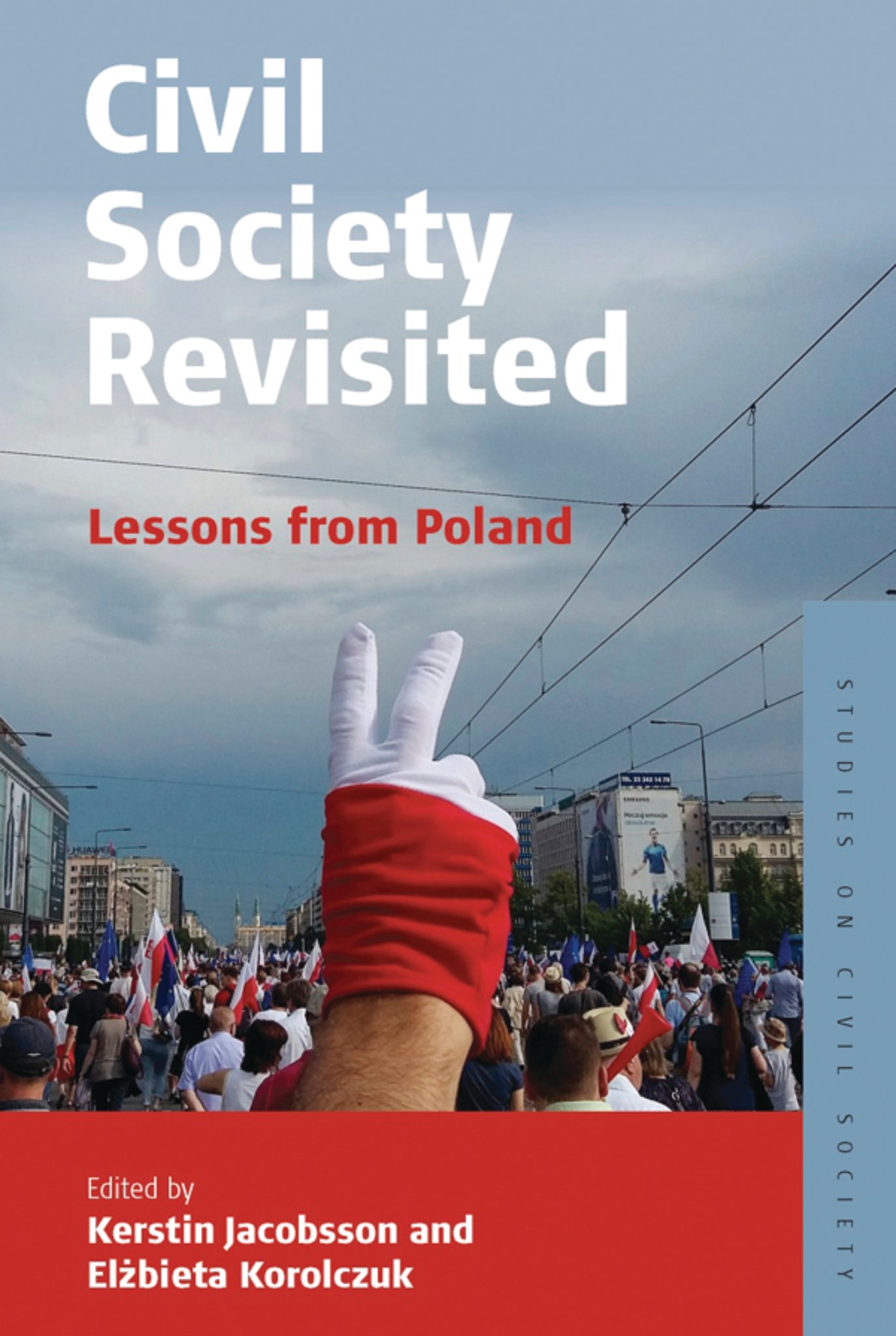
In much social scientific literature, Polish civil society has been portrayed as weak and passive. This volume offers a much-needed corrective, challenging this characterization on both theoretical and empirical grounds and suggesting new ways of conceptualizing civil society to better account for events on the ground as well as global trends such as neoliberalism, migration, and the renewal of nationalist ideologies. Focusing on forms of collective action that researchers have tended to overlook, the studies gathered here show how public discourse legitimizes certain claims and political actions as “true” civil society, while others are too often dismissed. Taken together, they critique a model of civil society that is ‘made from above’.


“The book Civil Society Revisited is relevant not only for Polish readers, but for all scholars of civil society and social movements in the region. This is a collection of interesting texts with a strong methodological thesis and equally strong message …. The authors of the chapters challenge a common view that civil society in Poland and other post-socialist countries is underdeveloped: they question the biased image of passive societies, lacking in social capital and ‘intermediary bodies’, in which citizens are poorly educated, unaware of their own rights, deprived of the culture of participation and the necessary resources needed for social activity.” • Przegląd Socjologiczny
“Empirically grounded, methodologically plural, gender aware, theoretically rich, and sufficiently provocative, the editors of this volume have assembled interpretations of Polish civil society that ought not only draw in those dedicated to Polish scholarship. This volume needs to be engaged by everyone who wants to appreciate how social science matters in figuring social change.” • Slavic Review
List of Tables and Figures
Preface
Introduction: Rethinking Polish Civil Society
Kerstin Jacobsson and Elżbieta Korolczuk
PART I: CIVIL SOCIETY IN CONTEMPORARY POLAND: MYTHS AND REALITIES
Chapter 1. Civil Society in Post-communist Europe – Poland in a Comparative Perspective
Grzegorz Ekiert and Jan Kubik
Chapter 2. (Mis)understanding Social Activism in Poland
Anna Giza-Poleszczuk
Chapter 3. Rethinking Civic Privatism in a Postsocialist Context: Individualism and Personalization in Polish Civil Society Organizations
Kerstin Jacobsson
Chapter 4. Defining In/Defining Out. Civil Society through the Lens of Elite NGOs
Katarzyna Jezierska
PART II: (DE)LEGITIMIZATION OF CIVIC ACTIVISM: NEW ACTORS AND MARGINALIZED GROUPS
Chapter 5. When Parents Become Activists. Exploring the Intersection of Civil Society and Family
Elżbieta Korolczuk
Chapter 6. On the Disappearing Mother. Political Motherhood, Citizenship and Neoliberalism in Poland
Renata Ewa Hryciuk
Chapter 7. Marginalizing Discourses and Activists’ Strategies in Collective Identity Formation: The Case of the Polish Tenants’ Movement
Dominika V. Polanska
Chapter 8. Voice and Insecurity. Political Participation Among Members of the Precariat
Anna Kiersztyn
PART III: CIVIL SOCIETY MAKING: BETWEEN THE PAST AND THE PRESENT
Chapter 9. Between Tradition and Modernity: The Case of Rural Women’s Organizations in Poland
Ilona Matysiak
Chapter 10. Ethnic Bonding and Homing Desires: The Polish Diaspora and Civil Society Making
Gabriella Elgenius
This research was funded by the Swedish Research Council (2010-01706, PI Jacobsson). Earlier data collection was funded by the British Academy and John Fell at the University of Oxford (2007–2012, PI Elgenius). This chapter is available under a CC BY license thanks to the Swedish Research Council for Health, Working Life and Welfare (2018-00181). Not for resale.
Chapter 11. Mobilizing on the Extreme Right in Poland: Marginalization, Institutionalization and Radicalization
Daniel Platek and Piotr Plucienniczak
Conclusion: Empirical and Theoretical Lessons from the Volume
Kerstin Jacobsson and Elżbieta Korolczuk
Index