





Some error occured while loading the Quick View. Please close the Quick View and try reloading the page.
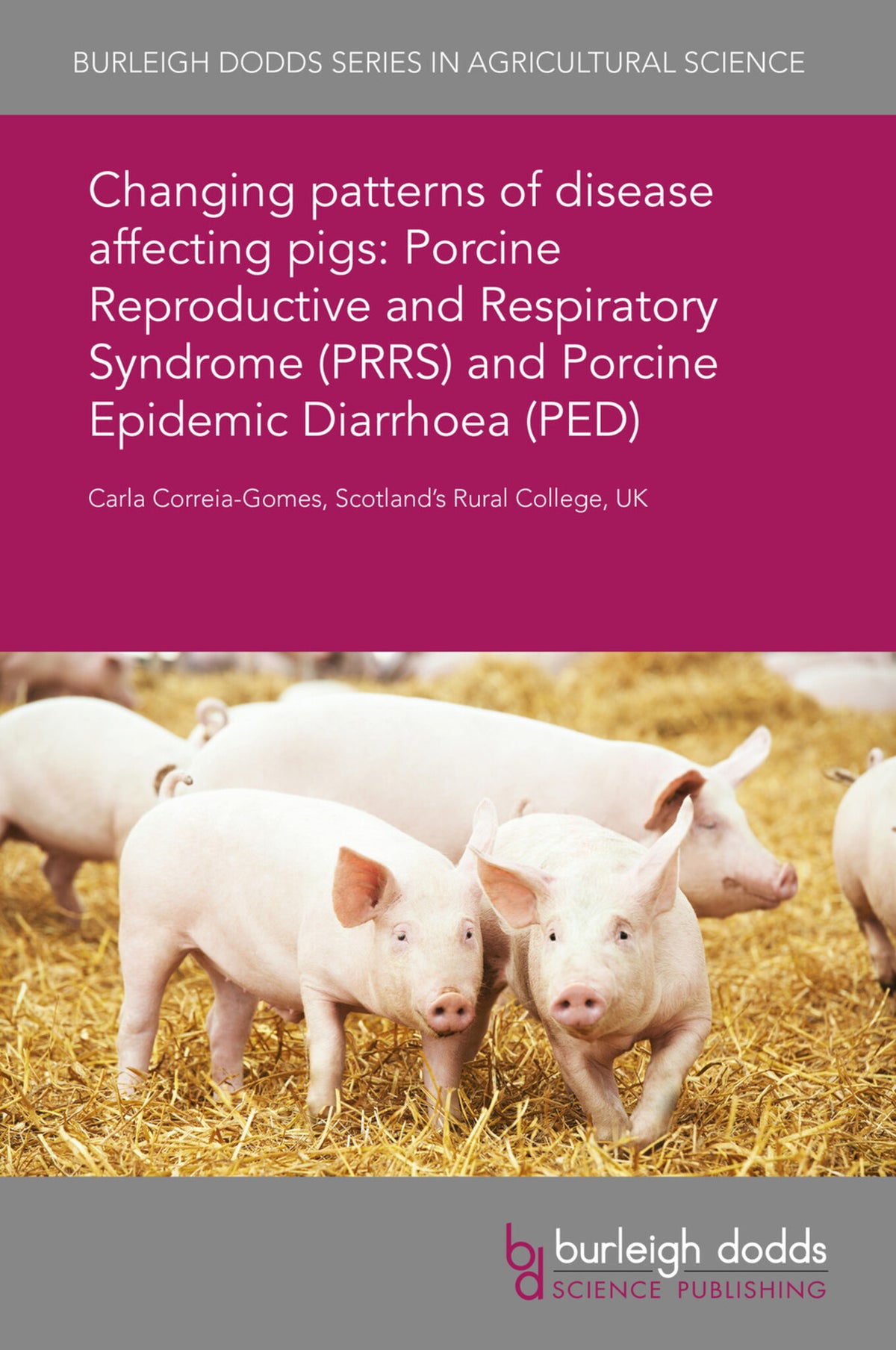
Porcine Reproductive and Respiratory Syndrome virus (PRRSv) and Porcine Epidemic Diarrhoea virus (PEDv) are two of the major viruses that affect pigs worldwide. This chapter focuses on the transmission, clinical presentation, evolution and spread of these two agents (PRRSv and PEDv), due to their importance in pig production worldwide and their evolution over the years. The chapter discusses in detail the agent, transmission, clinical presentation and evolution and spread of these two viruses in the pig population both worldwide, and more specifically, the United Kingdom. The chapter provides readers with an overview of the complexity of these two agents and how this influences their clinical presentation and evolution over time and space.

Price: £25.00
Publisher: Burleigh Dodds Science Publishing
Imprint: Burleigh Dodds Science Publishing
Series: Burleigh Dodds Series in Agricultural Science
Publication Date:
12 March 2018
ISBN: 9781838795146
Format: eBook
BISACs:

1 Introduction 2 Porcine Reproductive and Respiratory Syndrome (PRRS) 3 PRRS virus in the United Kingdom 4 Porcine Epidemic Diarrhoea (PED) 5 Epidemiological presentation of PED 6 Conclusion 7 Where to look for further information 8 Acknowledgements 9 References