





Some error occured while loading the Quick View. Please close the Quick View and try reloading the page.
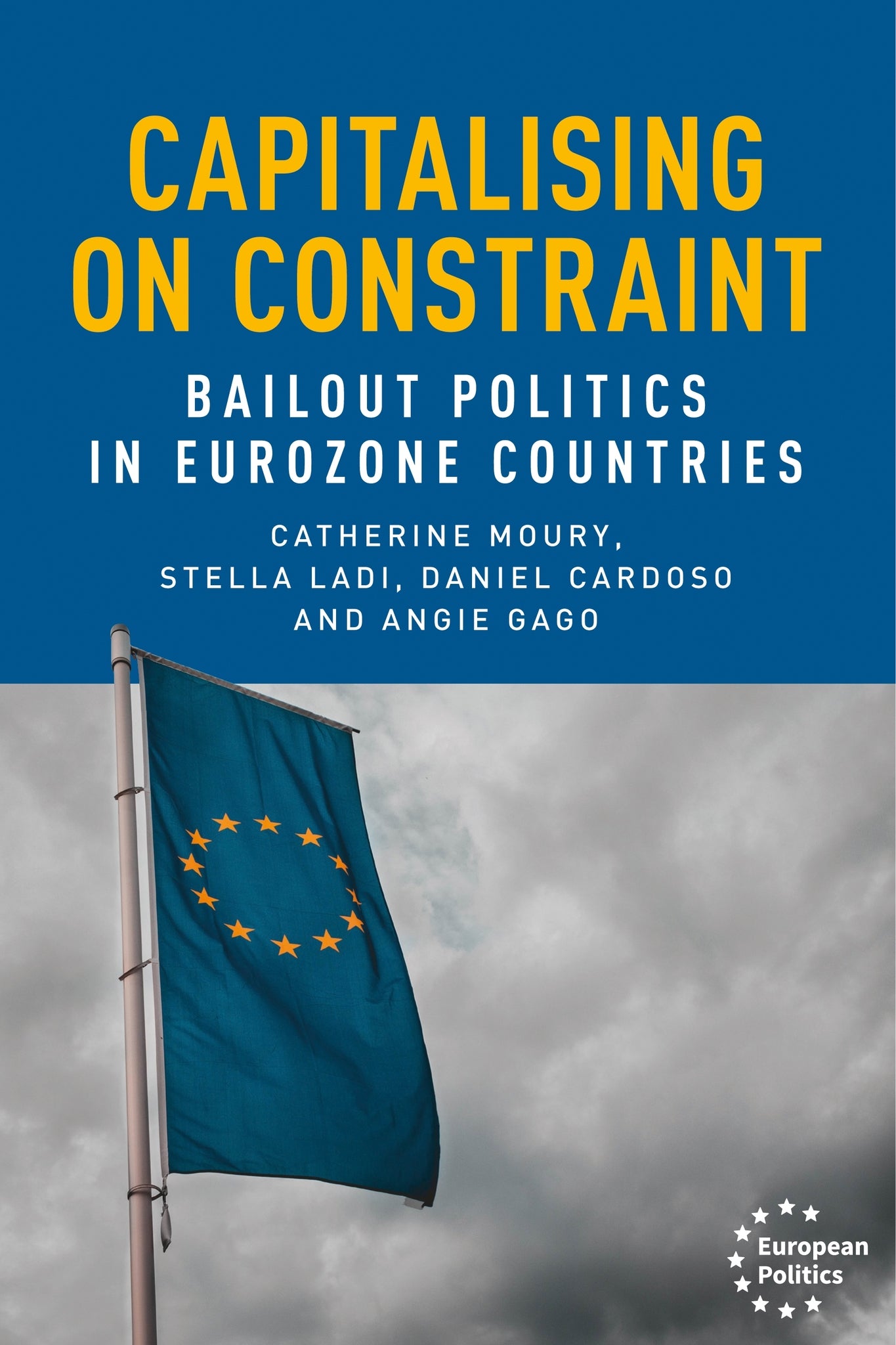
This book is an essential analysis of what really happens behind closed doors during and after a bailout.
In the last decade, five Eurozone governments in economic difficulty received assistance from international lenders on the condition that certain policies specified in the Memoranda of Understanding were implemented. How did negotiations take place in this context? What room for manoeuvre did the governments of these countries have? After conditionality, to what extent were governments willing and able to roll back changes imposed on them by the international lenders?
This book explores the constraints on national executives in the five bailed out countries of the Eurozone during and beyond the crisis, from 2008 to 2019. The authors argue that despite international market pressure and creditors’ conditionality, governments had some room for manoeuvre during a bailout and were able to advocate, resist, shape or roll back some of the policies demanded by external actors. Under certain circumstances, domestic actors were also able to exploit the constraint of conditionality to their own advantage.
Capitalising on constraint shows that after a bailout programme, governments could use their discretion to revert the measures that brought the greatest benefits at a lower cost. The authors provide a valuable insight into the determinants of bargaining leverage, the importance of credibility, and the limits of conditionality that might inform the design of international and European lending during future crises.


Shortlisted for the UACES Best Book Prize 2022
'Capitalising on Constraint is a perfect example that, when done with rigour, comparative case study research remains as key as compelling in order to address ambitious research questions involving macro processes and cross-national comparison.'
Amandine Crespy, Université Libre de Bruxelles, Political Studies Review
Catherine Moury, Faculty of Social and Human Sciences, NOVA University, Lisbon
Stella Ladi, Stella Ladi, Queen Mary University of London and Panteion University, Athens
Daniel Cardoso, Autonomous University of Lisbon
Angie Gago, University of Lausanne
Introduction
1 The politics of conditionality: a theoretical framework
2 Greece
3 Ireland
4 Portugal
5 Spain
6 Cyprus
7 Capitalising on external constraint: six things you should know about Eurozone bailouts
References
Index