





Some error occured while loading the Quick View. Please close the Quick View and try reloading the page.
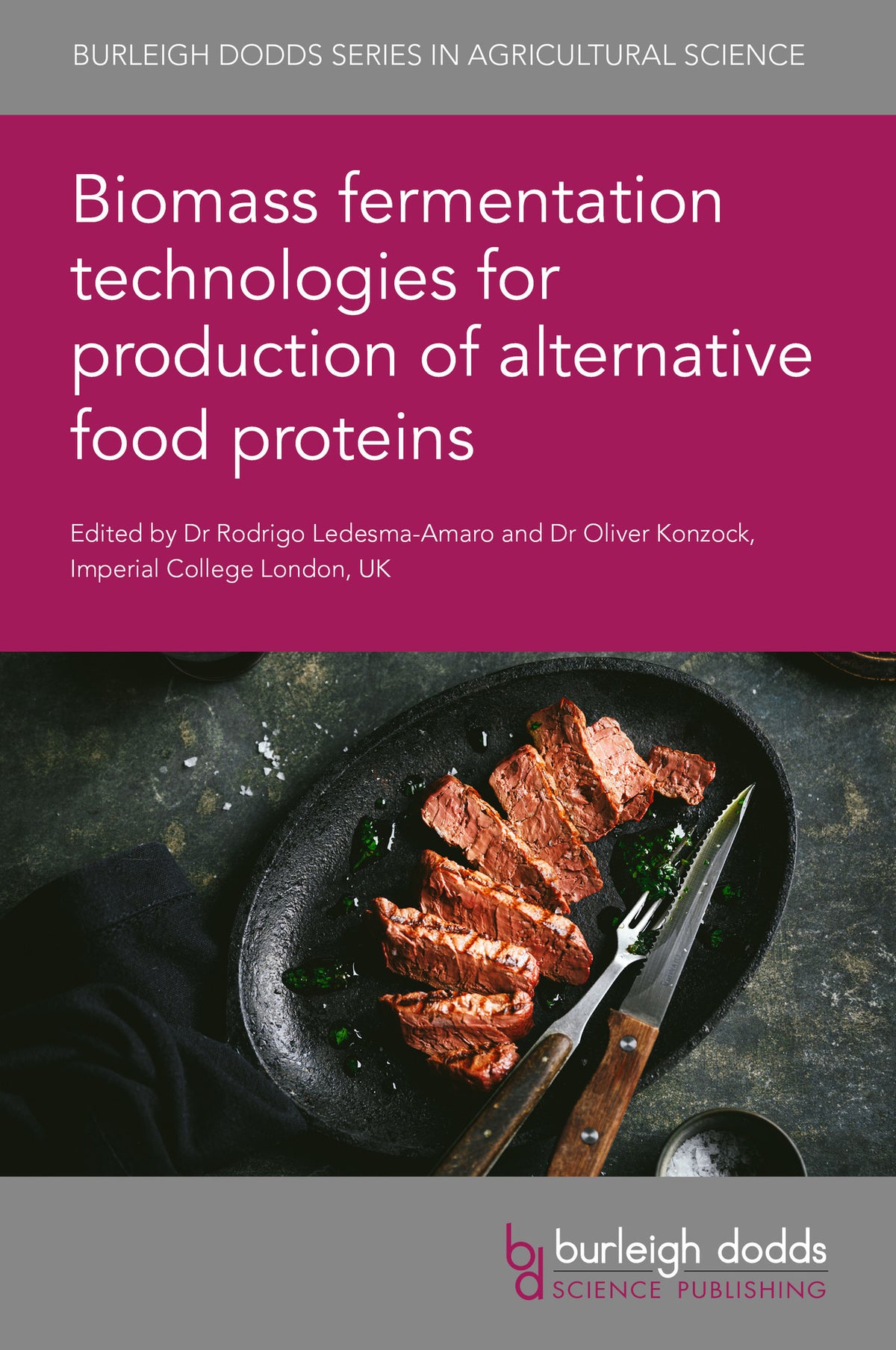
As a result of the environmental impact of global crop and livestock production, there is growing interest in developing novel, alternative protein sources for human consumption from microbial sources. One area which has attracted particular interest is the development of single-cell protein (SCP) foods produced using biomass fermentation technologies.
Biomass fermentation technologies for production of alternative food proteins provides a comprehensive overview of the current research in this developing area. The book reviews ways of addressing challenges in transferring new technologies from the lab to sustainable, large-scale commercial production whilst ensuring the nutritional value and sensory quality of SCP foods. The book also discusses strain collection and the range of traditional strain engineering approaches, as well as the current international regulatory landscape for novel microbial foods.


Dr Rodrigo Ledesma-Amaro is Professor and Academic Lead for Engineering Biology in the Department of Bioengineering at Imperial College London, UK. He is also Director of both the Bezos Centre for Sustainable Protein and the Microbial Food Hub at Imperial College.
Dr Oliver Konzock is a Research Associate in Dr Ledesdma-Amaro’s team. His research focuses on harnessing the yeast Yarrowia lipolytica to produce food and other lipids. He is the Chair of the COST Action Network “Accelerating Innovation and Development of European Microbial Foods (Mic2Food)”.
Part 1 Introduction
- 1.Introduction to alternative food proteins and their importance for sustainability: Rodrigo Ledesma-Amaro, Imperial College London, UK;
- 2.Introduction to fermentation technologies for the production of alternative food proteins: Adam Leman, Good Food Institute, USA;
Part 2 Strain selection, strain engineering and biomass fermentation technologies
- 3.Landscape of strain collection for biomass fermentation to produce alternative food proteins: Alessia Buscaino, Quadram Institute, UK;
- 4.Traditional strain engineering approaches for biomass fermentation to produce alternative food proteins: Sandra Garrigues, IATA-CSIC, Spain;
- 5.Advances in solid (solid-state and semi-solid) fermentation technologies for the production of alternative food proteins: Barak Dror, Solid Fermentation Innovation, Israel;
- 6.Advances in liquid (submerged state) fermentation technologies for the production of alternative food proteins: José Luis Martinez Ruiz, Technical University of Denmark, Denmark;
- 7.Advances in gas fermentation technologies for the production of alternative food proteins: Sonja Billerbeck, Imperial College London, UK;
Part 3 Advances in downstream processes (DSP)
- 8.Improving the texture and consistency of single-cell protein foods: Katarzyna Polanowska, Poznan University of Life Sciences, Poland;
- 9.Improving the shelf life and safety of single-cell protein foods: Mustafa Türker, Pakmaya, Turkey;
- 10.Optimising protein content and quality in single-cell protein foods: Alan Javier Hernandez-Alvarez, University of Leeds, UK;
- 11.Digestibility assays for assessing the nutritional value of single-cell protein foods: Loreta Bašinskienė, Kaunus University of Technology, Lithuania;
- 12.Taste and flavour evaluations for assessing the sensory quality of single-cell protein foods: Parag Acharya, University of Greenwich, UK;
Part 4 Regulation and consumer attitudes to microbial food
- 13.Landscape of international regulations for novel food and microbial foods: Joanne Chan, Singapore Food Agency, Singapore;
- 14.Understanding consumer behaviour and preferences in relation to single-cell protein foods: Majid Haddad Momeni, AAK AB, Sweden;
- 15.Life-cycle assessment (LCA) of single-cell protein foods: Maria Margallo, University of Cantabria, Spain;