





Some error occured while loading the Quick View. Please close the Quick View and try reloading the page.
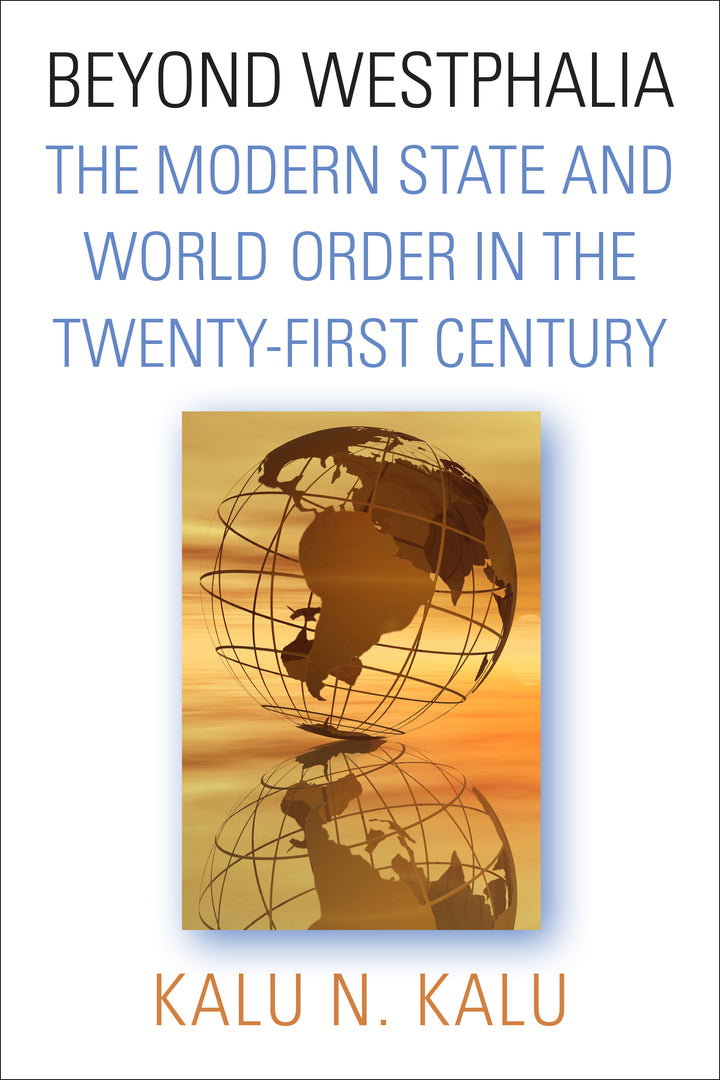
Examines the challenges facing the modern state system and the historical trajectory that would reshape it to the extent that theories of international relations will be compelled to reevaluate their central premises.
Using the Treaty of Westphalia as a reference point, Beyond Westphalia presents a historical and evolutionary trajectory of the modern state system in a way that captures a crucial turning point in modern geopolitics and international relations theory and practice. Epistemologically, this work draws and expands upon two theoretical emphases—theories of evolutionary social change and Giddensian structuration theory—reinforcing the constitutive role of the agency-structure-system, as well as how the trend of past history could be seen as implicated in contemporary international developments. Situated at the nexus between international relations, historical sociology, and structural-organizational theory, Kalu argues that the rapidity and increasing scope of variation in which world events have been changing in the the past few decades will lead to a drastic transformation of the core of the Westphalian ontology—but in such a way that the existing framework of social order would fundamentally dissolve into a new framework of sociopolitical organization. In the same way that empires and states have come and gone over the ages, the system we traditionally refer to as Westphalian statism would face a similar fate.


"An audacious reconceptualization of world order through the lens of evolutionary social change. Sitting at the nexus between international relations, historical sociology, and structural/organizational theory, Kalu proposes the modern Westphalian state system is in a state of decline and will be replaced with a new 'clan-based' mode of politics and society." — Christopher Day, College of Charleston
Kalu N. Kalu is Distinguished Research Professor of Political Science and National Security Policy at Auburn University Montgomery and Docent Professor at Tampere University, Finland. He is the author of A Functional Theory of Government, Law, and Institutions, a winner of the CHOICE award for Outstanding Academic Title.
Introduction: Pathways to History and Evolutionary Change
1. State and Empire: The Problem of Order
2. The Westphalian State: Phased Orthodoxy
3. Structuration: A Focus on Change
4. Political Change: The Geopolitics of World Ordering
5. Social Change: New Revolutionary Impulses
6. Institutional Order and Legitimation: Beyond Praxis
7. Immigration and the State: The End of Identity
8. The Political Economy of Labor and Capital Movements
9. Hybrid Communities and Territorial Conquest
10. War and Peace: Evolving Vistas of Power Politics
11. The New Security Paradigm: 1945 and Thereafter
12. Technology and Human Society: The Shape of Things to Come
13. Beyond Westphalia: A Social Theory of Clans
Notes
Bibliography
Index