





Some error occured while loading the Quick View. Please close the Quick View and try reloading the page.
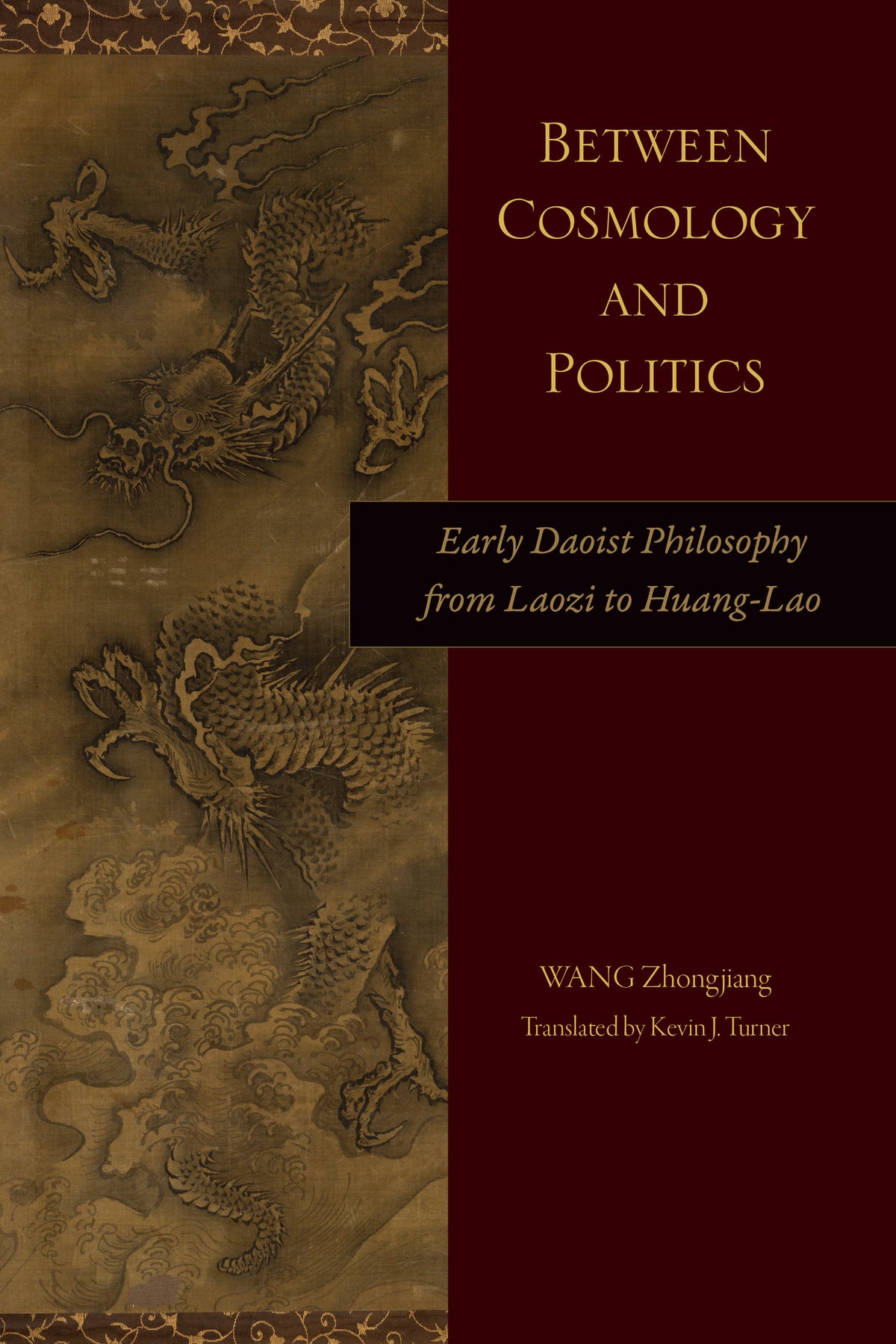
Explores the cosmopolitical philosophy of early Daoism.
Between Cosmology and Politics explores the cosmopolitical philosophy of early Daoism, tracing the development from Laozi's thought to Huang-Lao Daoism. Offering sinologically and philosophically sound interpretations of early Daoist cosmopolitical philosophy, the book discusses topics such as the relationship between dao and the ten thousand things, ultimate origins, the art of rulership, and cosmic and political order, which are developed through careful readings of both transmitted and unearthed texts such as the Laozi 老子, the Zhuangzi 莊子, the Guanzi 管子, the Huangdi sijing 黃帝四經, the Taiyi sheng shui 太一生水, and the Heng xian 恆先. It provides textually grounded and philosophically insightful analyses of key concepts like fan 反 (returning), yi (one), and heng 恆 (enduring). Demonstrating that Huang-Lao Daoist political philosophy is far from one of noninterventionist anti-intellectualism, the book underscores and brings to light the striking insights and penetrating discussions that constituted Huang-Lao discourse to argue that Daoist cosmopolitics is both theoretically robust and practically involved.


Zhongjiang Wang is Distinguished Professor of Philosophy at Shanxi University and Professor of Philosophy at Peking University. He is the author of Daoism Excavated: Cosmos and Humanity in Early Manuscripts; Order in Early Chinese Excavated Texts: Natural, Supernatural, and Legal Approaches; and Excavated Texts and a New Portrait of the Early Confucians. Kevin J. Turner is Assistant Professor of Religion and Philosophy at Hong Kong Baptist University. His previous translations include Family and Filiality: An Intercultural Perspective by Zhang Xianglong, also published by SUNY Press, and Excavated Texts and a New Portrait of the Early Confucians by Zhongjiang Wang.
Preface
1. The Tripartite Relationship between Dao and the Ten Thousand Things: The Structure of Laozi's Worldview
2. Abnormality and Returning: Exploring the Laozi's Concept of Fan 反
3. The Development and Form of "One" Thinking
4. The Concept of Ultimate Source and Its Genealogy: An Investigation of the Heng 恆 in the Shangbo Bamboo Heng Xian 恆先
5. The Transformation of Early Daoist "Art of Ruling"—From Laozi's "Dao Government" to Huang-Lao Daoism's "Government of Laws"
6. Order, System, and Worthies—an Internal Search for Why Huang-Lao was Anti-Intellectual
Notes
Bibliography
Index