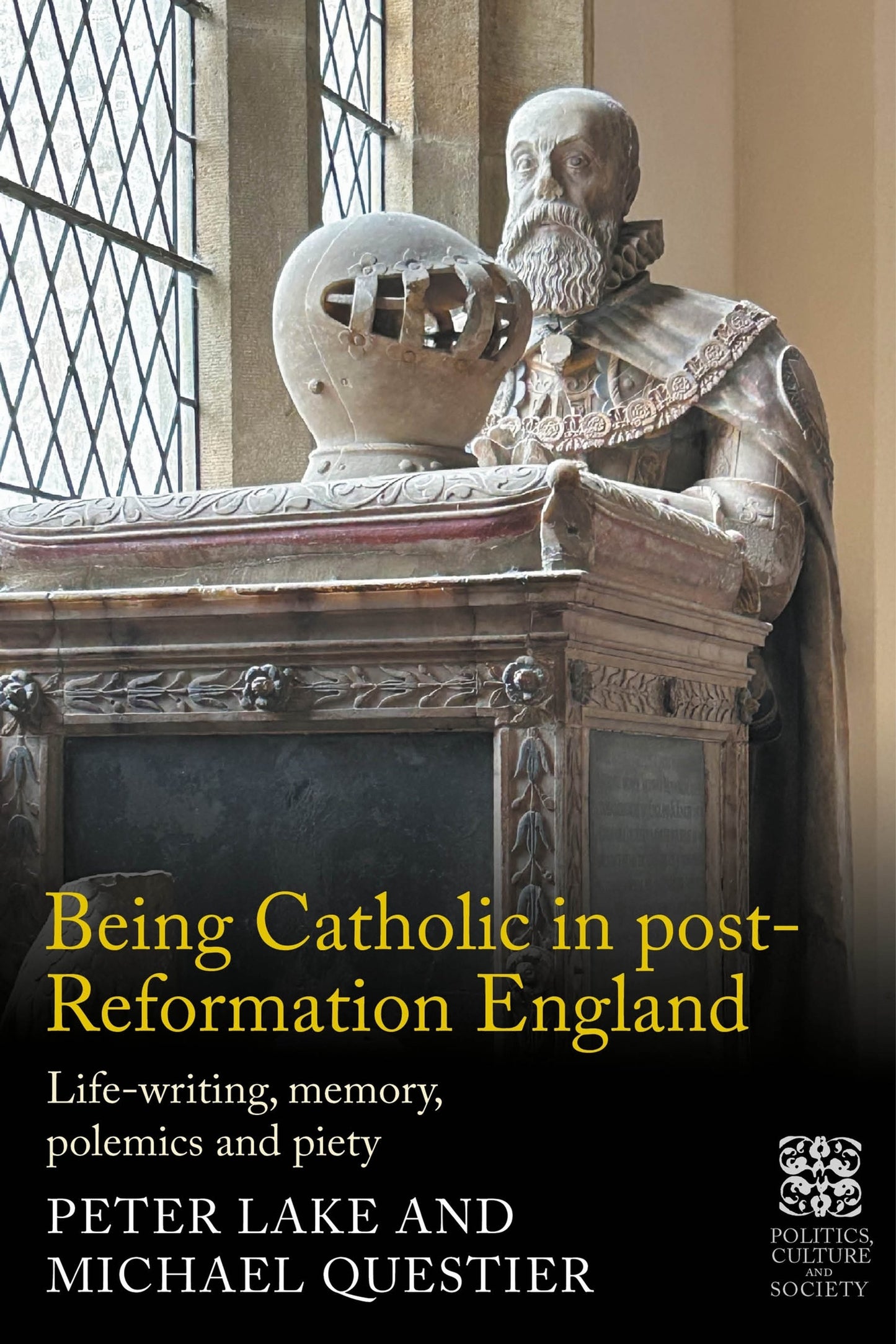
This book advances a view of the post-Reformation with godly life-writing at its heart. By writing the Lives of persons of exemplary godliness, both Catholics and Protestants hoped to refute the accusations of corruption and error lodged against them by the confessional other, while putting forward their own versions of just what it was to be Catholic or Protestant in the post-Reformation period. In this way they could realise both devotional and polemical agendas; presenting their co-religionists with striking examples of sanctity, whilst also doing down their enemies amongst their co-religionists and on the other side of the confessional divide. As a study of life-writing amongst English Catholics, this book contributes to the history of English Catholicism and to the connections between memory, life-writing and the formation and defence of various religious identities in the post-Reformation.
Price: £90.00
Pages: 384
Publisher: Manchester University Press
Imprint: Manchester University Press
Series: Politics, Culture and Society in Early Modern Britain
Publication Date:
12 January 2027
ISBN: 9781526194121
Format: Hardcover
BISACs:
HISTORY / Europe / Great Britain / Tudor & Elizabethan Era (1485-1603), History, RELIGION / Christianity / Catholic, RELIGION / Christian Church / History, European history: Reformation, History of religion, European history
Peter Lake is Emeritus Professor of History at Vanderbilt University
Michael Questier is Honorary Professorial Fellow in the History of Catholicism at Durham University
Introduction: Different ways of being Catholic in post-Reformation England
Part I
1 John Gerard, William Weston and the memorialization of the ‘English Mission’
2 Polemics, memories, pieties and emotions
3 Richard Smith’s funeral sermon for Lady Magdalen Dacre-Browne, Viscountess Montague
Part II
4 Libels, stereotypes and ungodly lives: The discursive context of the Approbation controversy
5 Philip Howard, Earl of Arundel and Anne Dacre-Howard, Countess of Arundel remembered
Conclusion